
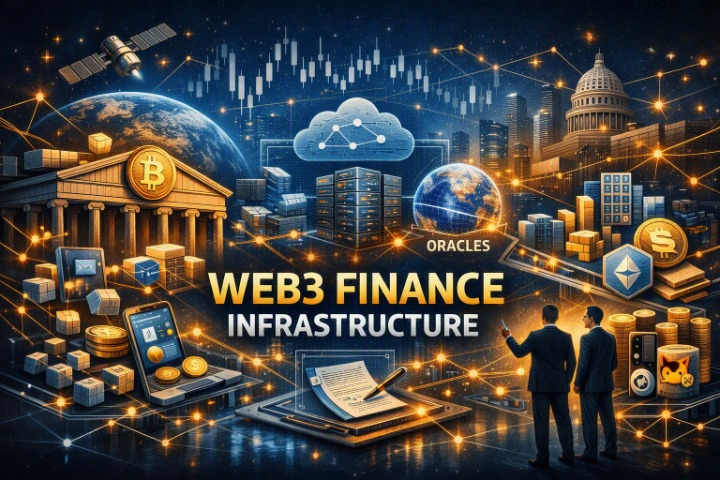
Futures Yours: The Infrastructure Behind Web3 Finance
Web3 isn’t just a buzzword or a trend — it’s a complete redesign of how value moves across the internet. Most people only see the surface: crypto tokens, NFTs, DeFi apps, digital wallets. But underneath all of that is a powerful, evolving infrastructure that makes Web3 finance possible.
If you want to understand the future of money, you need to understand the machinery behind it.
This is the foundation of Web3 — and it’s what will shape the next decade of digital finance.
The Core Pillars of Web3 Infrastructure
Web3 finance is built on several interconnected layers. Each one solves a problem the traditional financial system has struggled with for decades.
Let’s break them down.
1. Blockchain Networks (The Settlement Layer)
This is the base layer — the digital “ground” everything stands on.
- Bitcoin
- Ethereum
- Solana
- Avalanche
- Layer‑2 networks like Arbitrum, Base, and Optimism
These networks provide:
- Decentralized settlement
- Transparent ledgers
- Immutable records
- 24/7 global access
In traditional finance, settlement takes days.
In Web3, it takes seconds.
2. Smart Contracts (The Automation Layer)
Smart contracts replace middlemen with code.
They automate:
- Payments
- Lending
- Borrowing
- Trading
- Escrow
- Identity verification
This is the backbone of DeFi — and it’s why Web3 can operate without banks, brokers, or clearing houses.
Smart contracts don’t “trust.”
They execute.
3. Decentralized Storage (The Data Layer)
Web3 needs a place to store information that isn’t controlled by a single company.
Enter:
- IPFS
- Arweave
- Filecoin
These systems store:
- NFTs
- Identity data
- App files
- Transaction metadata
This ensures Web3 apps stay online, even if a company disappears.
4. Oracles (The Real‑World Data Layer)
Blockchains can’t access real‑world data on their own.
Oracles solve that.
- Chainlink
- Pyth
- UMA
They feed blockchains:
- Price data
- Weather data
- Sports results
- Market feeds
- Cross‑chain information
Without oracles, DeFi wouldn’t exist.
5. Wallets (The User Layer)
Wallets are the new “bank accounts” of Web3.
- MetaMask
- Phantom
- Coinbase Wallet
- Ledger
- Trezor
They give users:
- Control over their assets
- Access to dApps
- Identity management
- Secure signing
In Web3, your wallet is your identity — not your email, not your password.
6. Bridges (The Connectivity Layer)
Web3 isn’t one network — it’s thousands.
Bridges connect them.
They allow users to move assets between:
- Ethereum → Solana
- Polygon → Base
- Avalanche → Arbitrum
This creates a unified digital economy instead of isolated chains.
7. Tokenization (The Asset Layer)
Web3 turns real‑world and digital items into programmable assets.
Examples:
- Stablecoins
- Tokenized real estate
- Tokenized treasuries
- Digital identity tokens
- Gaming assets
- Ownership certificates
This is where institutions are focusing — because tokenization unlocks trillions in liquidity.
Why This Infrastructure Matters
Web3 isn’t about speculation.
It’s about building a financial system that actually works for people.
This infrastructure delivers:
✔ Faster payments
Seconds, not days.
✔ Lower fees
No middlemen.
✔ Global access
Anyone, anywhere.
✔ Transparency
Public ledgers reduce fraud.
✔ Programmability
Money that can follow rules automatically.
✔ Ownership
Users control their assets — not banks.
This is the foundation of the next financial era.
The Futures Yours Perspective
Web3 finance isn’t magic — it’s engineering.
It’s infrastructure.
It’s systems working together to create a financial world that’s faster, smarter, and more open than anything before it.
At Futures Yours, we focus on truth, not hype.
Understanding Web3 isn’t about chasing trends — it’s about understanding the architecture that will power the future of money.
Continue Learning
👉 Use the “Back” button below to return to all my blog content and explore more topics.
Go Deeper
👉 Use the upper‑right button to visit my shop and access my full crypto guides.