
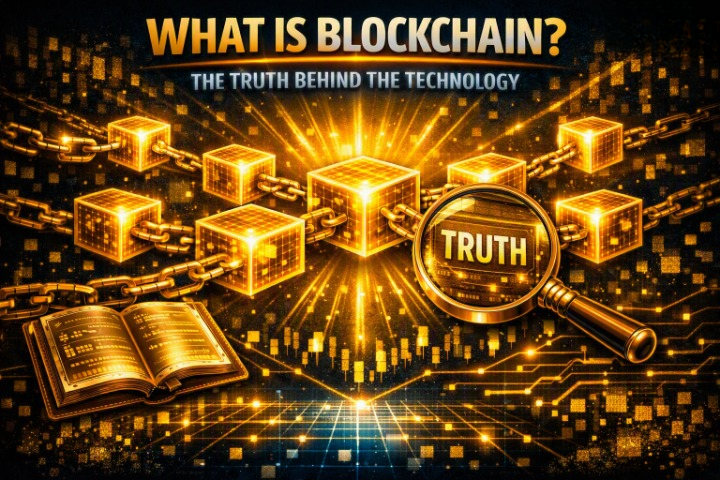
What Is Blockchain? The Truth Behind the Technology
Blockchain is one of those words that gets thrown around constantly — often wrapped in hype, buzzwords, and confusion. But beneath all that noise lies a simple, powerful idea that’s changing how we think about trust, data, and digital transactions.
At its core, blockchain is a digital ledger — a record‑keeping system that stores information securely and transparently across a network of computers. Instead of one central authority (like a bank or company) controlling the data, blockchain spreads it out so everyone can verify it.
Think of it as a shared notebook that anyone can read, but no one can erase or alter without everyone else noticing.
Blockchain Explained Simply
A blockchain is made up of blocks — bundles of data that record transactions or information. Each block is linked to the one before it, forming a continuous chain.
Every block contains:
- A list of transactions or records
- A timestamp
- A unique cryptographic signature (called a hash)
- The hash of the previous block
This structure makes blockchain tamper‑resistant. If someone tries to change one block, it breaks the chain — and the network rejects it.
Why Blockchain Exists
Blockchain was created to solve one major problem: trust.
In traditional systems, trust is centralized. You rely on banks, governments, or companies to keep accurate records. Blockchain removes that need by making the system itself trustworthy through transparency and math.
Here’s what that means in practice:
- No single point of failure — the data is stored across thousands of computers.
- No hidden edits — every change is visible to everyone.
- No need for middlemen — transactions can happen directly between people.
This is why blockchain became the foundation for cryptocurrency — it allows digital money to exist without a central bank.
How Blockchain Works
- A transaction happens — someone sends data or crypto.
- The transaction is verified — computers on the network (called nodes) check that it’s valid.
- The transaction is added to a block — once verified, it’s grouped with others.
- The block is added to the chain — permanently recorded and linked to previous blocks.
- The chain updates everywhere — every node gets the new version instantly.
This process creates a permanent, transparent record that can’t be changed or deleted.
Real‑World Uses Beyond Crypto
Blockchain isn’t just for Bitcoin. It’s being used in:
- Supply chains — tracking products from factory to store.
- Healthcare — securing patient records.
- Voting systems — ensuring transparency and preventing fraud.
- Digital identity — protecting personal data online.
- Smart contracts — automating agreements without lawyers or banks.
These applications show blockchain’s potential far beyond finance.
The Truth Behind the Technology
Blockchain isn’t magic. It’s not perfect. It’s not a cure‑all for every problem.
It’s simply a new way to store and verify information — one that’s transparent, secure, and decentralized.
The hype may fade, but the core idea will remain: a system built on truth, not trust.
Continue Learning
👉 Use the “Back” button below to return to all my blog content and explore more topics.
Go Deeper
👉 Use the upper‑right button to visit my shop and access my full crypto guides.