
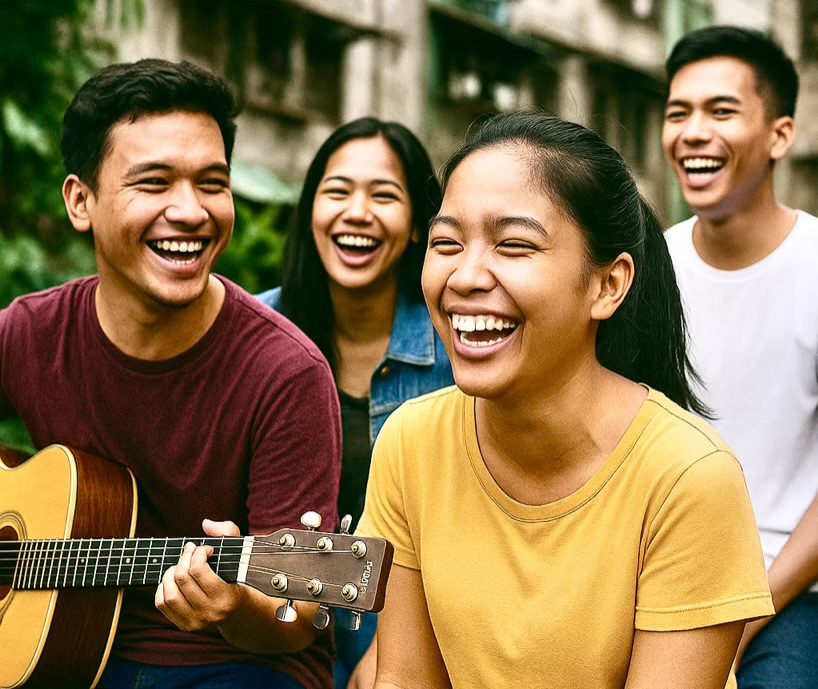
The Filipino smile is often misunderstood. To some, it looks like cheerfulness. To others, resilience. But beneath it lies something far deeper—a quiet strength learned through years of carrying weight without complaint.
Filipinos are raised in a culture where endurance is normal. From a young age, we watch our elders sacrifice in silence—parents working long hours, mothers skipping meals, fathers setting aside their own dreams for the sake of family. Pain is rarely announced; it is absorbed. The smile becomes a way of saying, “I’m okay,” even when the heart is tired.
Smiling, for Filipinos, is not pretending that life is easy. It is choosing not to burden others with one’s suffering. There is love in that choice. A desire to protect family and friends from worry. A belief that hardship is easier to bear when carried quietly.
Faith also plays a powerful role. In a nation shaped by prayer, pain is often entrusted to God before it is shared with people. Many smiles are born from whispered prayers, from the hope that even suffering has meaning. The smile reflects trust—that God sees what others do not.
Humor becomes another form of survival. Filipinos laugh in the middle of storms, joke during hospital visits, and find light even in dark places. Laughter does not erase pain; it softens it. It reminds the soul that sorrow is not permanent.
Yet it is important to remember: the Filipino smile can hide wounds. It may cover grief, exhaustion, and silent battles. That is why it deserves kindness, patience, and understanding. Not every smile means “I’m happy.” Sometimes it means, “I’m still standing.”
Filipinos smile even when it hurts because resilience runs in their blood. Because love teaches them to endure. Because hope, no matter how small, is always worth holding onto.
The smile is not denial.
It is bravery.