

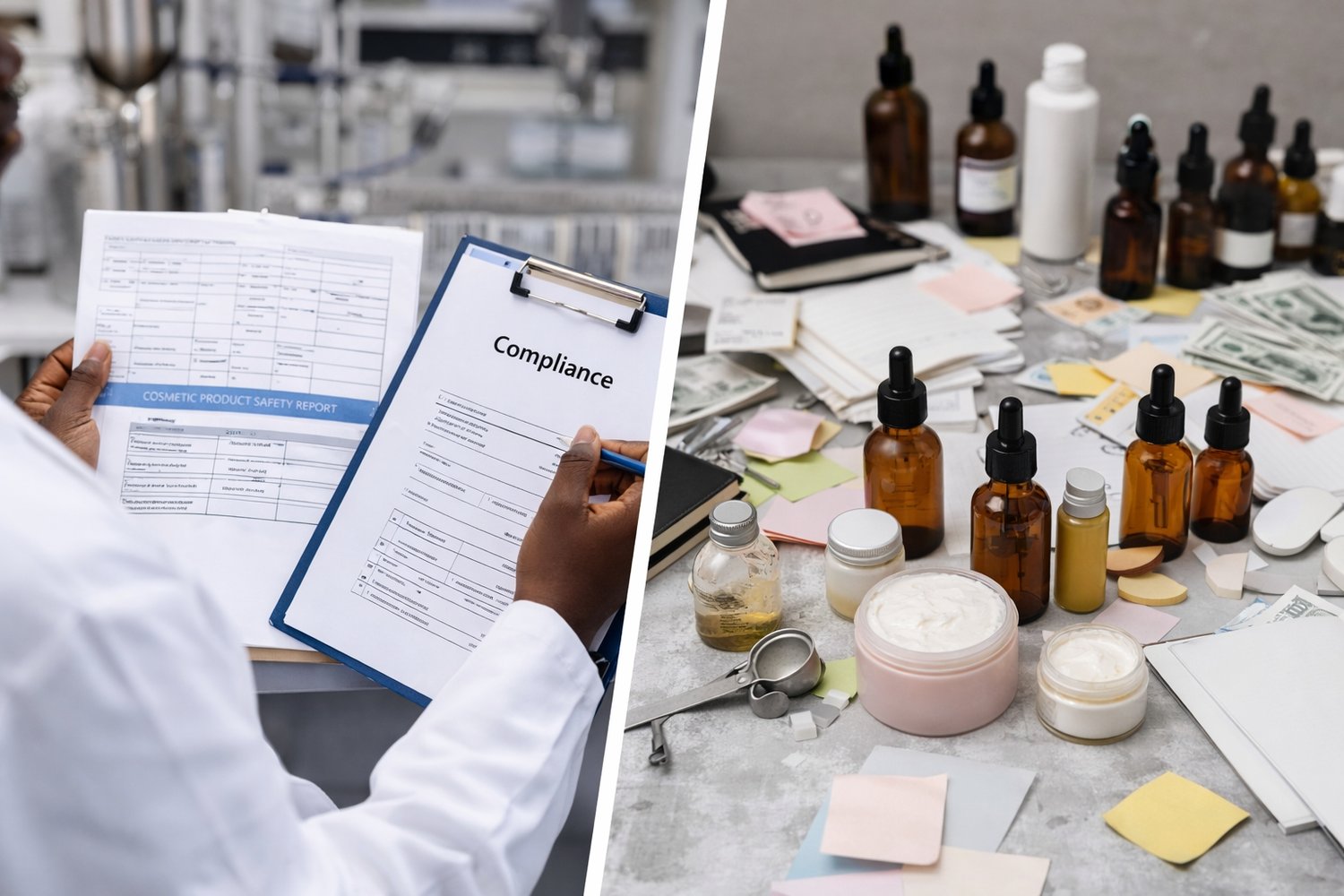
Over the past few years, we have seen an incredible rise in small, independent beauty brands. Many founders are passionate, creative, and genuinely want to bring something meaningful into the market. But behind the excitement of launching a product, there is a reality that many people do not talk about enough: cosmetic compliance.
A surprising number of small brands in the UK are currently selling products that are not fully compliant with cosmetic regulations. In many cases, this is not because founders want to break the law. It often happens because of misinformation, shortcuts, or simply not understanding how the system works.
Social media has made it very easy to start a beauty brand quickly. Someone sees a trending ingredient, mixes a formula, designs a label, and begins selling online. Unfortunately, the legal framework for cosmetics in the UK does not work that way. Before a cosmetic product can be legally placed on the market, several things must be in place: a Cosmetic Product Safety Report (CPSR), a Product Information File (PIF), proper ingredient documentation, compliant labelling, and SCPN notification.
Without these, a product is technically not legally compliant, even if the formula itself looks harmless.
One of the biggest misunderstandings is the belief that “natural” automatically means safe. In regulatory terms, safety is not determined by whether an ingredient sounds natural or familiar. It is determined through documented safety assessment, proper toxicological evaluation, and verified ingredient information. If a supplier cannot provide proper documentation such as SDS, COA, and clear INCI identification, a safety assessor cannot confidently approve the product.
Another reason compliance is often overlooked is cost. Many founders are trying to launch with limited budgets, and compliance can feel like an expensive hurdle. But the reality is that skipping these steps does not eliminate the risk, it simply delays the consequences.
Authorities such as Trading Standards and OPSS have the power to request documentation at any time. If a brand cannot provide a Product Information File within the required timeframe, the product may be removed from sale, investigated, or in serious cases lead to legal consequences. Beyond the legal side, there is also the issue of consumer safety and brand credibility.
The truth is that cosmetic compliance is not designed to punish small founders. It exists to ensure that products placed on the market are safe, traceable, and responsibly produced. When done correctly, compliance actually strengthens a brand. It protects customers, builds trust, and allows a business to grow without fear of regulatory issues later.
For founders who are just starting out, the key is simple: slow down and build correctly from the beginning. Gather the right supplier documentation, understand the regulatory requirements, and ensure your product is properly assessed before selling it. Building a beauty brand should not be about rushing to market. It should be about building something safe, credible, and sustainable for the long term. And when compliance is understood properly, it stops being a barrier and becomes a powerful foundation for a real brand. If you’re planning to launch a beauty or cosmetic product in the UK and want to avoid costly compliance mistakes, I’ve created a structured step-by-step course that walks you through the entire regulatory process, from formulation readiness to CPSR, PIF documentation, and SCPN notification.
👉 Access the UK Cosmetic Compliance Course here: https://payhip.com/b/VrS3C
Comments ()