
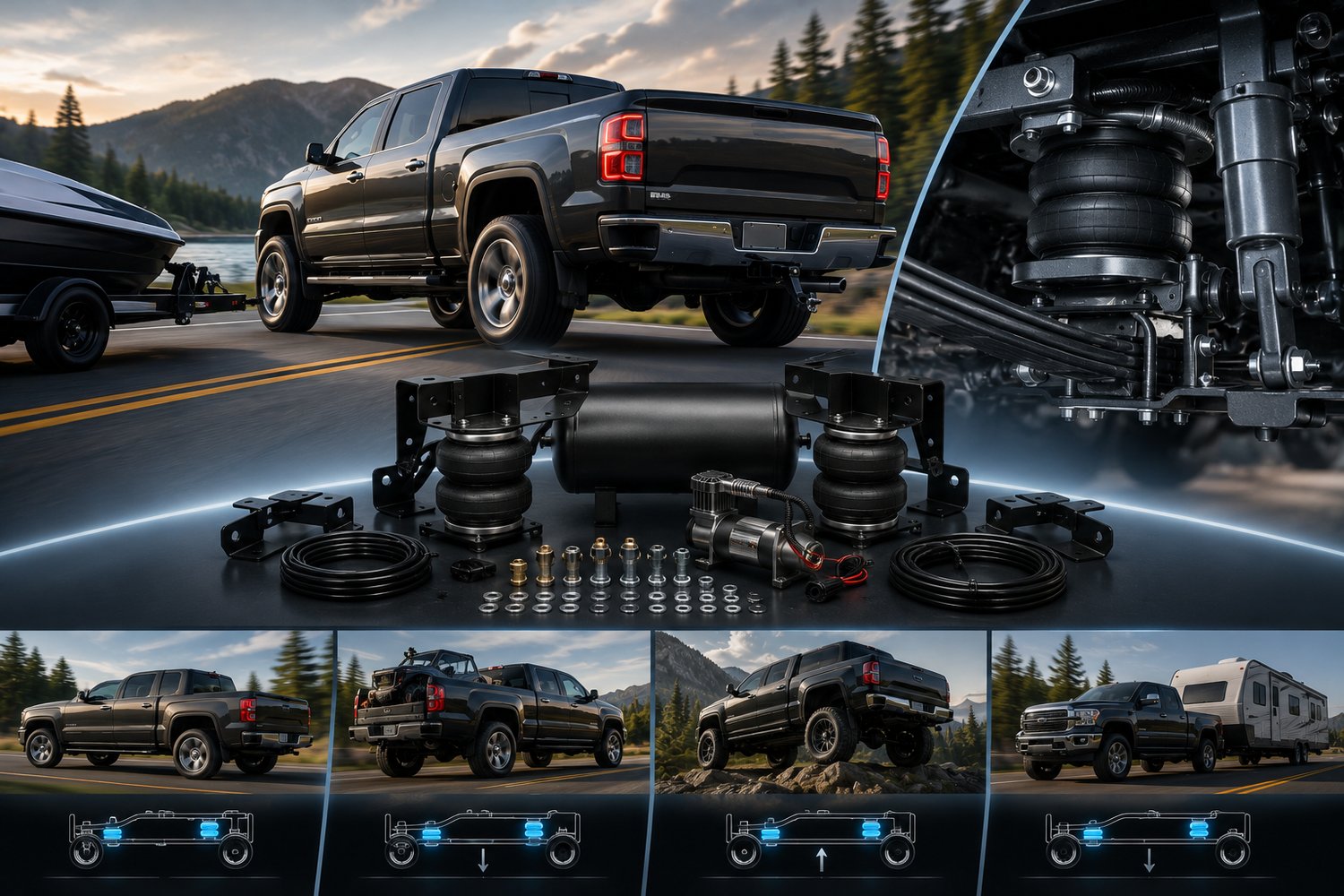
When evaluating performance upgrades for a truck, SUV, or daily driver, few modifications deliver as profound a transformation as a complete chassis suspension overhaul. For decades, the automotive aftermarket relied almost exclusively on traditional steel coil springs, heavy leaf spring stacks, or rigid static coilovers. While these conventional setups performed adequately in an era of single-purpose vehicles, today’s driving demands require far greater flexibility.
Modern vehicle owners demand unprecedented versatility from their platforms. A single pickup truck or SUV often serves as a daily commuter, a weekend tow rig for trailers or camper shells, an off-road overland machine, and a refined long-distance cruiser. Traditional static suspension setups force drivers into a fundamental compromise: configure the chassis for heavy payloads and endure a harsh, rigid ride when unladen, or tune for daily comfort and suffer dangerous rear-end sag, body roll, and instability when hauling heavy loads.
This inherent trade-off is precisely why modern chassis engineering has turned toward pneumatics. Understanding how an advanced air suspension functions—and selecting components built for long-term real-world durability—allows vehicle owners to unlock unmatched ride comfort, towing capability, and chassis control.
Why Choose Pneumatic Suspension Over Traditional Static Setups?
To appreciate the functional advantages of pneumatics, it helps to analyze the mechanical limitations of traditional steel springs.
Traditional steel coils and leaf springs operate on a fixed spring rate. A leaf spring pack designed to support a 2,000-pound bed load must be extremely stiff. When that heavy load is removed, that same stiff spring lacks the compliance needed to absorb road chatter, resulting in a flighty rear end, harsh dampening, and reduced tire contact with the pavement. Conversely, springs soft enough to deliver a smooth daily drive will collapse immediately under heavy tongue weights, bottoming out against the bump stops and compromising chassis control.
Pneumatic systems solve this issue by replacing or supplementing rigid steel springs with durable, pressurized rubber bladders, commonly referred to as air springs or air bags. By adjusting the volume and internal pressure of compressed air inside these flexible bladders, drivers can dynamically alter the spring rate on demand.
Instead of forcing a vehicle to operate on a fixed mechanical spring rate regardless of cargo weight, a modern air ride suspension adapts dynamically to whatever load, terrain, or driving condition you encounter.
The Practical Benefits of Upgrading to Air Suspension
Upgrading to a pneumatic setup delivers functional, measurable improvements across safety, drivability, and vehicle longevity that extend far beyond aesthetics.
1. Superior Load Leveling and Towing Control
When towing heavy trailers, boats, or commercial equipment, rear-end squatted chassis geometry is one of the leading causes of highway instability. As rear suspension compresses under heavy tongue weight:
- The front axle lifts, reducing front tire contact patches and reducing steering authority.
- Steering response becomes light, vague, and prone to dangerous trailer sway.
- Headlights aim upward into oncoming traffic, severely impairing night visibility.
- Brake bias shifts unnaturally, increasing stopping distances and accelerating front brake rotor wear.
Installing pressurized air springs restores factory ride height under maximum load. By leveling the vehicle frame, weight is redistributed evenly across both front and rear axles, maintaining proper alignment, maximizing tire grip, and stabilizing steering response during high-speed highway travel.
2. On-Demand Height Adjustability
Static suspensions limit a vehicle's adaptability across changing environments. Air-based setups allow drivers to adjust chassis height at the push of a button or adjustment of a valve. Vehicle owners can lower the chassis to improve aerodynamic efficiency and high-speed stability on open highways, then raise the vehicle instantly to navigate steep driveways, parking garage ramps, or rutted off-road trails.
3. Effective Road Isolation and Cabin Comfort
Steel springs transfer mechanical road vibrations directly through the frame rails and into the vehicle cabin. Pressurized air acts as a natural dampening cushion, absorbing high-frequency road noise, expansion joints, and surface harshness far more effectively than solid steel. The result is a smooth, quiet cabin environment during extended road trips without sacrificing cornering stability.
4. Extended Drivetrain and Tire Longevity
Driving a vehicle that operates outside its engineered alignment window accelerates mechanical wear across multiple subsystems. Sustained rear-end squat puts extreme angular stress on universal joints, CV axles, and driveshafts while causing rapid, uneven tire wear along the inner shoulders. Keeping the chassis level under load keeps suspension components within factory alignment tolerances, prolonging tire tread life and protecting driveline hardware from premature wear.
Engineering Standards: Why Vehicle Owners Choose RETRUE
While the physical principles behind pneumatic suspension apply broadly, the real-world performance and longevity of any system depend entirely on component quality, precise manufacturing, and material integrity. Air systems operate under continuous pressure cycles while exposed underneath the chassis to road debris, mud, moisture, de-icing salts, and severe temperature fluctuations.
At RETRUE, we approach aftermarket chassis development with a dedicated focus on commercial-grade durability, zero-leak sealing, and exact platform fitment.
Here is what defines RETRUE's approach to suspension engineering:
High-Tensile Multi-Ply Rubber Construction
The core of any pneumatic setup is the flexible air bladder itself. Substandard air bags using low-density or improperly vulcanized rubber tend to develop micro-cracks, dry rot, and eventual pressure loss under heavy loads.
RETRUE air springs are constructed using multi-ply, high-tensile reinforced rubber compounds. This heavy-duty, multi-layer design provides high burst pressure thresholds and continuous flexibility while actively resisting degradation from oil, road salt, ozone, UV rays, and extreme temperature swings.
Zero-Leak Hardware and Sealing Precision
Micro-leaks are one of the most common frustration points in low-quality air systems. Even minor air loss forces compressors to cycle repeatedly, causing electrical drain, compressor overheating, and inconsistent ride height.
To ensure long-term pressure retention, Retrue utilizes precision-machined solid brass air inlet fittings, anodized end caps, and heavy-duty internal sealing rings. Every connection point is designed to sustain high pressure spikes during severe suspension compression without weeping air.
Vehicle-Specific Direct-Fit Engineering
Invasive frame cutting, drilling, and custom modification add unnecessary labor time and can weaken the structural integrity of a vehicle’s frame.
RETRUE complete air spring kits are engineered for specific vehicle platforms. Utilizing advanced 3D scanning and computer-aided design (CAD), our heavy-duty mounting brackets bolt directly into existing factory frame mounting points. This ensures a clean, straightforward installation process for both professional technicians and independent builders.
Rigorous Stress and Quality Assurance
Safety-critical suspension hardware requires thorough validation before installation. Every RETRUE component undergoes multi-stage quality control, including long-term static pressure retention checks, burst-limit testing, and continuous cycle fatigue trials simulating hundreds of thousands of miles of heavy-duty operation. When installing Retrue hardware, drivers can proceed with complete confidence in their vehicle's reliability.
Elevate Your Driving Experience
Upgrading your vehicle chassis is about more than making visual changes—it is about maximizing your platform's capability, safety, and versatility. Upgrading to a modern pneumatic system eliminates the traditional compromises of static suspension, delivering adjustable load capacity, customizable ride comfort, and precise height control whenever required.
When selecting hardware for your chassis build, prioritize proven material strength, direct fitment, and robust manufacturing standards.
Explore RETRUE’s complete catalog of heavy-duty air springs, vehicle-specific kits, and suspension hardware today to equip your chassis with components built to perform under pressure.