

In the vast realm of computer networking and web communication, the "2xx Success" status codes stand as a beacon of triumph. These codes, beginning with the numbers 2 and followed by two additional digits, signify that a client's request has been received, understood, and successfully processed by the server. They serve as a powerful assurance, indicating that a desired objective has been accomplished in the digital landscape.
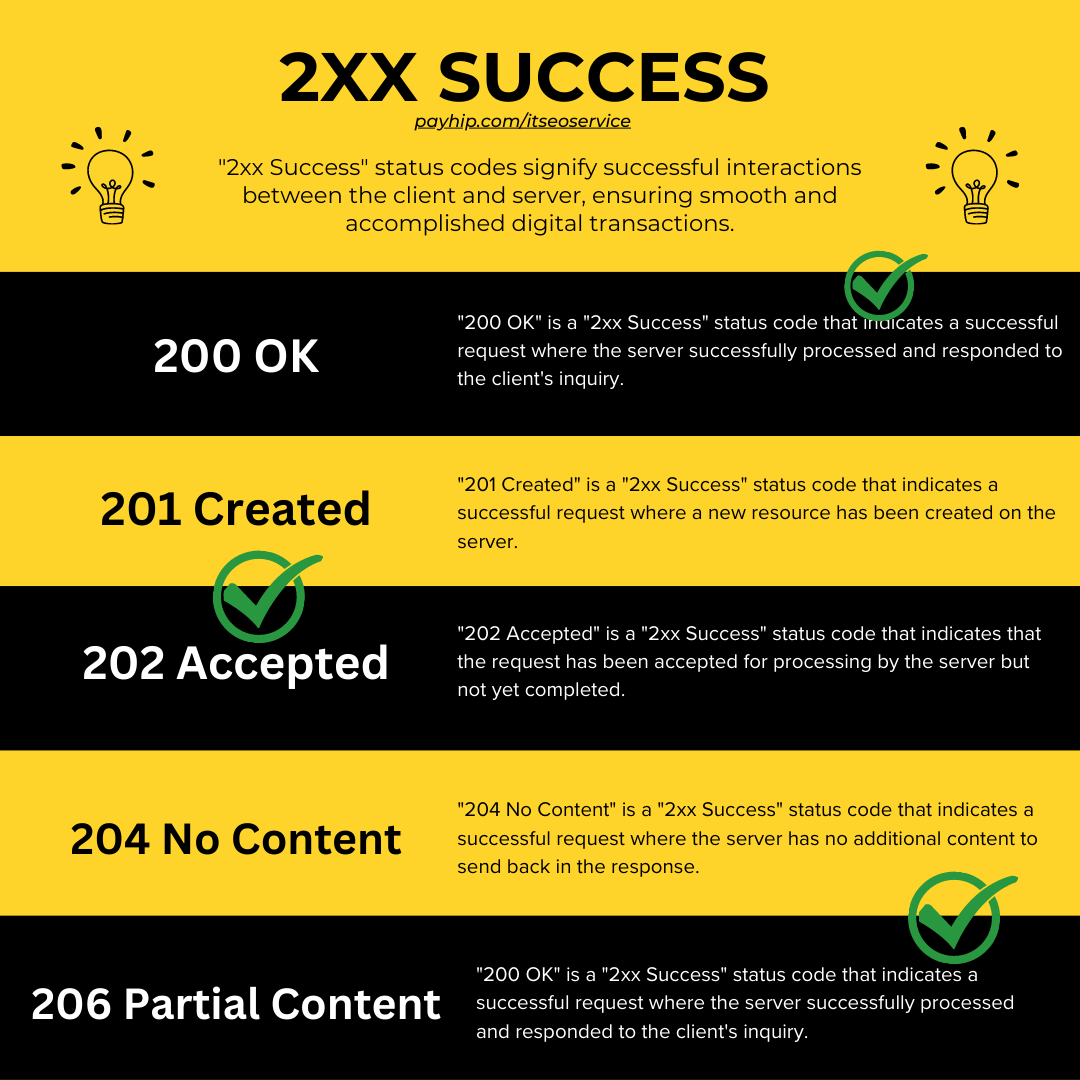
What is 2xx Success HTTP Status Code?
Understanding the significance of "2xx Success" status codes is essential for developers, administrators, and users alike, as they enable seamless transactions, enhance user experiences, and foster trust in the interconnected world we inhabit. In this article, we explore the intricacies of these codes, their variants, and their impact in various online scenarios, shedding light on their role in achieving success in web communication.
- 200 OK
- 201 Created
- 202 Accepted
- 204 No Content
- 206 Partial Content
200 OK
This is the most common status code, indicating that the request was successful. The server has successfully processed the request, and the response body may contain the requested data.
201 Created
This status code is used to indicate that a new resource has been successfully created as a result of the request. It is often used in conjunction with a POST request to create a new resource on the server. The response typically includes the URL of the newly created resource.
202 Accepted
This status code indicates that the request has been accepted for processing, but the processing may not be complete. It is typically used in scenarios where the request requires a long processing time or is queued for later processing. The server may provide a status URL or other means to check the progress of the request.
204 No Content
This status code is similar to the 200 OK status, but it indicates that the server has successfully processed the request, and there is no content to send back in the response body. It is commonly used for requests that do not require a response body, such as a DELETE request.
206 Partial Content
This status code is used when a server fulfills a Range request for a resource. It indicates that the server is returning only a portion of the requested resource, typically in response to a request for downloading large files in chunks. The response includes the range of bytes being returned and the total size of the resource.
These 2xx status codes signify that the client's request was successfully received, understood, and processed by the server, indicating a successful interaction between the client and the server.
How to fix 2xx Success HTTP Status Code
The 2xx Success HTTP status codes client's request was successfully received, understood, and processed by the server. As such, there is typically no need to "fix" these status codes. However, I can provide some guidance on how to handle and interpret these status codes:
1. 200 OK:
This is the most common status code, indicating that the request was successful, and the server has processed it. As the client, you can typically proceed with using the response data provided by the server.
2. 201 Created
This status code is used to indicate that a new resource has been successfully created as a result of the request. As the client, you can typically expect the server to provide additional information, such as the URL of the newly created resource, in the response. You can use this information for further interactions with the newly created resource.
3. 202 Accepted
This status code indicates that the server has accepted the request for processing but may not have completed it yet. As the client, you should be prepared for the fact that the requested operation may take some time to finish or be queued for later processing. The server may provide additional means, such as a status URL or other mechanisms, to check the progress of the request.
4. 204 No Content
This status code indicates that the server has successfully processed the request, but there is no content to send back in the response body. As the client, you should interpret this as a successful operation without any additional data provided. This status code is commonly used for operations like DELETE, where no further response content is expected.
5. 206 Partial Content
This status code is used when the server fulfills a Range request for a resource, indicating that only a portion of the requested resource is being returned. As the client, you should be prepared to handle partial content and use the provided response headers to determine the range of bytes being returned and the total size of the resource.
In summary, the 2xx Success status codes typically indicate successful interactions between the client In summary, the 2xx Success status codes typically indicate successful interactions between the client and server. As the client, you should handle these status codes based on their specific meanings and any additional information provided by the server in the response. Utilizing professional SEO services can help ensure that you optimize your website's handling of these codes, maximizing its performance and enhancing user experiences.
Read more 1xx Informational Responses HTTP Status