
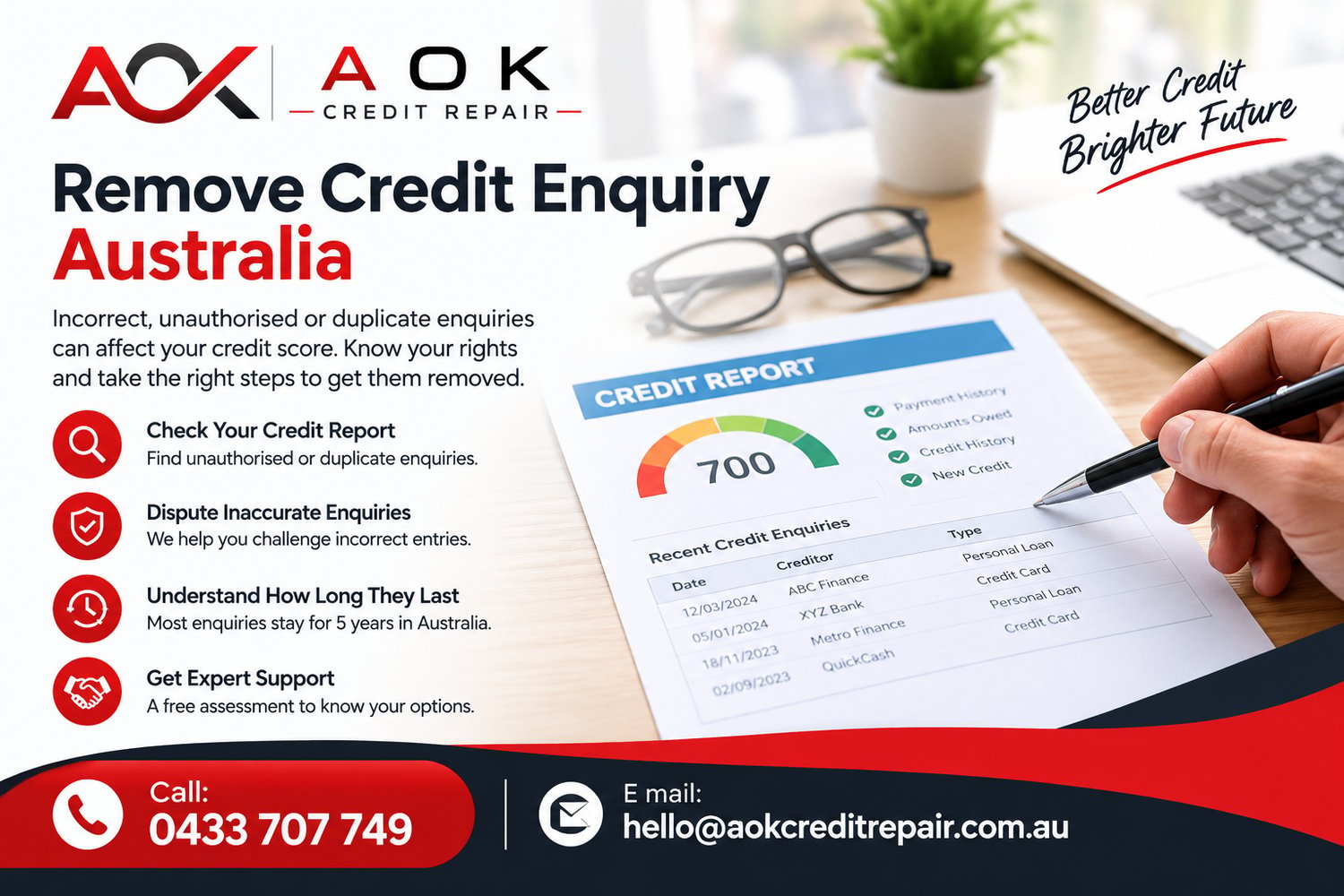
Your credit report plays an important role in your financial life. Banks, lenders and other credit providers use it to assess your creditworthiness when you apply for loans, credit cards or other financial products. However, incorrect information on your credit report can affect your borrowing opportunities and financial reputation.
If you notice inaccurate details, understanding the process of credit report correction Australia can help you take the right steps to resolve the issue and protect your credit history.
What Is Credit Report Correction?
Credit report correction is the process of identifying and fixing inaccurate, outdated or incorrectly recorded information on your credit file. Credit reporting bodies collect financial information from lenders and other credit providers, but mistakes can sometimes occur.
Common credit report errors include:
- Incorrect personal information, such as your name or address.
- Accounts or loans that do not belong to you.
- Payments incorrectly reported as overdue.
- Duplicate credit enquiries.
- Defaults recorded without proper verification.
- Debts that have already been paid but show incorrect details.
- Information that should have been removed after its legal retention period.
Correcting these errors can help ensure lenders receive an accurate picture of your financial history.
What Can and Cannot Be Corrected?
Not every negative entry can be removed from a credit report. Australian credit reporting laws provide consumers with the right to request corrections when information is inaccurate, incomplete, outdated or misleading.
Information that may be corrected includes:
- Incorrect defaults or repayment records.
- Unauthorised or incorrectly recorded credit enquiries.
- Duplicate accounts or debts.
- Incorrect personal details.
- Information belonging to another person.
- Records that have exceeded their permitted reporting period.
However, accurate negative information cannot generally be removed simply because it affects your credit score. Genuine defaults, correctly reported repayment history and valid financial information usually remain on your file for the legally permitted period.
How Does the Credit Report Correction Process Work?
The correction process is straightforward when you follow the right steps.
1. Obtain Your Credit Report
Request a copy of your credit report from Australia's major credit reporting bodies, such as Equifax, Experian or illion. You can generally access a free copy every three months.
2. Identify Incorrect Information
Carefully review your personal details, credit enquiries, repayment history, defaults and account information. Highlight anything that appears incorrect or unfamiliar.
3. Collect Supporting Documents
Gather relevant evidence, such as payment receipts, bank statements, lender correspondence, identification documents or account closure confirmations.
4. Submit a Correction Request
Contact the credit reporting body or the credit provider responsible for the information. Explain the error clearly and provide supporting evidence. You can request an investigation and correction.
5. Follow Up on the Outcome
The organisation should investigate your complaint and inform you of the outcome. If the information is incorrect, it should be corrected without charge.
How Long Does Credit Report Correction Take?
Under Australian credit reporting rules, a correction request generally needs to be investigated within 30 days. In certain circumstances, the investigation period can be extended by up to another 30 days, provided you are notified.
The actual timeframe depends on the complexity of the issue, the evidence provided and how quickly the relevant credit provider responds.
What Are the Costs and Free Options?
You can request a free credit report and dispute incorrect information without paying a credit repair company. Credit reporting bodies and credit providers must handle legitimate correction requests free of charge.
Professional credit repair services may charge fees for reviewing your report, preparing disputes and managing correspondence. Before engaging a service, understand its fees and avoid anyone promising guaranteed removal of accurate negative information.
Know Your Rights Under Australian Law
Australian consumers have rights under the Privacy Act 1988 and the Privacy (Credit Reporting) Code. You can access your credit information, request corrections and make complaints when an organisation does not handle your request appropriately.
If your issue remains unresolved, you may be able to escalate your complaint to the Australian Financial Complaints Authority (AFCA) or the Office of the Australian Information Commissioner (OAIC), depending on the organisation and nature of the complaint.
Final Thoughts
An accurate credit report is essential for maintaining a healthy financial profile. By checking your credit file regularly, identifying incorrect entries and understanding your legal rights, you can take practical steps towards resolving reporting errors.