
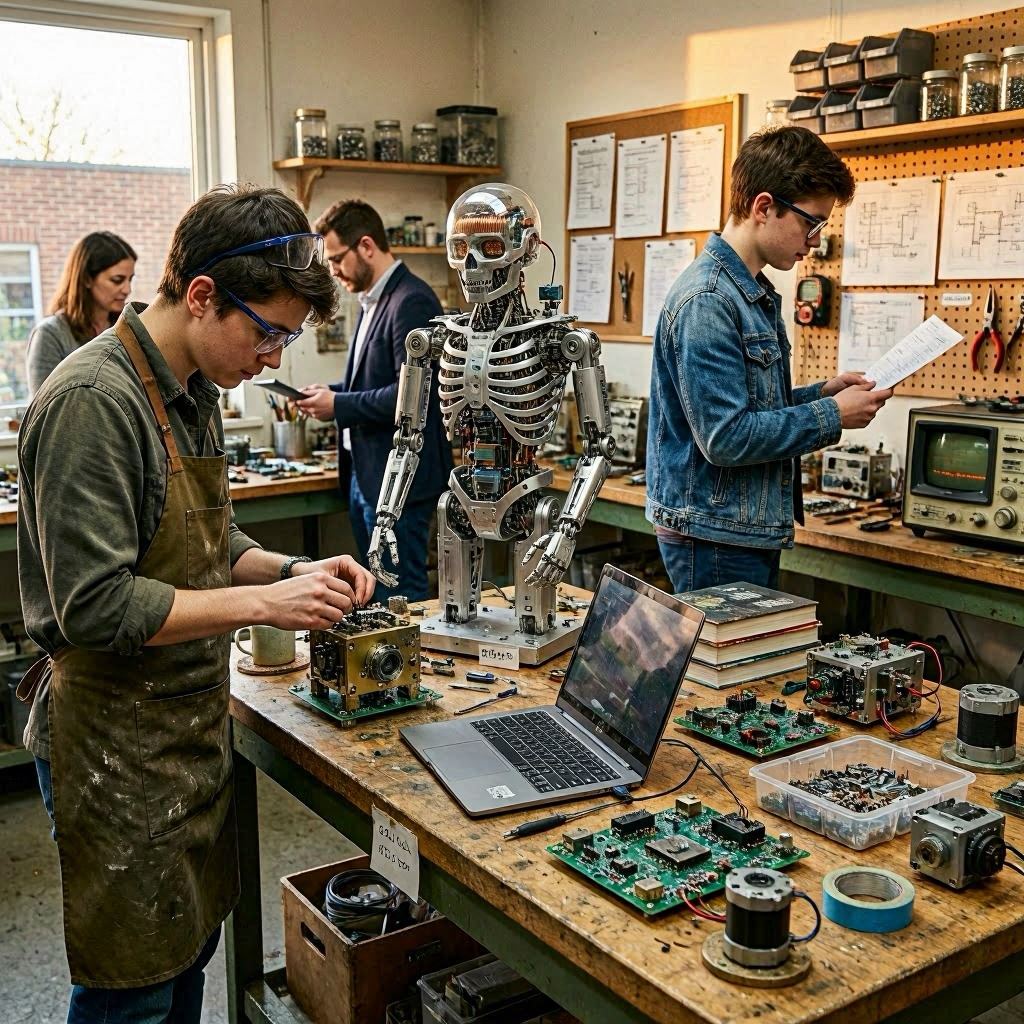
Think back to school for a moment. Most people struggle to remember every page of a textbook or every lecture they sat through. Dates fade. Definitions blur together. But oddly enough, the hands-on moments often remain crystal clear.
The tiny volcano that erupted all over the kitchen table.
The homemade circuit that somehow worked after several failed attempts.
The classroom project held together with tape, hope, and a little bit of luck.
Those memories stay because they felt real. There was excitement in them. Maybe even a little chaos.
Learning has always science project toys been a strange thing. Information enters our minds through reading and listening, sure, but understanding often settles in through experience. We tend to remember what we build, test, touch, and occasionally mess up.
That’s probably why practical learning has started receiving more attention again.
Not because traditional learning stopped mattering.
Because people realized something was missing.
Curiosity works best when it has room to breathe.
Children ask questions constantly. Sometimes endlessly.
Why do magnets stick?
How does electricity move?
What happens if I push this button?
Adults usually answer quickly and move on. Life gets busy. There’s dinner cooking, messages waiting, schedules filling up.
Still, curiosity deserves attention.
Because behind every question sits a larger opportunity. Curiosity isn’t simply about getting answers. It creates the desire to explore.
And exploration changes the way people learn.
Once someone starts experimenting on their own, information stops feeling forced. It becomes personal.
That difference matters more than it seems.
A student reading about science concepts might understand basic theories. But place materials in their hands and suddenly everything shifts. Learning becomes active instead of passive.
That’s where things get interesting.
Hands-on experiences quietly create stronger understanding.
People often assume educational tools are only useful because they make learning more entertaining. Fun matters, of course. Nobody complains when learning becomes enjoyable.
But entertainment isn’t the entire story.
Hands-on projects create something deeper. They connect abstract ideas to real-world experiences.
Students experimenting with science project toys often discover that concepts like motion, circuits, and energy become easier to understand once they physically interact with them. Instead of simply reading instructions, they participate in the process.
That participation creates ownership.
And ownership creates engagement.
It sounds simple, maybe even obvious, but learning changes dramatically once students feel like they’re discovering something themselves.
Because suddenly they’re not following lessons.
They’re chasing answers.
Mistakes have a funny way of becoming teachers.
Nobody enjoys getting things wrong.
Not really.
Yet some of the most valuable learning happens right in the middle of failed attempts and unexpected outcomes.
Projects rarely go smoothly the first time around. Batteries die. Connections loosen. Instructions somehow stop making sense halfway through.
Frustration shows up.
Then comes adjustment.
Then troubleshooting.
Then eventually—if patience sticks around long enough—progress.
The process feels messy because it is messy.
But real learning usually is.
Outside classrooms, people solve problems by experimenting. They test ideas, rethink approaches, and adapt when things don’t work.
Hands-on projects teach those habits naturally.
Without lectures.
Without pressure.
Just experience doing its thing.
Technology feels more exciting when people understand how it works.
Modern devices almost seem magical sometimes. Phones recognize voices. Sensors detect movement. Machines perform tasks automatically.
Most people use technology every day without thinking much about what happens behind the scenes.
Kids, though, see things differently.
They pull things apart.
Ask questions.
Press buttons adults avoid touching.
That curiosity opens doors.
Students exploring beginner electronics often encounter projects involving a laser alarm system, which can introduce concepts related to sensors, circuits, and detection in a way that feels exciting rather than intimidating. There’s something satisfying about creating a project that reacts to movement and suddenly feels alive.
Maybe because interaction creates surprise.
And surprise tends to hold attention.
The lesson sneaks in while curiosity stays busy.
Not a bad trade.
Building something changes how success feels.
Watching videos feels rewarding for a moment.
Reading information feels productive.
But creating something with your own hands feels different.
There’s a deeper satisfaction involved.
Maybe because effort becomes visible.
You see progress happen.
You remember mistakes.
You know exactly how many times things nearly failed before finally working.
That journey becomes part of the outcome.
People often remember projects not because they turned out perfectly but because of everything that happened while building them.
Oddly enough, imperfections become part of the story.
And stories stay with people.
Learning isn’t supposed to feel distant.
Somewhere along the way, education occasionally became associated with pressure. Tests. Scores. Deadlines.
Necessary things, perhaps.
But learning itself should still feel alive.
Curiosity shouldn’t disappear simply because people grow older.
Questions still matter.
Experimentation still matters.
Hands-on experiences remind laser alarm system people that understanding isn’t something delivered perfectly from one person to another. Sometimes understanding grows through trial, observation, and a little patience.
Often, it grows quietly.
One experiment.
One project.
One unexpected moment at a time.
And maybe that’s worth holding onto.
Because years later, people rarely remember every answer they memorized.
But they do remember building something that made them stop, smile, and think, “Wait...that actually worked.”