

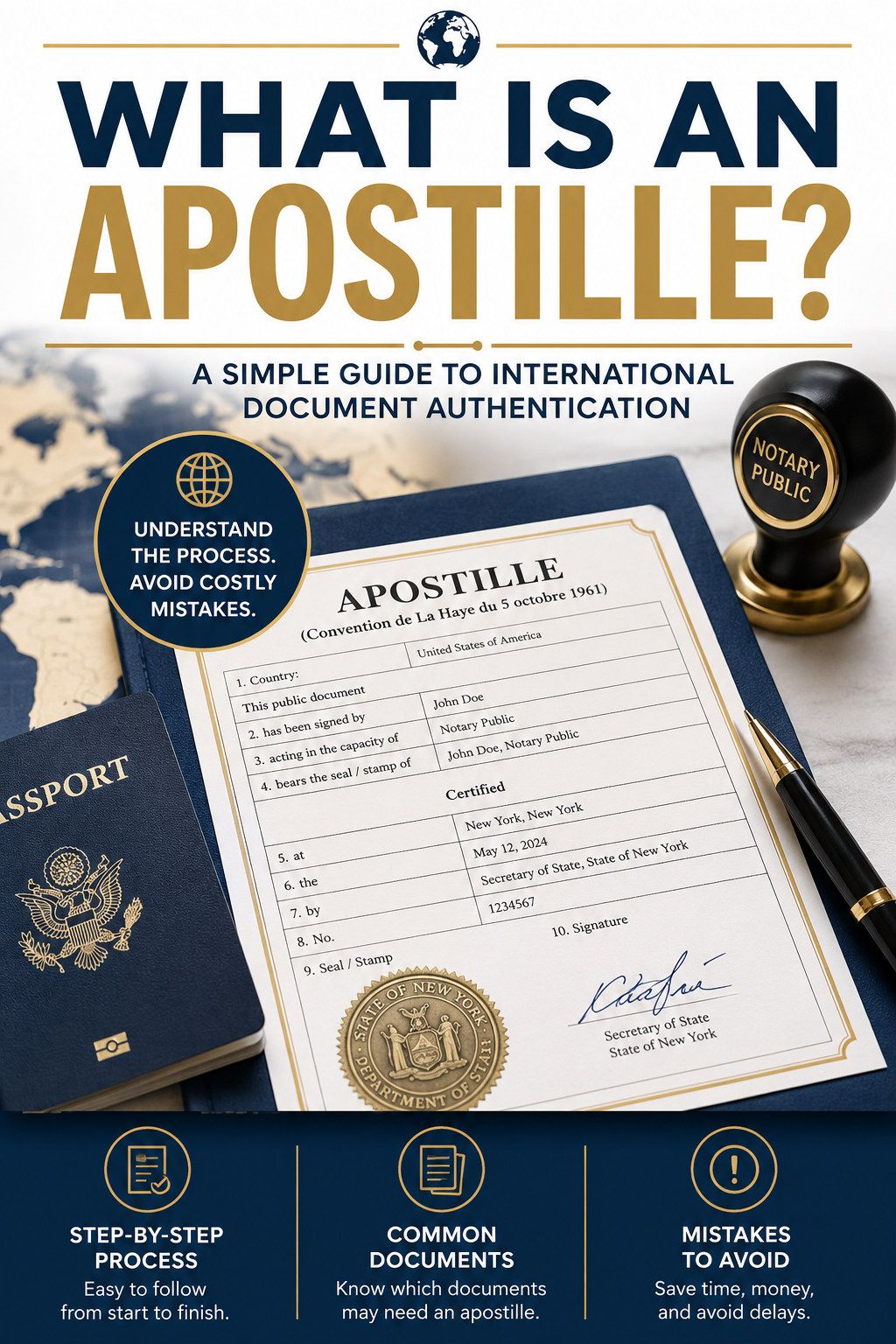
If you've ever been asked to obtain an apostille for a document, you're probably wondering: What exactly is an apostille, and why do I need one?
For many people, the apostille process can seem confusing at first. Between notarizations, certified copies, state offices, and international requirements, it's easy to feel overwhelmed. The good news is that once you understand the purpose and process, obtaining an apostille becomes much easier.
What is an apostille, why it's needed, and the general steps involved in getting one?
What Is an Apostille?
An apostille is an official certificate that verifies the authenticity of a public document for use in another country.
The apostille itself does not validate the contents of the document. Instead, it confirms that the signature, seal, or stamp on the document is legitimate and was issued by an authorized official.
Apostilles are used between countries that participate in the Hague Apostille Convention, an international treaty that simplifies document authentication among member countries.
Without an apostille, many foreign governments, schools, businesses, and organizations may refuse to accept your documents.
Why Would Someone Need an Apostille?
Navigating international document requirements can be confusing, especially when different countries, agencies, and document types have unique rules. For a more detailed breakdown of the apostille process and how to build a professional apostille service business, check out The Apostille Blueprint: How to Start & Grow a Profitable Apostille Service Business.
There are many situations where apostilles are required, including:
- International business transactions
- Studying abroad
- Marriage in a foreign country
- Immigration or residency applications
- Overseas employment
- International adoptions
- Foreign property purchases
- Establishing businesses abroad
Any time a foreign government or organization requests authenticated documents, an apostille may be necessary.
Common Documents That Require an Apostille
The type of document depends on your situation, but common examples include:
Personal Documents
- Birth Certificates
- Marriage Certificates
- Death Certificates
- Divorce Decrees
- Adoption Records
Educational Documents
- Diplomas
- Degrees
- Academic Transcripts
- Teaching Credentials
Business Documents
- Articles of Incorporation
- Certificates of Good Standing
- Corporate Agreements
- Business Licenses
Legal Documents
- Power of Attorney
- Court Records
- Affidavits
- Background Checks
Understanding the Apostille Process
Although procedures vary by state and document type, the general process follows several key steps.
Step 1: Determine Whether an Apostille Is Required
Before beginning, verify that the country receiving the document is a member of the Hague Apostille Convention. If the country is not a member, a different authentication process may be required through embassies or consulates.
Step 2: Obtain the Correct Document
Many documents must be original certified copies issued by the appropriate government agency.
For example:
- Birth certificates are usually obtained from a state's vital records office.
- Marriage certificates are typically issued by county or state authorities.
- Business records may come from the Secretary of State.
Photocopies are often rejected unless specific requirements are met.
Step 3: Notarize Documents When Necessary
Some documents must be notarized before they can receive an apostille.
Examples may include:
- Powers of Attorney
- Affidavits
- Consent Forms
- Certain business documents
The notarization must be completed correctly before moving to the next step.
Step 4: Submit the Document to the Appropriate Authority
In most states, apostilles are issued by the Secretary of State's office. The issuing authority will review the document and verify the authenticity of the signature or seal. Depending on the document type, federal apostilles may be processed through federal agencies rather than state offices.
Step 5: Pay Applicable Fees
Most states charge a fee for apostille services.
Additional costs may include:
- Certified copies
- Notary services
- Shipping fees
- Expedited processing
Fee structures vary by state
.
Step 6: Receive Your Apostilled Document
Once approved, an apostille certificate is attached to the document.
The document is then ready for use in the destination country.
Common Mistakes to Avoid
The Apostille Blueprint provides a step-by-step roadmap covering document preparation, client intake, pricing, workflows, common mistakes, and business-building strategies for those interested in offering apostille services professionally.
👉 Learn More About The Apostille Blueprint
Many delays occur because of avoidable errors.
Don't Submit Incorrect Documents
Always verify that the document meets the receiving country's requirements.
Don't Use Uncertified Copies
Many agencies require original certified documents.
Don't Forget Notarization Requirements
Some documents cannot be apostilled until properly notarized.
Don't Wait Until the Last Minute
International transactions often have strict deadlines.
Starting early can help avoid unnecessary stress.
Don't Assume Every Country Has the Same Rules
Requirements can vary significantly depending on the destination country.
Always verify instructions before submitting documents.
State Apostilles vs. Federal Apostilles
One area that often causes confusion is the difference between state and federal apostilles.
State Apostilles
Typically issued for:
- Birth certificates
- Marriage certificates
- Notarized documents
- Business filings
Federal Apostilles
Often required for:
- FBI Background Checks
- Federal court documents
- Certain federally issued records
Knowing which type you need can save considerable time and frustration.
What you should remember
An apostille is simply a method of authenticating documents for international use. While the process may seem complicated initially, understanding the basic steps can help you avoid mistakes and complete the process more efficiently.
Whether you're moving overseas, expanding a business internationally, studying abroad, or handling legal matters in another country, knowing how apostilles work can save you time, money, and frustration.
Ready to Master the Apostille Process?
Whether you're handling documents for personal use or exploring the opportunity to offer apostille services professionally, understanding the process is the key to avoiding delays, mistakes, and unnecessary expenses.
The Apostille Blueprint: How to Start & Grow a Profitable Apostille Service Business was designed to help beginners and entrepreneurs confidently navigate the apostille industry.
Inside you'll discover:
✔ Apostille requirements explained simply
✔ State vs. federal apostille procedures
✔ Client intake and document workflows
✔ Pricing and service strategies
✔ Common mistakes and how to avoid them
✔ Business growth and marketing tips
If you're serious about understanding apostilles or building an additional income stream through apostille services, this guide provides the framework to help you get started.
👉 Get The Apostille Blueprint Today