

Building a successful business isn't just about having a great idea, working longer hours, or making more sales. Many entrepreneurs spend years chasing success without realizing they're overlooking one of the most important foundations of long-term growth: themselves.
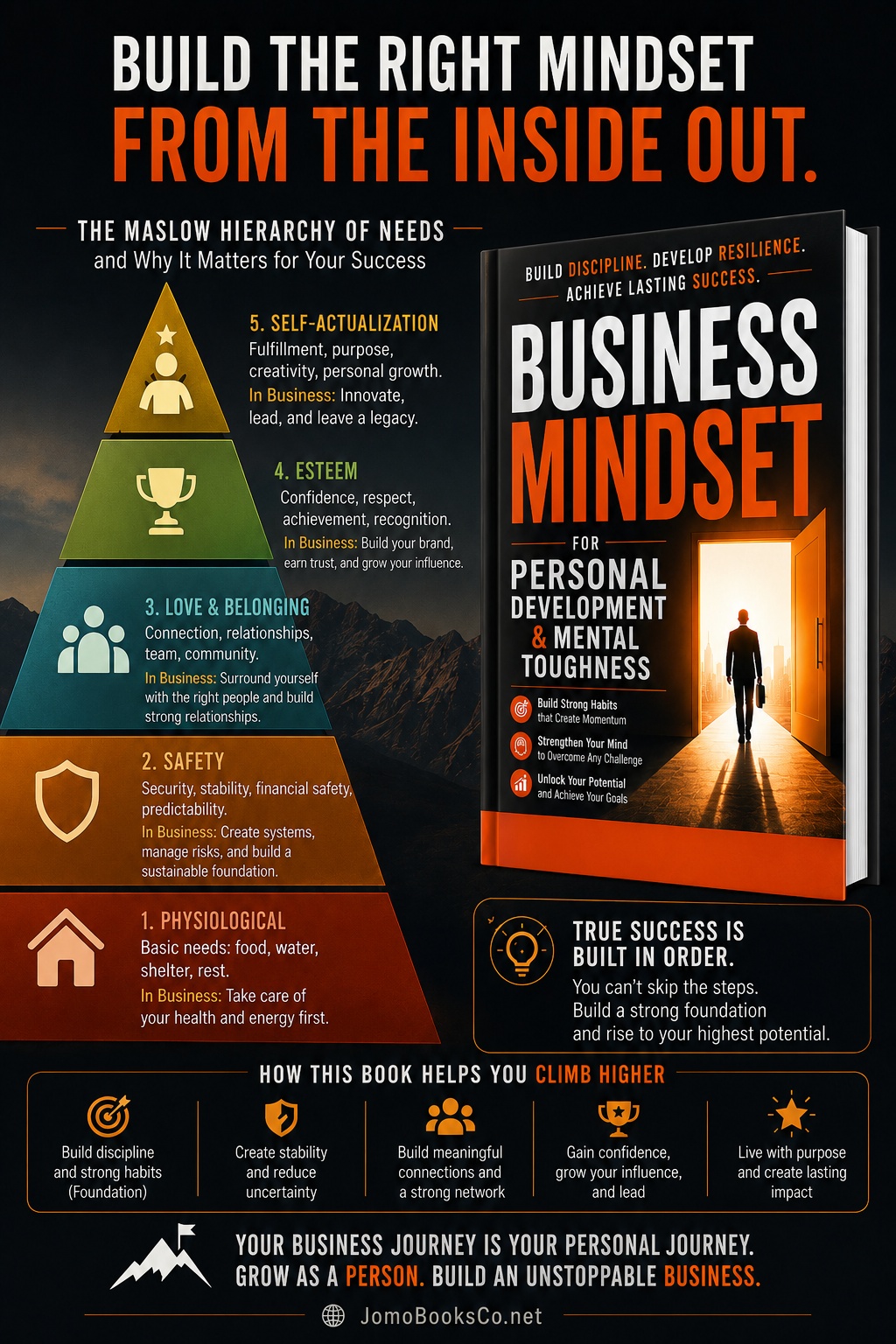
Long before writing a business plan or launching a product, psychologist Abraham Maslow introduced a framework known as the Hierarchy of Needs. Although it was originally created to explain human motivation, the same principles apply surprisingly well to entrepreneurship.
Every business owner climbs a similar ladder. Each level builds on the one below it. Skip a step, and the entire foundation becomes unstable.
Let's explore how Maslow's Hierarchy of Needs can help you become not only a better entrepreneur but a stronger, more resilient leader.
What Is Maslow's Hierarchy of Needs?
Maslow's Hierarchy of Needs is a motivational theory that explains the five stages of human development. Before people can reach their highest potential, they must satisfy more fundamental needs first.
The five levels include:
- Physiological Needs
- Safety
- Love and Belonging
- Esteem
- Self-Actualization
Think of it like building a house. Without a solid foundation, adding more floors only increases the chance of collapse.
Business works exactly the same way.
Level 1: Physiological Needs, Your Energy Is Your Greatest Asset
At the base of Maslow's pyramid are our most basic needs:
- Food
- Water
- Sleep
- Health
- Rest
Many entrepreneurs wear exhaustion like a badge of honor. They sacrifice sleep, skip meals, and work endless hours believing hustle alone creates success. In reality, poor health eventually reduces creativity, focus, and decision-making.
Business Example
Imagine two entrepreneurs.
One sleeps four hours a night, drinks energy drinks all day, and works 80-hour weeks. The other exercises regularly, sleeps seven hours, eats well, and schedules recovery. After twelve months, who is more likely to make better business decisions? Success begins by protecting your energy.
Level 2: Safety, Build Stability Before You Scale
Safety isn't just physical security. For entrepreneurs, it means creating systems that reduce uncertainty.
Examples include:
- Emergency savings
- Business insurance
- Reliable income streams
- Organized finances
- Legal protection
- Standard operating procedures
Businesses without structure often depend entirely on the owner's daily effort. When life happens, the business stops. Successful entrepreneurs build systems that continue working even when they take a day off.
Level 3: Love and Belonging: Success Is Rarely a Solo Journey
Many entrepreneurs believe they must do everything themselves. The truth? Relationships create opportunities.
Strong business owners intentionally build:
- Professional networks
- Mentorships
- Partnerships
- Referral relationships
- Loyal customers
- Communities
Every conversation becomes a potential opportunity. Whether you're a mobile notary, consultant, author, or online entrepreneur, people often buy because they trust you not simply because they need your product. Your network becomes one of your greatest business assets.
Level 4: Esteem: Confidence Comes From Keeping Promises to Yourself
Esteem represents confidence, achievement, and self-respect.
Many people think confidence comes before action.
Entrepreneurs learn the opposite.
Confidence comes after consistent action.
Every completed task builds trust in yourself.
Every promise you keep strengthens your identity.
Examples include:
- Publishing your first book
- Launching your first website
- Making your first sales call
- Posting consistently on Pinterest
- Finishing difficult projects
Momentum creates confidence. Confidence creates bigger opportunities.
Level 5: Self-Actualization: Build Something Bigger Than Yourself
At the top of Maslow's pyramid is self-actualization.
This is where entrepreneurs stop asking:
"How can I make more money?"
Instead, they begin asking:
- What legacy am I creating?
- How can I serve more people?
- What impact will my work have ten years from now?
- How can I continue growing?
This level is about purpose. Many of the world's most respected entrepreneurs continue building long after financial success because they are driven by impact, not income.
Why Entrepreneurs Get Stuck
Most business owners don't fail because they lack intelligence.
They fail because they try to skip the foundation.
They chase revenue before creating stability.
They seek recognition before building confidence.
They look for motivation instead of developing discipline.
Business growth is personal growth.
The entrepreneur grows first.
Then the business follows.
Applying Maslow's Hierarchy to Your Business
Here's a simple framework you can start using today:
Strengthen Your Foundation
Prioritize your health, manage your energy, and establish daily routines that support consistent performance.
Build Stability
Organize your finances, create repeatable processes, and reduce unnecessary risks before pursuing rapid growth.
Invest in Relationships
Connect with mentors, collaborate with peers, provide value to your audience, and nurture meaningful business relationships.
Build Confidence Through Action
Choose one meaningful task each day and complete it. Small wins compound into lasting confidence.
Pursue Purpose
Look beyond short-term profits. Build a business that reflects your values and leaves a positive impact on the people you serve.
Build Your Success from the Inside Out
If you're serious about growing your business, don't just focus on marketing strategies or revenue goals. Invest in the person building the business.
Your mindset influences every decision you make, every obstacle you overcome, and every opportunity you pursue. When you strengthen your habits, discipline, resilience, and confidence, you create the foundation for sustainable success.
Ready to Build the Right Mindset?
If this article helped you see business growth from a new perspective, Business Mindset for Personal Development & Mental Toughness goes even deeper.
Inside, you'll learn how to:
- Develop lasting self-discipline and resilient habits.
- Build mental toughness to navigate setbacks with confidence.
- Create systems that support long-term business success.
- Strengthen your leadership, decision-making, and personal growth.
- Turn everyday actions into extraordinary results.
Don't just grow your business—grow into the entrepreneur your business needs.
📘 Explore Business Mindset for Personal Development & Mental Toughness today and start building success from the inside out.