
Introduction
Ceramic materials are traditionally recognized for their excellent strength, hardness, thermal stability, and chemical resistance. However, modern industries increasingly require ceramic materials that provide not only mechanical durability but also advanced optical performance. Applications in optics, electronics, aerospace, medical technology, and defense require ceramics that can transmit light while maintaining structural reliability.
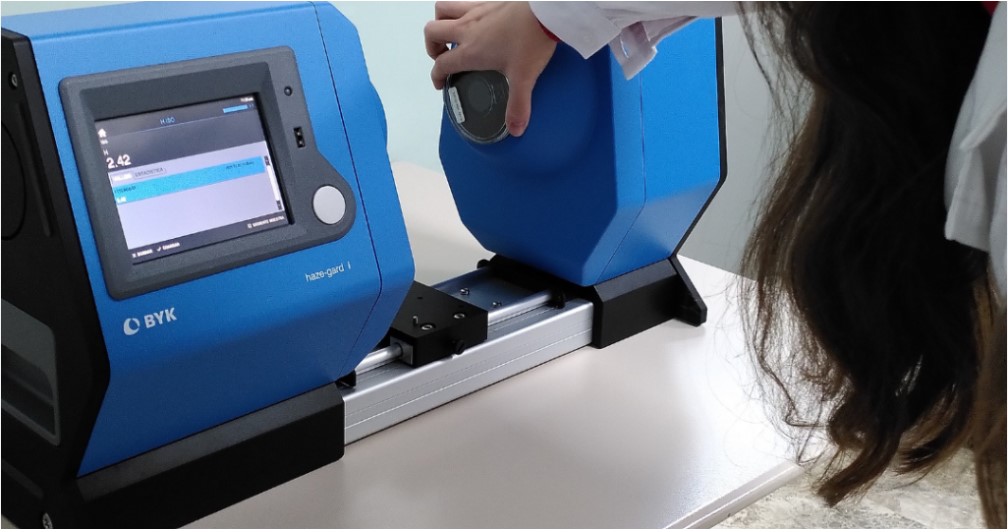
Two important parameters used to evaluate optical ceramic performance are ceramic transmittance and haze. These properties determine how effectively light passes through a ceramic material and how much light is scattered during transmission.
Achieving high ceramic transmittance with low haze is a complex challenge because ceramic structures naturally contain grain boundaries, pores, and microscopic imperfections that influence light behavior. Advanced processing methods and functional additives are used to improve material density, reduce defects, and optimize microstructure.
Materials such as fumed silica and nano alumina are increasingly studied as ceramic additives because they can support better structural control and improved optical characteristics.
Understanding the relationship between ceramic transmittance and haze helps manufacturers develop advanced transparent ceramic materials for demanding applications.
Understanding Ceramic Optical Properties
What Is Ceramic Transmittance?
Ceramic transmittance refers to the ability of a ceramic material to allow light to pass through its structure.
A ceramic with high transmittance allows more light transmission, resulting in improved transparency.
Transmittance is influenced by:
- Material density
- Porosity
- Grain structure
- Purity
- Thickness
High-transmittance ceramics require carefully controlled manufacturing processes.
What Is Ceramic Haze?
Haze refers to the amount of light scattered inside a transparent material.
A ceramic with high haze may allow light to pass through but appear cloudy or less clear.
Low haze indicates:
- Better optical clarity
- Reduced light scattering
- Improved transparency
For many optical applications, manufacturers aim for high transmittance and low haze simultaneously.
Factors Affecting Ceramic Transmittance and Haze
Internal Porosity
Porosity is one of the most important factors affecting optical performance.
Small pores inside ceramic structures create differences in optical density. When light encounters these pores, scattering occurs.
Effects include:
- Reduced transmittance
- Increased haze
- Lower optical clarity
Reducing porosity through improved densification is essential for transparent ceramic production.
Grain Structure
Ceramic grain size and distribution strongly influence light movement.
Large or irregular grains can scatter light and increase haze.
A uniform grain structure allows better light transmission and improves transparency.
Manufacturers carefully control grain growth during processing to achieve better optical properties.
Material Purity
Impurities can absorb or scatter light, reducing optical quality.
High-purity ceramic powders are required for producing materials with:
- Higher transmittance
- Lower haze
- Better optical consistency
Ceramic Thickness
Thickness affects the distance light travels through the material.
As thickness increases:
- Light has more opportunities to scatter
- Transmittance may decrease
- Haze may increase
Manufacturers must balance thickness requirements with optical performance.
Methods to Improve Ceramic Transmittance and Reduce Haze
Advanced Powder Processing
The quality of ceramic powders directly influences final optical performance.
Fine and uniform powders improve:
- Particle packing
- Density
- Structural uniformity
Better powder preparation helps reduce defects during manufacturing.
Optimized Sintering
Sintering is essential for achieving dense ceramic structures.
Advanced sintering methods help remove pores and improve transparency.
Common approaches include:
- Vacuum sintering
- Hot pressing
- Pressure-assisted sintering
These techniques improve density and reduce light scattering.
Use of Functional Ceramic Additives
Functional additives help improve ceramic processing and final properties.
They can influence:
- Densification
- Grain control
- Defect reduction
Nanoscale additives are particularly valuable because of their high surface activity.
Role of Fumed Silica in Ceramic Transparency
Fumed silica is a nanoscale silicon dioxide material with a high surface area and unique structural characteristics.
When incorporated into ceramic systems, it can support:
- Improved particle distribution
- Better densification
- Reduced structural defects
- More uniform microstructures
A more uniform ceramic structure reduces light scattering and can contribute to improved optical performance.
Industries exploring optical ceramic development can learn more about ceramic transmittance and haze and how advanced materials influence transparency.
Role of Nano Alumina in Transparent Ceramics
Nano alumina is another important material used in advanced ceramic production.
Its nanoscale particle size allows it to influence:
- Grain development
- Density improvement
- Mechanical strength
Better-controlled ceramic structures can improve optical performance while maintaining durability.
Applications Requiring High Transmittance and Low Haze
Optical Windows
Transparent ceramics are used in optical windows where both strength and clarity are required.
Applications include:
- Sensor protection
- Laser systems
- Infrared devices
Low haze ensures better optical performance.
Aerospace Technologies
Aerospace environments require materials that can withstand extreme conditions.
Transparent ceramics provide:
- Thermal resistance
- Mechanical strength
- Optical transmission
Defense Applications
Defense systems require transparent protective materials that combine visibility and impact resistance.
High-transmittance, low-haze ceramics provide reliable performance in demanding environments.
Electronic Devices
Modern electronics increasingly use advanced ceramic materials.
Applications include:
- Optical sensors
- Protective layers
- Display components
Importance of Controlling Ceramic Transmittance and Haze
Better Optical Quality
High transmittance and low haze provide clearer optical performance.
This is essential for applications requiring accurate light transmission.
Improved Product Reliability
Consistent optical properties indicate better manufacturing control and material quality.
Expanded Application Possibilities
Improved transparency allows ceramics to replace traditional materials such as glass in more demanding environments.
Challenges in Achieving High Ceramic Transparency
Complex Manufacturing Control
Small variations in processing conditions can significantly affect optical properties.
Manufacturers must carefully control:
- Temperature
- Pressure
- Material composition
Balancing Strength and Transparency
Increasing transparency while maintaining mechanical strength remains challenging.
Production Cost
Advanced processing methods and high-purity materials can increase manufacturing costs.
Future Development of Transparent Ceramic Technology
The demand for transparent ceramic materials continues growing as industries seek stronger and more durable optical solutions.
Future research may focus on:
- Advanced nanomaterial additives
- Improved sintering techniques
- Lower-cost manufacturing
- Enhanced optical performance
With continued innovation, transparent ceramics are expected to become more common in advanced engineering and optical applications.
FAQs
1. What is ceramic transmittance?
Ceramic transmittance is the ability of a ceramic material to allow light to pass through its structure.
2. What causes haze in transparent ceramics?
Haze is mainly caused by light scattering from pores, impurities, grain boundaries, and structural defects.
3. How can ceramic transparency be improved?
Ceramic transparency can be improved through better powder processing, optimized sintering, and the use of functional additives such as fumed silica and nano alumina.
Conclusion
Ceramic transmittance and haze are critical factors in evaluating the optical performance of advanced ceramic materials. Achieving high transparency requires precise control of porosity, grain structure, purity, and manufacturing processes.
Through advanced additives, improved processing methods, and nanotechnology-based solutions, manufacturers can develop ceramics with better optical clarity and durability. As industries continue demanding stronger and more reliable transparent materials, controlling ceramic transmittance and haze will remain essential for future ceramic innovation.