
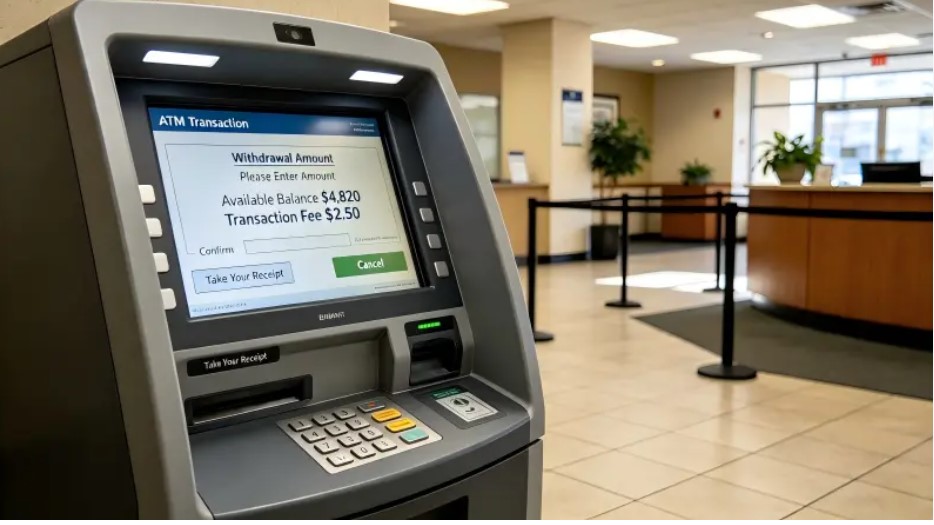
The display is one of the first parts of an ATM that customers interact with. It provides transaction instructions, confirmation messages, menu options, and other information needed to complete financial activities.
Although modern ATMs increasingly use advanced interfaces, the display remains a fundamental component. When it develops a fault, customers may have difficulty completing transactions even if the machine's other systems are functioning correctly.
The Role of the ATM Display
An ATM display communicates information between the machine and the customer.
It may show:
- Transaction instructions
- Account options
- Withdrawal amounts
- Error messages
- Confirmation information
- Security notices
Clear and reliable visual communication is therefore important for the overall customer experience.
Why Display Quality Matters
A damaged or malfunctioning screen can create confusion and potentially prevent customers from completing transactions.
Problems may include poor image quality, unresponsive areas, inconsistent brightness, damaged surfaces, or communication errors.
The appropriate solution depends on the actual cause of the problem.
Understanding Different ATM Configurations
ATM manufacturers may use different display sizes, connection methods, mounting arrangements, and technical specifications.
For this reason, replacement planning should begin with exact equipment identification.
A display that fits physically may still be unsuitable if its technical characteristics do not match the ATM's requirements.
Inspecting Display Problems
Technicians should first determine whether the problem originates from the screen itself or another part of the display system.
Possible causes can include:
- Display hardware
- Cable connections
- Power supply
- Controller components
- Software configuration
Proper diagnosis helps prevent unnecessary component replacement.
Selecting a Replacement Monitor
When replacing a display, operators should compare dimensions, interface specifications, mounting requirements, resolution, and compatibility information.
The ATM model should also be confirmed before ordering.
For organizations maintaining Diebold Nixdorf equipment, RONG MEI diebold nixdorf 19 inch lcd monitor can be referenced when researching a specific display configuration.
Installation Considerations
A replacement monitor needs to be installed correctly.
Technicians should follow appropriate technical procedures and ensure that connections are secure. Physical mounting should also be checked so that the display remains stable during normal operation.
After installation, the display should be tested across the relevant ATM functions.
Preventive Display Maintenance
Although screens generally require less mechanical maintenance than cash-handling assemblies, they should still be inspected.
Technicians can check for physical damage, display abnormalities, connection problems, and signs of deterioration.
The surrounding ATM environment should also be kept clean and suitable for electronic equipment.
Customer Experience
A functioning display supports a smoother transaction process.
Customers need to read instructions quickly and accurately, particularly when entering transaction information or reviewing confirmation messages.
For this reason, display reliability is not simply a technical concern. It is also part of the machine's usability.
FAQ
1. Why is the display important in an ATM?
It communicates transaction instructions and information to customers throughout the ATM process.
2. What should be checked before replacing an ATM monitor?
The ATM model, display dimensions, technical specifications, connections, mounting requirements, and compatibility should be verified.
3. Can a display problem be caused by something other than the monitor?
Yes. Cables, power, controllers, or other parts of the display system may contribute to the problem, so proper diagnosis is important.
Conclusion
A reliable ATM display helps customers understand and complete transactions efficiently. Selecting a compatible replacement requires careful attention to the machine's model and technical configuration.
By diagnosing display problems accurately, following appropriate installation procedures, and maintaining clear equipment records, ATM operators can manage display-related maintenance more effectively. A dependable visual interface remains an important part of a functional and user-friendly ATM.