
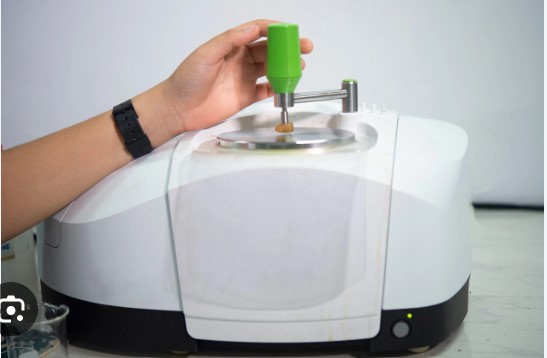
Introduction
FTIR analysis equipment is an essential component in modern laboratories for studying the molecular composition and chemical structure of materials. FTIR, or Fourier Transform Infrared spectroscopy, provides precise identification of functional groups, chemical bonds, and molecular interactions. Its versatility, speed, and accuracy make it indispensable for research, quality control, and industrial applications.
Industries such as pharmaceuticals, polymers, chemicals, environmental science, and food manufacturing rely on FTIR analysis equipment for material verification, quality assurance, and compliance with regulatory standards.
Principle of FTIR Analysis
FTIR analysis equipment works by measuring how a sample absorbs infrared light at specific wavelengths. Each type of chemical bond absorbs light at characteristic frequencies, producing a unique spectral “fingerprint” for the material.
The process generally involves:
- Emission of a broadband infrared light toward the sample.
- Absorption of specific wavelengths by molecules in the sample.
- Detection of transmitted or reflected light.
- Fourier Transform algorithms convert the raw interferogram data into a readable spectrum.
- Analysis of the spectrum to identify chemical bonds, functional groups, and material composition.
FTIR spectroscopy enables both qualitative and quantitative analysis, making it a versatile tool for laboratories.
Key Components of FTIR Analysis Equipment
Infrared Light Source
Provides a broad range of IR wavelengths for interaction with the sample.
Interferometer
Splits and recombines the light beam to produce an interference pattern, which is converted into a spectrum using Fourier Transform algorithms.
Sample Holder
Accommodates solids, liquids, or gases depending on the type of analysis required.
Detector
Captures the light after interaction with the sample and converts it into electronic signals for processing.
Software System
Facilitates data acquisition, spectrum analysis, library comparison, quantitative calculations, and report generation.
Applications of FTIR Analysis Equipment
Pharmaceutical Industry
Used to identify raw materials, monitor chemical reactions, and ensure the composition of finished products meets regulatory requirements.
Polymer and Plastics Industry
Helps analyze polymer composition, detect impurities, monitor chemical reactions, and verify product quality.
Environmental Analysis
Detects pollutants, organic compounds, and hazardous chemicals in air, water, and soil samples, supporting environmental monitoring and compliance.
Chemical Research and Development
FTIR analysis equipment is used for studying molecular structures, reaction mechanisms, and chemical interactions, aiding in the development of new compounds and materials.
Food and Beverage Industry
Used to verify food authenticity, detect adulteration, and monitor chemical composition to ensure safety and quality.
Advantages of FTIR Analysis Equipment
- Non-destructive analysis: Preserves samples for further testing.
- Rapid and efficient: Fast spectral acquisition reduces analysis time.
- Versatile: Capable of analyzing solids, liquids, and gases.
- Accurate and reproducible: Provides consistent and reliable results.
- Minimal sample preparation: Saves time and simplifies laboratory workflows.
Maintenance and Operational Tips
To maintain optimal performance:
- Clean optical components regularly to prevent dust and contamination.
- Ensure proper calibration using standard reference materials.
- Inspect and maintain the infrared light source and detector periodically.
- Store samples correctly to avoid degradation or contamination.
- Maintain stable laboratory conditions with controlled temperature and humidity.
Routine maintenance ensures the longevity and accuracy of FTIR analysis equipment.
Future Trends
FTIR analysis equipment continues ftir analysis equipment to advance with automation, digital integration, cloud-based data storage, and high-throughput capabilities. Modern systems support real-time monitoring, remote data access, and intelligent spectrum analysis, enhancing laboratory efficiency and reducing human error.
As technology evolves, FTIR analysis equipment will remain a cornerstone for rapid, accurate, and versatile chemical and material analysis across industries.
Conclusion
FTIR analysis equipment offers laboratories a precise, efficient, and versatile solution for material and chemical testing. Its high sensitivity, non-destructive nature, and minimal sample preparation make it ideal for pharmaceuticals, polymers, chemicals, environmental monitoring, and food safety applications.
By providing accurate and reproducible results, FTIR analysis equipment supports regulatory compliance, quality assurance, and scientific research, making it an indispensable tool in modern laboratories.
Frequently Asked Questions
What is FTIR analysis equipment used for?
It is used to study molecular composition, identify chemical bonds, and analyze materials across various industries.
Can it analyze different types of samples?
Yes, FTIR equipment can handle solids, liquids, and gases with minimal preparation.
How does FTIR compare to traditional IR spectroscopy?
FTIR uses Fourier Transform technology for faster acquisition, higher resolution, and improved sensitivity.
Is FTIR suitable for environmental monitoring?
Yes, it is commonly used to detect pollutants and hazardous chemicals in air, water, and soil.
Which industries benefit most from FTIR analysis equipment?
Pharmaceuticals, polymers, chemicals, food and beverage, environmental testing, and research laboratories.