
Maintaining product appearance over time can be challenging when materials are exposed to sunlight. Fading, discoloration, and surface changes may affect customer perception as well as product performance. Laboratory light exposure testing can help manufacturers investigate these issues before products are released.
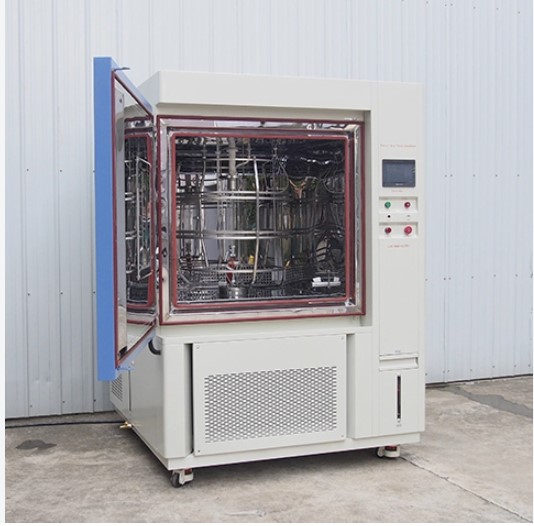
The LIB industry Xenon Light Fastness Chamber offers a controlled testing environment for studying the effects of xenon light exposure. By using defined laboratory conditions, researchers can compare different materials and formulations more systematically.
Why Light Exposure Should Be Considered Early
Material selection is often one of the earliest stages of product development.
A material may meet mechanical or cost requirements but still perform poorly when exposed to light. If this weakness is discovered late in development, changing the material may require additional design work.
Light fastness testing can provide information earlier and support more informed material selection.
What Can Happen During Light Exposure?
The effects of light vary from one material to another.
Pigments and dyes can lose their original appearance. Plastics may undergo color changes or surface deterioration. Coatings can change in gloss or appearance.
The exact response depends on composition, exposure conditions, protective additives, and intended application.
Controlled Testing Versus Outdoor Exposure
Outdoor exposure provides real-world environmental information but can be difficult to reproduce exactly.
A laboratory xenon chamber allows researchers to establish controlled conditions and repeat tests using similar exposure programs.
This can be especially useful when comparing several formulations.
Preparing Materials for Testing
Good specimen preparation is essential.
Samples should be clean, correctly sized, clearly identified, and prepared using consistent procedures.
If different samples are prepared differently, the results may reflect preparation differences rather than actual material performance.
Establishing Evaluation Criteria
Before testing begins, researchers should decide what changes they will measure.
For a textile, this could involve color change. For a coating, it could include gloss, cracking, or surface appearance.
For a plastic component, researchers may investigate color and selected physical properties.
Defining the evaluation criteria in advance makes the testing process more focused.
Using Control and Reference Samples
Reference samples provide an important baseline.
An unexposed sample can be stored under suitable conditions and compared with exposed specimens after testing.
For development programs involving multiple formulations, reference materials can also provide a consistent comparison point.
Benefits for Manufacturers
Controlled light testing can help manufacturers identify promising materials and eliminate weaker options.
It can also support formulation improvements. If a particular material changes significantly under exposure, engineers can investigate alternative pigments, additives, coatings, or production methods.
Testing therefore becomes part of an iterative product-development process.
Choosing Laboratory Equipment
Equipment should be selected according to the laboratory's testing objectives.
Consider the types and sizes of specimens, number of samples, desired exposure conditions, control capabilities, and expected workload.
The laboratory should also review maintenance requirements and technical support options because equipment performance needs to remain consistent over time.
Monitoring and Maintenance
A controlled light exposure program depends on reliable equipment.
Light sources should be monitored and maintained appropriately. Sensors and environmental controls should also be checked.
Laboratories should establish procedures for recording equipment maintenance, calibration, and other relevant activities.
For organizations evaluating laboratory systems for controlled xenon exposure, LIB industry Xenon Light Fastness Chamber can serve as a reference point when researching suitable testing equipment.
Frequently Asked Questions
1. Why test a material before commercial production?
Testing can reveal potential light-related deterioration while the product is still being developed. This may give engineers an opportunity to modify materials or formulations before large-scale production.
2. What is usually evaluated after xenon exposure?
Depending on the material, researchers may evaluate color, gloss, surface condition, cracking, or selected physical properties.
3. Can the same exposure program be used for every product?
No. Test conditions should be selected according to the material, intended application, testing objective, and relevant procedure.
Conclusion
Controlled xenon light testing can provide valuable information during material selection and product development. It allows manufacturers to study light-related changes under defined conditions and compare different samples using consistent procedures.
A successful testing program requires careful specimen preparation, appropriate exposure settings, reliable measurements, reference samples, and regular equipment maintenance. When these elements are managed together, light fastness testing can help manufacturers better understand material behavior and improve product-development decisions.