
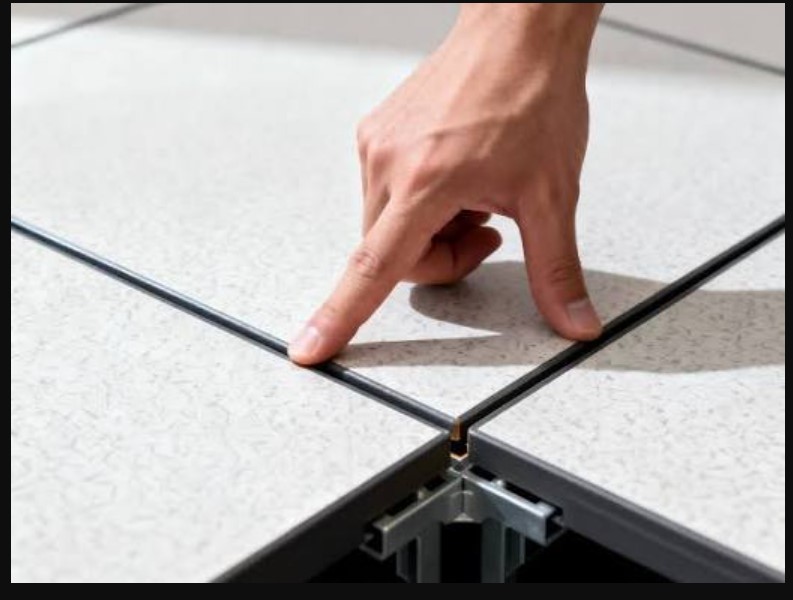
Raised flooring systems provide a practical way to manage electrical wiring, data connections, and other services beneath a finished floor. They are used in commercial offices, data centers, technical rooms, and other facilities where access to concealed infrastructure is important.
Manufacturing these systems requires a coordinated approach to material selection, panel fabrication, cutting, finishing, and inspection. Equipment decisions can influence production speed, dimensional accuracy, material waste, and the consistency of the final product.
The Basics of Raised Floor Production
A raised floor typically consists of removable panels supported above the building's structural floor. Pedestals and related support components create an accessible space for building services.
Panel designs vary according to the intended application. Some are developed for general commercial use, while others must meet more demanding requirements for load capacity, surface durability, or technical environments.
Production equipment must be suitable for the panel's construction and the specifications required by the customer.
Key Manufacturing Stages
Material Preparation
The process begins with raw materials that may include sheet metal, core materials, adhesives, and surface finishes. Materials should be checked for damage, thickness variation, and compliance with the relevant specifications.
Correct storage and handling reduce the risk of defects before production begins.
Panel Cutting and Shaping
Cutting establishes the panel's dimensions and may also create openings or other required shapes. Accuracy is important because finished panels must fit the intended support grid and meet the product design.
Tooling and operating parameters should be matched to the material. Poorly controlled cutting can cause rough edges, surface damage, or dimensional variation.
Finishing and Inspection
Depending on the design, panels may require edge treatment, coating, cleaning, or other finishing operations. Final inspection should verify dimensions and the characteristics relevant to the product's intended use.
The acceptance criteria should be documented so that production and quality teams apply the same standards.
Selecting Appropriate Production Equipment
Manufacturers researching raised floor production equipment should consider the complete manufacturing workflow rather than evaluating individual machines in isolation.
Equipment should fit the material types, panel sizes, expected output, available utilities, and layout of the facility.
Match Equipment to Product Design
A machine should be capable of processing the panel construction used in production. Metal-faced panels, composite structures, and other designs may require different cutting approaches and handling arrangements.
Manufacturers should provide detailed product information when requesting quotations and, where practical, test representative materials.
Estimate Production Capacity
Capacity planning should consider the number of panels required per shift, setup time, inspection needs, and the time required for material movement.
A machine's maximum rated speed does not necessarily equal practical production output. Downtime, rework, loading, and finishing can all influence the number of acceptable panels completed.
Review Automation Options
Automation may reduce repetitive handling and help maintain consistent settings. However, its value depends on production volume, product variety, staffing, and integration requirements.
Manufacturers should compare the expected productivity benefits with installation costs, training needs, maintenance, and the complexity of future changes.
Improving Quality and Reducing Waste
Establish Clear Tolerances
Dimensional requirements should be defined before production begins. Measurement methods and inspection frequency should be suitable for the required tolerances.
Clear criteria help teams distinguish acceptable variation from defects that require corrective action.
Monitor Common Defects
Manufacturers should track issues such as chipped finishes, rough edges, dimensional errors, and damaged corners. Reviewing defect patterns can help identify problems with tooling, material quality, setup, or handling.
Corrective actions should address the cause of the problem rather than simply increasing final inspection.
Optimize Material Use
Cutting plans can be organized to reduce offcuts while maintaining the required panel dimensions. Accurate material identification also helps prevent incorrect settings and unnecessary scrapping.
Waste figures should be reviewed regularly to determine whether process changes are delivering measurable improvements.
Maintenance and Production Continuity
Equipment reliability is important because a breakdown at one stage can affect the entire manufacturing line. Preventive maintenance should include the components identified by the equipment supplier, such as cutting tools, guides, clamps, sensors, and safety devices.
Operators should report unusual vibration, noise, or changes in cutting quality promptly. Early investigation may prevent a minor issue from causing a larger production interruption.
Spare-part availability and access to technical support should be considered when selecting equipment.
Safety and Workplace Organization
Manufacturing facilities should assess risks associated with cutting tools, moving machinery, sharp panel edges, dust, and heavy materials. Appropriate guarding, emergency stops, training, and safe material-handling methods should be established.
Organizing the work area into clearly identified zones for incoming materials, active production, finished goods, and rejected items can reduce confusion and improve movement through the facility.
Frequently Asked Questions
1. What influences the selection of raised floor manufacturing equipment?
Important factors include panel construction, dimensions, required tolerances, production volume, available space, safety requirements, and maintenance support.
2. Can automation eliminate the need for quality inspection?
No. Automation may improve repeatability, but inspection remains necessary to verify that products meet the agreed specifications.
3. How can a factory improve production continuity?
Preventive maintenance, staff training, spare-part planning, standardized procedures, and early identification of defects can reduce avoidable interruptions.
Conclusion
Raised floor manufacturing requires equipment that supports the panel design, production target, and required quality standards. By planning capacity, controlling cutting operations, organizing material flow, and maintaining machinery, manufacturers can improve production efficiency and deliver more consistent flooring components.