
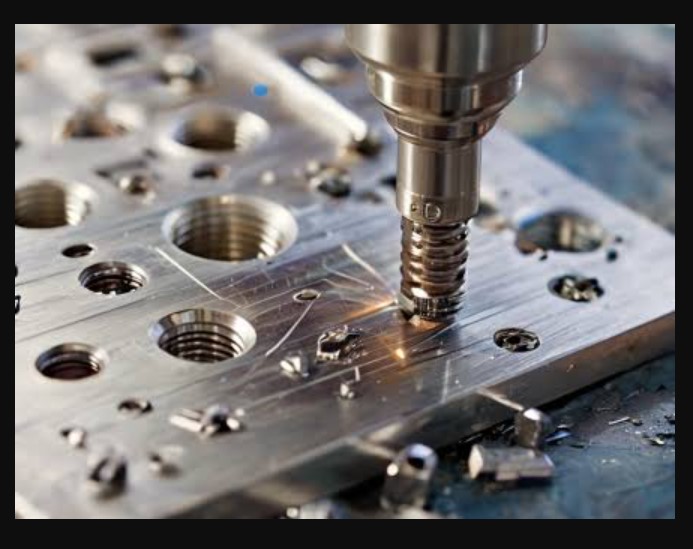
Broken taps can create costly problems in machining and manufacturing. A tap that fractures inside a threaded hole may leave a hardened fragment that is difficult to remove using conventional drilling methods. If removal damages the surrounding threads or workpiece, the component may require extensive rework or replacement.
Electrical discharge machining, commonly known as EDM, offers an alternative approach for selected broken-tool removal tasks.
Understanding the Broken Tap Problem
Taps are used to create internal threads in drilled holes. They may break because of excessive torque, unsuitable cutting conditions, poor lubrication, incorrect alignment, tool wear, or material-related challenges.
When a tap fractures inside a component, its hardened material can make ordinary drilling difficult. Attempts to force the fragment out may damage the hole or compromise the surrounding material.
Why Conventional Removal Can Be Difficult
Broken tap fragments may have irregular edges and remain tightly engaged with the workpiece. Conventional drill bits may struggle to cut the tool material effectively, especially when the fragment is made from a hard tool steel.
The correct removal approach depends on the tap size, fracture location, workpiece material, hole geometry, and value of the component.
How EDM Removes a Broken Tap
Electrical discharge machining removes electrically conductive material through controlled electrical discharges between an electrode and the workpiece. The process does not rely on conventional cutting edges in the same way as drilling or milling.
For broken tap removal, the EDM system is positioned to erode the unwanted fragment while aiming to preserve the surrounding workpiece. Successful removal depends on accurate positioning, suitable electrical parameters, and proper control of the process.
Precision and Access
The electrode must reach the broken tool without causing unacceptable damage to the surrounding material. Small holes and complex components may require careful setup and specialized electrodes.
Workpiece Conductivity
EDM generally requires electrically conductive workpiece material. The suitability of a particular component should be confirmed before the process begins.
Process Control
Electrical settings, electrode dimensions, flushing conditions, and the geometry of the broken fragment can affect removal time and accuracy. Operators should follow the machine's procedures and inspect the workpiece after removal.
Benefits for Maintenance and Production
A broken tap does not always mean that the entire component must be discarded. Where conditions are suitable, EDM removal may help preserve expensive workpieces and reduce the need for replacement.
Protecting the Existing Thread
The objective is to remove the broken tool while retaining as much of the original thread as possible. The result should be inspected to confirm that the hole remains suitable for its intended fastener and application.
Reducing Component Waste
Saving a workpiece can reduce material waste and avoid repeating earlier manufacturing operations. The economic benefit depends on the component's value, removal time, inspection requirements, and likelihood of successful recovery.
Supporting Repair Operations
Portable EDM equipment may be useful when the workpiece is large, difficult to move, or installed in a location where conventional machine access is limited. Practical suitability depends on the equipment's dimensions, power requirements, and access to the broken fragment.
Choosing an EDM Broken Tap Remover
Buyers should evaluate the machine's power rating, supported tap sizes, electrode options, working range, and operating requirements. The advertised power rating alone does not establish removal speed or suitability for every broken tool.
It is also important to understand the machine's cooling arrangements, electrical supply, setup procedure, and availability of replacement components.
For product research, Clyertek portable EDM broken tap remover is a relevant reference for evaluating portable equipment designed for this type of maintenance task. Confirm the supported workpiece materials, electrode requirements, operating parameters, and current technical specifications before purchasing.
Operator Safety and Quality Inspection
EDM equipment must be operated according to its instructions and the hazards identified in the workplace risk assessment. Electrical safety, workpiece stability, suitable fluid handling where applicable, and protection against process-related hazards should all be considered.
After removal, inspect the hole for remaining fragments, thread damage, and dimensional conformity. Depending on the component, inspection may include visual examination, thread gauging, or additional testing required by the engineering specification.
Frequently Asked Questions
1. Can EDM remove a broken tap without damaging the workpiece?
It can remove suitable fragments while helping preserve the surrounding material, but the result depends on setup, material, fragment geometry, and operator control. Inspection is still necessary.
2. Can an EDM machine work on every material?
EDM generally requires electrically conductive materials. The equipment's capabilities and the workpiece material should be verified before use.
3. What should buyers check before selecting a portable unit?
They should review power requirements, supported tap sizes, electrode options, working access, operating procedures, safety provisions, and after-sales support.
Conclusion
Broken taps can threaten component quality and increase machining costs, but suitable EDM equipment may offer a practical recovery method. Careful machine selection, controlled removal, and post-process inspection help determine whether the original workpiece can be retained. Evaluating the specific fragment, workpiece material, and access conditions is essential before choosing an EDM solution.