
A Primary 5 student sits down with last year's SMOPS paper for the first time and stalls on the second question. It is not a hard concept. It is simply a type of question the school syllabus never covers.
That gap is the whole story behind SMOPS preparation. The Singapore Mathematical Olympiad for Primary Schools, organised by Hwa Chong Institution since 1990, tests non-routine problem solving rather than syllabus recall, and the awards reflect how demanding that is: a Platinum certificate goes to roughly the top 1.5 percent of participants, based on the competition's own published scoring bands. Math Olympiad training exists specifically to close that gap, by giving students structured, repeated exposure to the kind of reasoning SMOPS actually rewards, well before exam day arrives.
What Is SMOPS, Exactly?
SMOPS began in 1990 as a local primary school competition. In 2002, it was renamed the Asia-Pacific Mathematical Olympiad for Primary Schools, or APMOPS, once the event expanded to include overseas centres across the region. Today, "SMOPS" is still commonly used to describe the Singapore leg of the competition, which feeds into the wider APMOPS Invitation Round.
The competition runs in two stages. Round 1 is set in early April, either at local schools or at overseas partner centres, with no penalty for wrong or blank answers. The strongest scorers from Round 1 then advance to an Invitation Round hosted at Hwa Chong Institution later in the school term.
Primary 6 students are the main eligible group, and Singapore schools can also register a number of Primary 5 students each year, usually sitting a Junior SMOPS paper that uses the same question format.
Why Doesn't School Math Alone Prepare a Child for This?
Regular school math tests reward accurate application of taught methods. A student sees a question type, recalls the method, and applies it correctly under time pressure. SMOPS works differently. Its questions are designed to be unfamiliar, so a student who has only practised standard school problems often has no obvious starting point.
This is a genuine skills gap, not a motivation problem. A student can be excellent at school math and still find a SMOPS paper confusing on the first attempt, simply because the two are testing different things.
What Does Math Olympiad Training Actually Add?
Structured Math Olympiad training gives students repeated, guided exposure to the problem types SMOPS and similar competitions use, including number theory, combinatorics and less conventional geometry questions. The point is not to memorise more formulas. It is to practise recognising an unfamiliar problem and working through it methodically, which is closer to what SMOPS actually tests.
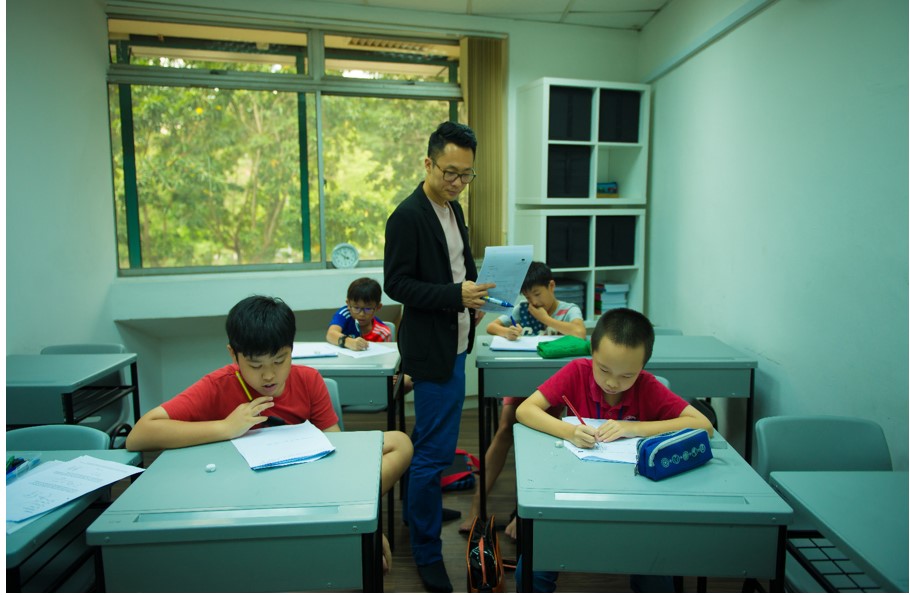
Enrichment providers such as The Math Classroom, a competition math and Olympiad training centre in Singapore, run Math Olympiad Training programmes built around exactly this kind of non-routine practice, rather than simply repeating school-level questions at a faster pace.
Training also builds familiarity with the exam format itself. Since SMOPS carries no penalty for wrong answers, students benefit from learning when it is worth attempting a partial solution rather than leaving a question blank, a strategy that rarely comes up in school tests.
A Realistic Timeline Before the April Papers
Preparation tends to work better spread out than rushed. A reasonable sequence looks like this.
Primary 4 to early Primary 5. Introduce non-routine problem types gradually, without pressure, so the format feels less unfamiliar later.
Mid Primary 5. Sit a recognised competition or two, so a student has direct experience of timed, non-routine papers before SMOPS itself.
Term 1 of the SMOPS year. Focus practice on past papers and the specific topics the competition tends to cover, since registration typically happens through the school in the months leading up to the April sitting.
Schools confirm SMOPS and Junior SMOPS registration details directly, so checking with the teacher-in-charge each year remains the most reliable way to get exact dates.
Where SMOPS Fits Into the Bigger Picture
A strong SMOPS result is not just a certificate. Students who do well in Round 1 go on to the APMOPS Invitation Round, and a track record across recognised competitions like SMOPS is one of several factors some secondary schools consider during Direct School Admission exercises. It is one input among several rather than a guaranteed pathway, but it is a meaningful one for families already weighing up Olympiad training.
Quick Answers
At what age should a child start SMOPS-style training?
Many families begin gentle exposure to non-routine problems around Primary 4, then increase intensity closer to Primary 5, when SMOPS eligibility opens up.
Is a weak Round 1 score a bad sign?
Not necessarily. Round 1 is intentionally difficult and designed to separate a small top band, so most participants will not advance to the Invitation Round, and a first attempt is often more about gaining exposure than final results.
What is the difference between SMOPS and APMOPS today?
They are effectively the same competition. SMOPS generally refers to the Singapore round, while APMOPS is the full name used once overseas centres and the Invitation Round are included.
Does an SMOPS award guarantee a DSA place?
No. It is one factor schools may consider alongside school grades and a school's own DSA test, but it is not a guaranteed outcome on its own.