
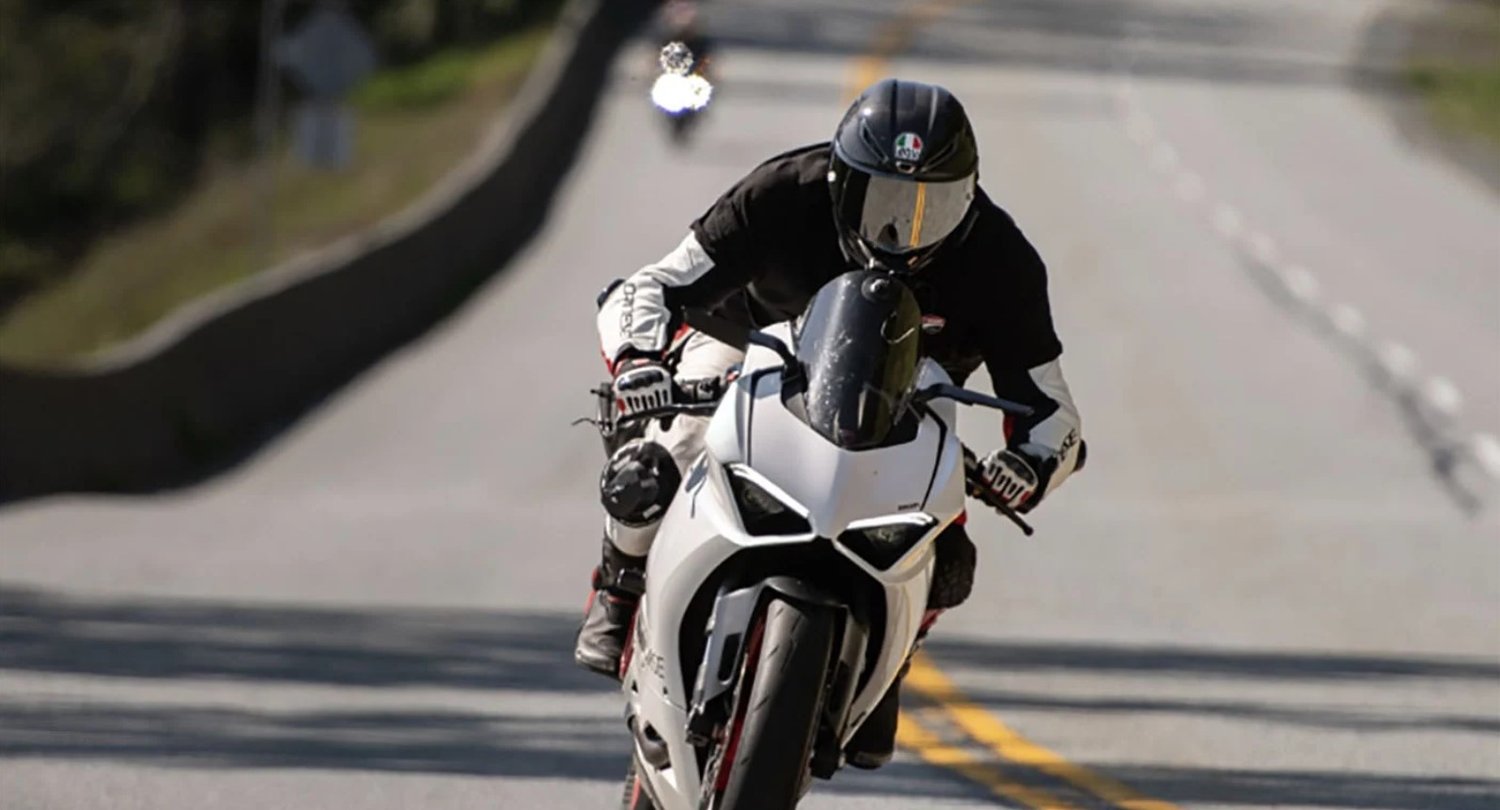
There is a particular kind of motorcycle that has always captured the imagination: the supersport. With its full fairing, low bars and racing pedigree, it looks fast even when it is parked, and for many riders it is the dream machine. The trouble has always been that genuine supersport bikes are demanding, expensive and often too much for everyday roads. That is why the arrival of a smaller, more approachable 450cc supersport motorcycle matters: it brings the look and much of the feeling of a full-size supersport within reach of ordinary riders.
The appeal of the supersport shape is easy to understand. A full fairing protects the rider from the wind, the low bars put weight over the front wheel, and the whole machine feels purposeful in a way that a naked bike does not. For riders who grew up watching racing, that shape carries an emotional charge. The question has always been whether a bike can look like that and still be sensible to own — and in the smaller classes, the answer is increasingly yes.
What Makes a Supersport Different
The defining feature of a supersport is its riding position. The bars are low, the pegs are high and the rider leans forward over the tank, and that position gives the rider precise control over the front of the bike. It also puts more weight on the front wheel, which is what makes a supersport feel so planted in corners. The trade-off is comfort: the position is demanding on long journeys. For shorter rides and weekend blasts, though, it is hard to beat.
The engine in a small supersport is designed to be used, not admired from a distance. Where a large machine makes its power in a way that can only be explored on a circuit, a smaller engine can be ridden hard on ordinary roads, through the gears and into the upper reaches of the rev range, without breaking every speed limit in the book. That is the secret of the class: it lets the rider use the whole machine, and using the whole machine is what makes riding fun.
Handling is where a small supersport earns its keep. A light chassis, good suspension and sticky tyres add up to a bike that changes direction eagerly and holds its line through corners with confidence. The best machines in the class feel as though they are reading the rider's mind, responding to the smallest inputs with precision. That quality matters far more than outright speed, because a bike that corners well is a bike that gets ridden often.
Living With a Supersport Every Day
Owning a supersport does not have to mean owning a garage ornament. Used regularly, a small supersport is cheap to run, easy to park and narrow enough for city traffic. The fairing keeps the worst of the wind and rain off the rider, which makes it a surprisingly practical choice for commuting in poor weather. A tail pack or a small tank bag adds enough carrying capacity for daily use, and the fuel consumption of a small engine is modest by any standard.
The main compromise is comfort on longer journeys. The committed riding position suits a couple of hours in the saddle, but a full day on motorways can leave wrists and a neck aching. Riders who plan longer trips usually fit a taller screen, a more padded seat or bar risers, and those small changes make a real difference. It is worth being honest about how the bike will be used.
Taking a Supersport to the Track
The circuit is where a supersport finally gets to show what it can do. On a track, the fairing, the riding position and the chassis all make sense at once, and a rider who has only ever used the bike on the road will discover a new level of performance. Track days are also the safest place to learn the limits of the machine, because there is no traffic, no speed cameras and plenty of run-off. Many owners say that a single track day teaches them more about their bike than a year of road riding.
For a first track day, the preparation is simple: check the bike over, fit fresh tyres if needed, tape the mirrors and lights, and bring basic tools and spares. Most organisers offer instruction for newcomers, and taking it up is the fastest way to learn the circuit and the etiquette that goes with it. The goal is not a lap time but a smooth, safe day and a bike that comes home in one piece, ready for the next outing.
Frequently Asked Questions
1. Is a supersport comfortable enough for daily riding?
For shorter journeys, yes. The riding position is committed, but a small supersport is light, narrow and easy to manage in traffic, and the fairing offers useful weather protection. For long motorway commutes, it can be tiring, so a proper test ride is essential. Many owners commute happily on theirs, especially with a taller screen and a more padded seat fitted.
2. Are supersport bikes expensive to insure?
Insurance depends on the rider, the area and the machine, but smaller supersports generally cost far less to insure than large ones. A clean licence, secure storage and an approved lock all help to keep premiums down. It is worth getting quotes before you buy, because the difference between two similar machines can be surprising.
3. Can a beginner ride a supersport?
A small supersport can be a good choice for a careful beginner who takes training seriously, because it teaches good habits and is forgiving of mistakes. A large supersport is a poor first bike. Start with a smaller machine, build your skills gradually, and move up when you are ready. The bigger bikes will still be there.
Conclusion
A small supersport offers the look, the sound and much of the feeling of a racing machine, in a package that ordinary riders can afford, insure and actually enjoy. It is a bike that rewards the rider who uses it properly, on the road and on the track, and it proves that you do not need a huge engine to have a huge amount of fun. For riders who have always wanted a proper supersport, the smaller class is the place to start.