
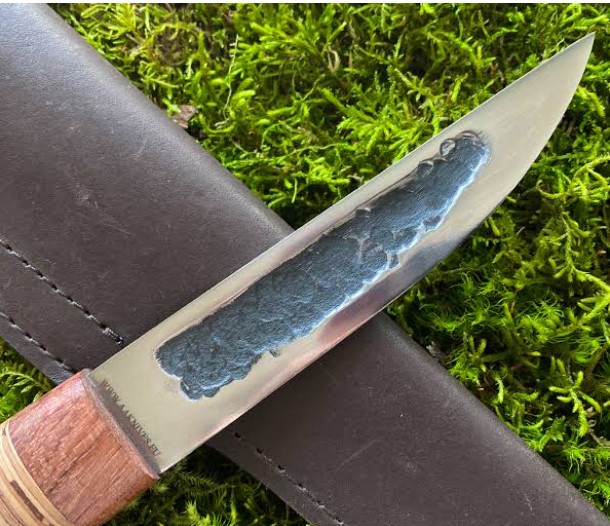
Yakut knife is a traditional knife associated with the Sakha people of northeastern Siberia. It has been used for many generations as a practical everyday tool. Its distinctive blade shape and simple construction developed in response to the environment, lifestyle, and needs of people living in a region known for its long, cold winters.
The history of the Yakut knife is closely connected with the traditional life of the Sakha people. Knives were needed for many different tasks, including woodworking, preparing food, hunting, working with animal hides, and other household activities. Because a single knife could be used for many purposes, practicality was an important part of its design.
One of the most recognizable features of the Yakut knife is its asymmetrical blade. Traditionally, one side of the blade is relatively flat, while the other side has a noticeable convex shape. This unusual design helps make the knife effective for cutting and shaping different materials. The exact shape and proportions can vary depending on the craftsman and the intended use.
Traditional Yakut knives were generally made from iron or steel, while the handles were made from locally available materials such as wood, bone, or antler. The handle was designed to provide a secure grip, even when working in cold conditions. Some traditional knives also had simple sheaths made from wood, leather, or other natural materials.
Over time, the methods used to make Yakut knives changed. Traditional blacksmithing techniques involved heating metal and shaping it with a hammer. Modern craftsmen may use contemporary steels and tools, but many continue to preserve the characteristic blade shape and traditional appearance of the knife.
The Yakut knife was not simply a weapon. Its main importance came from its usefulness as a working tool. In the harsh Siberian environment, having a reliable knife was especially valuable because it could be used for numerous everyday tasks.
Today, the Yakut knife remains an important part of Sakha cultural heritage. Traditional craftsmen continue to produce knives using both historical methods and modern techniques. The knife is also appreciated by collectors and outdoor enthusiasts because of its distinctive design and practical character.
In conclusion, the history of the Yakut knife reflects the close relationship between traditional craftsmanship and the environment of the Sakha people. Its unusual blade, practical construction, and versatility developed from everyday needs in northeastern Siberia. Although modern versions may differ from historical examples, Yakut knife for sale continues to preserve an important part of Sakha craftsmanship and cultural tradition.