
Forgot Your Crochet Hook Size? How to Restart That WIP
You find a half-finished crochet blanket, remember how much you liked the colors, and decide today is its day.
Then comes the question: which hook were you using?
The project bag contains yarn, scissors, and absolutely no useful witnesses. Before unraveling anything, try this approach.
Look for clues before guessing
Check the pattern, handwritten notes, and progress photos. You might have photographed the hook beside your work without realizing you were leaving yourself evidence.
The pattern’s suggested hook is a starting point, but you may have changed sizes. Handle color alone isn’t dependable across different hook brands.
Let the existing fabric become your reference
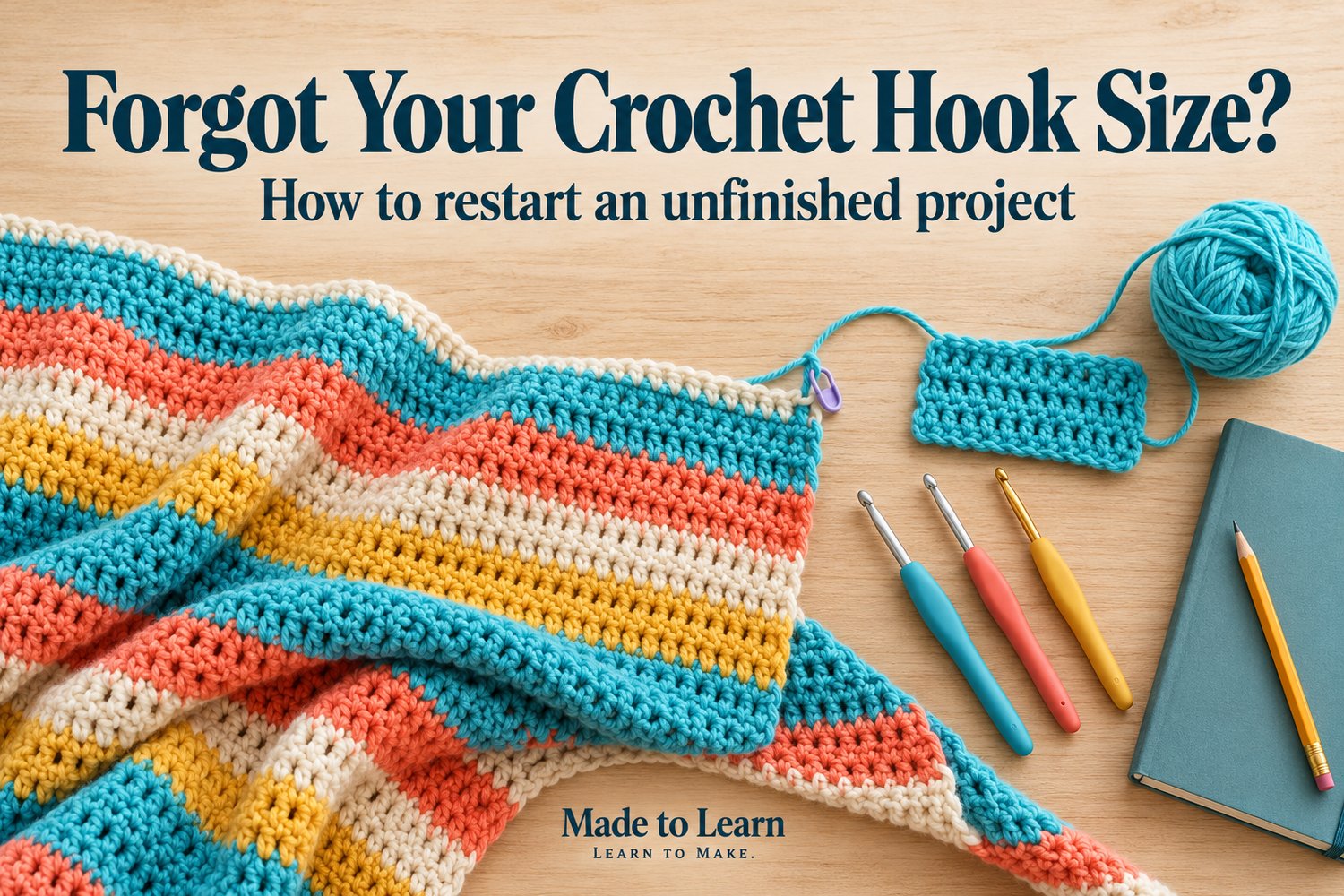
For a project worked in a repeating stitch pattern, lay the fabric flat without stretching it. Away from the edges, count the stitches across four inches and the rows over four inches. This is your existing gauge: how much space those stitches occupy.
Using the same yarn and stitch pattern, make a separate swatch with your most likely hook. Make it larger than four inches so you can measure the middle.
Compare it with the original fabric:
- More stitches across four inches: Your new stitches are smaller. Try a larger hook.
- Fewer stitches across four inches: Your new stitches are larger. Try a smaller hook.
Check row height and how the fabric feels, too. Matching stitch width alone may leave a noticeable change in texture or length.
If the original has already been washed or blocked, treat the sample the same way before comparing. You’re trying to match fabric in the same condition.
Restart with a small checkpoint
Once you have a close match, identify your place in the pattern and check the stitch count before continuing.
Mark where you restart, then work a few rows and inspect the transition. Is the width staying consistent? Do the stitches look and feel similar?
Your tension can change over time, so even finding the original hook size doesn’t guarantee identical fabric. A short trial gives you a chance to adjust before adding another evening’s worth of work.
Leave Future You a useful note
Before putting the project away again, record the hook size in millimeters, its brand, the yarn, and the last completed row or round. Add any changes you made to the pattern.
A photo showing the project and readable hook size makes a handy backup. Secure the working loop with a locking stitch marker.
My Made to Learn Crochet Project Planner includes pages for swatches, gauge, row and round counting, and reflection. Use those pages to keep your successful sample details and restart point together, so the next session begins with crocheting.
One mystery solved. One project moving again.
Made to Learn. Learn to Make.