
Glue Basting vs. Thread Basting EPP: Which Should You Use?
You have your paper shapes, your carefully chosen fabric and a cup of something you will absolutely forget to drink while it is warm. Now you must decide: should you glue baste or thread baste your English paper piecing?
Here is the teacher answer: choose the method that fits the assignment. Neither one earns extra credit.
Choose glue basting when you want speed
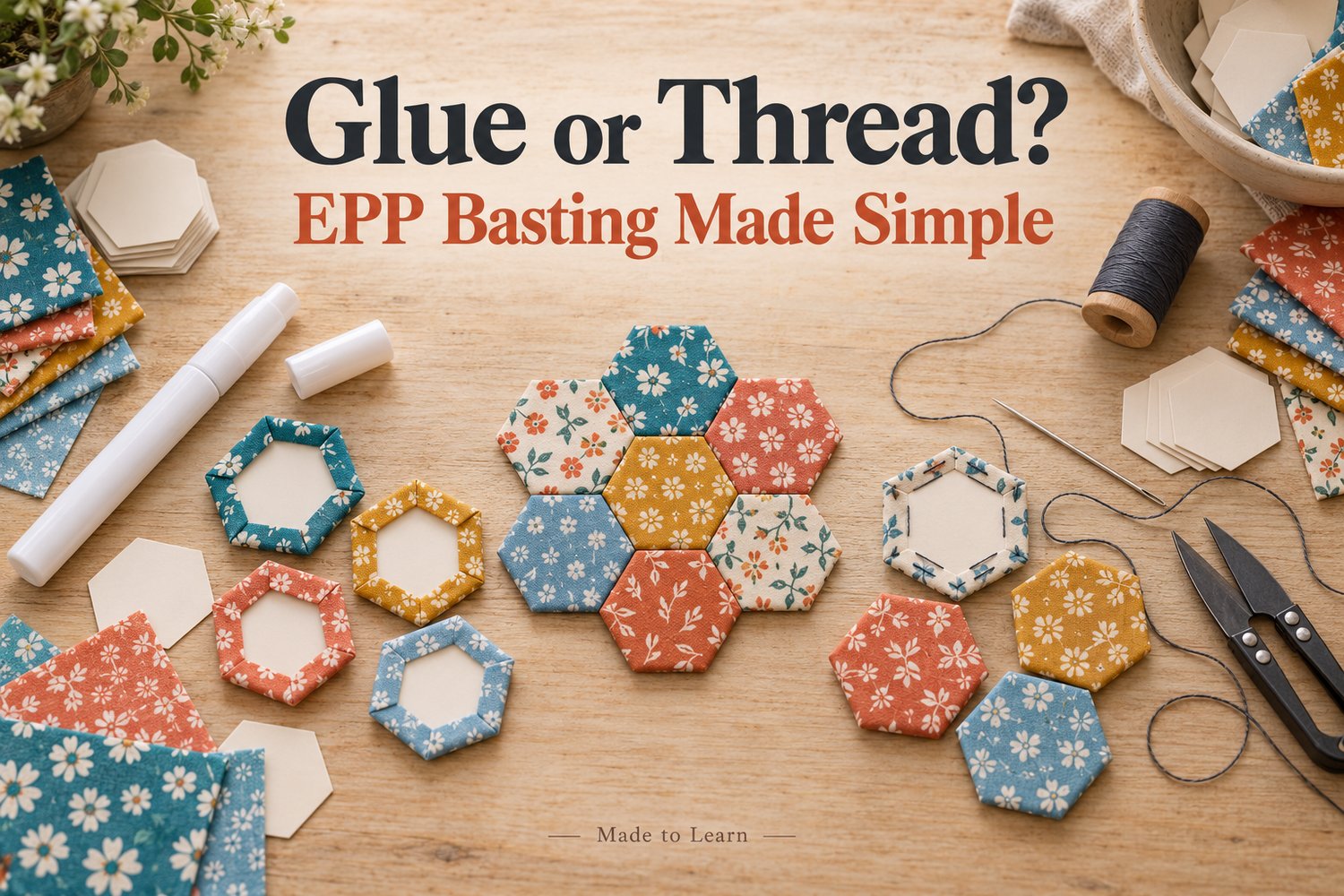
Glue basting is usually the quickest way to prepare a stack of EPP pieces. Use a fabric-safe, water-soluble glue pen and apply one light swipe near the edge of the paper—not all over the fabric.
Fold the seam allowance over the paper one side at a time, pressing each edge into place. Use only enough glue to hold it. Too much can make the fabric stiff and turn paper removal into a tiny wrestling match.
Glue basting is especially useful for:
- Small or awkward shapes
- Fussy-cut motifs that need precise placement
- Preparing many pieces quickly
- Beginners who want to start sewing sooner
Choose thread basting when you want easy paper removal
Thread basting takes longer, but it uses supplies you probably already own. Fold the seam allowance around the paper and secure the folds with large temporary stitches or small tacking stitches at the corners.
If you tack only through the folded fabric—not through the paper—you can often remove and reuse the template without cutting the basting stitches.
Thread basting works well for:
- Larger, simple shapes
- Reusable paper templates
- Long-term projects
- Makers who enjoy the preparation as part of the slow-stitching process
Try the hybrid method
Still undecided? Place one tiny dot of washable glue in the center to keep the paper from sliding, then thread baste the edges. This is wonderfully practical and requires no lifelong pledge of loyalty to Team Glue or Team Thread.
Whichever method you choose, keep the fabric snug rather than stretched. Remove a paper only after every edge of that piece has been sewn to a neighboring piece.
The Made to Learn EPP Templates Pack gives you ready-to-use shapes for practicing both methods. Try several pieces each way, label your samples and choose the method that feels easiest in your hands.
There is no single correct way to prepare EPP. There is only the method that helps you relax, keep stitching and Learn to Make.