
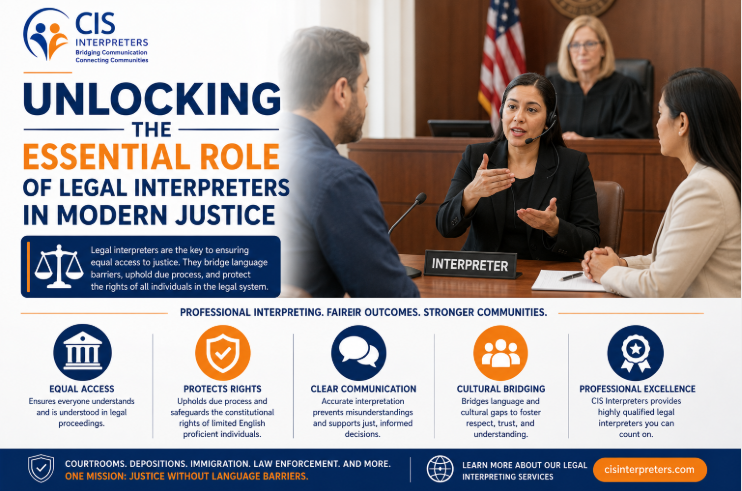
In today’s increasingly interconnected world, legal systems frequently interact with individuals from diverse linguistic and cultural backgrounds. This growing diversity has made the role of legal interpreters more important than ever. These professionals help bridge language gaps in courts, law firms, immigration offices, and other legal environments, ensuring that justice remains fair and accessible to everyone.
Without accurate interpretation, misunderstandings can occur that may directly impact legal outcomes. Legal interpreters help maintain clear communication, protect legal rights, and support the integrity of judicial proceedings.
The Importance of Accurate Legal Communication
Clear communication is the foundation of every legal process. In legal settings, even a small misunderstanding can lead to serious consequences. Legal interpreters ensure that all parties involved fully understand the proceedings, regardless of the language they speak.
Preventing Misunderstandings
Legal terminology is often complex and highly specific. Interpreters must accurately translate legal concepts, statements, and courtroom discussions so that nothing is misunderstood or misrepresented. Their work helps prevent confusion that could negatively affect a case.
Supporting Equal Access to Justice
Every individual deserves fair treatment under the law. Legal interpreters make it possible for non-native speakers to understand their rights, responsibilities, and legal options. This support ensures equal participation in legal proceedings and reinforces fairness within the justice system.
The Role of Legal Interpreters in Fair Trials
Fair trials depend on accurate and complete communication between judges, attorneys, defendants, witnesses, and juries. Legal interpreters play a vital role in ensuring this communication remains precise and unbiased.
Assisting Defendants and Witnesses
Defendants and witnesses who do not speak the primary language of the court may struggle to understand proceedings without interpretation support. Legal interpreters provide accurate translations that allow individuals to fully participate and respond appropriately during hearings and trials.
Maintaining Neutrality and Professionalism
Professional legal interpreters must remain impartial at all times. Their responsibility is to translate information accurately without adding personal opinions or altering meaning. This neutrality helps preserve the fairness and integrity of the legal process.
Challenges Faced by Legal Interpreters
Although their role is essential, legal interpreters face several unique challenges in their profession.
Complex Legal Terminology
Legal documents and courtroom discussions often include specialized terminology that can be difficult to translate accurately. Interpreters must possess not only language fluency but also a deep understanding of legal systems and procedures.
Cultural and Linguistic Nuances
Language interpretation goes beyond translating words. Cultural expressions, idioms, and communication styles can vary significantly between languages. Legal interpreters must understand these nuances to ensure the intended message is communicated correctly.
Emotional Pressure in Legal Settings
Legal proceedings can involve emotionally intense situations, including criminal cases, family disputes, and immigration matters. Interpreters must remain calm, focused, and professional while handling sensitive conversations under pressure.
Benefits of Certified Translation and Interpretation Services
Using certified legal interpretation and translation services offers several important advantages for law firms, courts, and clients.
High Accuracy Standards
Certified professionals undergo extensive training and testing to ensure they meet strict language and legal competency requirements. Their expertise reduces the risk of errors or misinterpretations during legal proceedings.
Legal Recognition and Credibility
Certified translations are often officially recognized by courts and government authorities. This recognition adds credibility to legal documents and ensures compliance with legal requirements.
Improved Efficiency
Experienced legal interpreters and translators can handle complex materials quickly and accurately. Their efficiency helps legal proceedings move forward smoothly while minimizing delays caused by communication barriers.
Growing Demand for Legal Interpretation Services
As globalization continues to increase cross-border interactions, the demand for qualified legal interpreters continues to rise.
Immigration and International Cases
Immigration proceedings, international business disputes, and cross-border family law cases frequently require professional interpretation services. These situations often involve multiple languages and legal systems, making accurate communication essential.
Multicultural Legal Environments
Modern societies are becoming increasingly multicultural. Courts and legal institutions must adapt by ensuring language accessibility for diverse populations. Legal interpreters help legal systems serve communities more effectively and inclusively.
The Future of Legal Interpretation
Technology is transforming many areas of the legal industry, and interpretation services are evolving alongside it.
Remote Interpretation Services
Virtual court hearings and remote legal consultations have increased the use of telephone and video interpretation services. These solutions improve accessibility and allow interpreters to assist clients from virtually anywhere.
AI-Assisted Language Tools
Artificial intelligence and language technology are helping improve interpretation efficiency. While human expertise remains essential in legal settings, AI tools can support scheduling, terminology management, and administrative tasks.
Conclusion
The role of legal interpreters in modern justice is both essential and invaluable. By breaking down language barriers, they ensure fair communication, protect legal rights, and uphold the principles of equality within the legal system.
From courtrooms and law firms to immigration offices and international legal disputes, legal interpreters help create a more accessible and trustworthy justice system. Their expertise, professionalism, and cultural understanding make them indispensable in today’s diverse world.
As global communication continues to expand, the need for skilled legal interpreters will only grow stronger. Investing in qualified and certified interpretation services is not just beneficial — it is a critical step toward ensuring fairness, accuracy, and equal access to justice for all.