
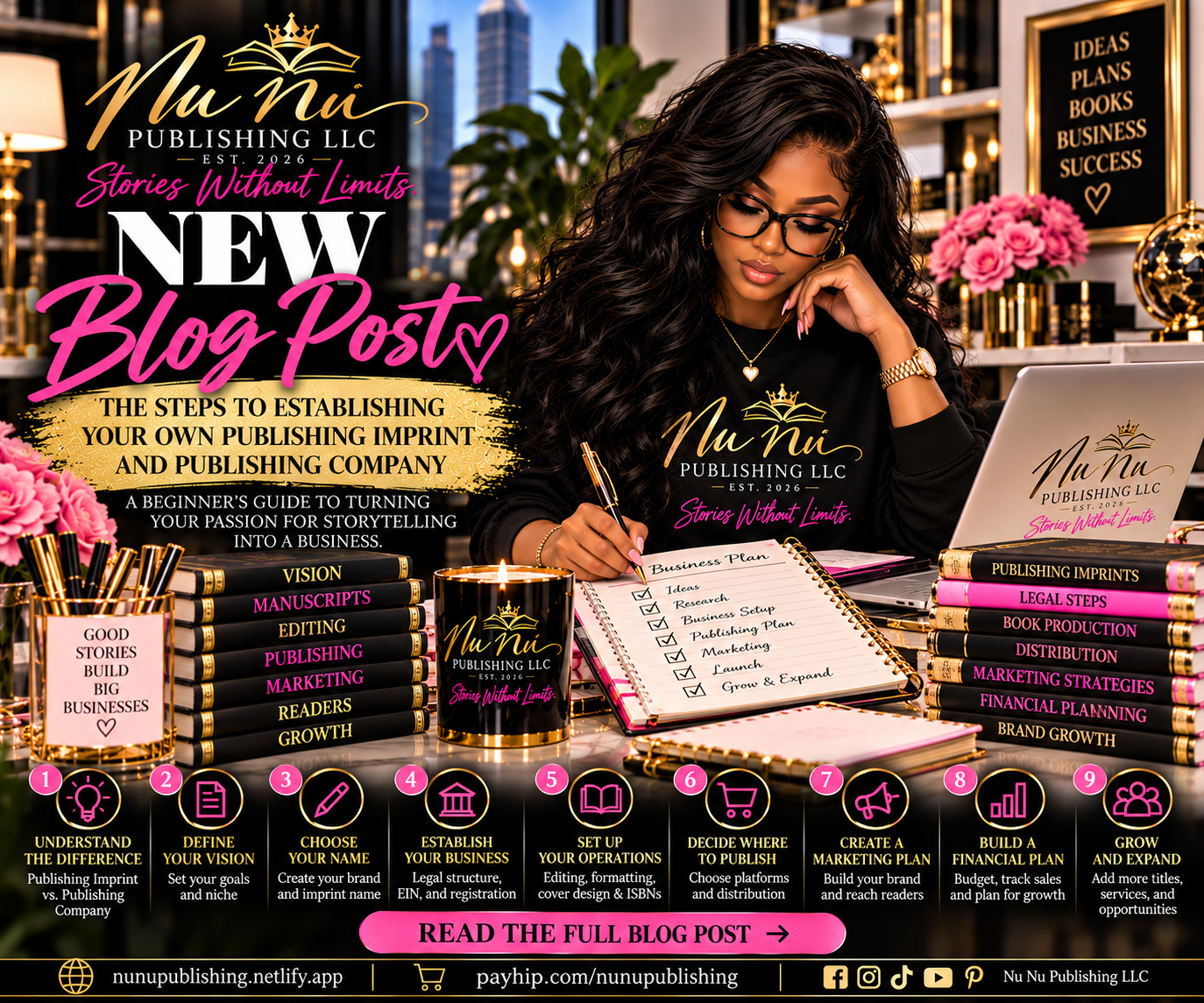
A Beginner's Guide to Turning Your Passion for Storytelling Into a Business
Nu Nu Publishing LLC | Stories Without Limits.
Have you ever dreamed of publishing your own books, creating a recognizable publishing brand, or building a business that allows you to share stories with readers around the world? If so, you may have considered establishing your own publishing imprint or starting a publishing company.
Although these two concepts are closely related, they are not exactly the same. Understanding the difference can help you decide how to structure your business, build your brand, and prepare for long-term growth.
At Nu Nu Publishing LLC, we believe that knowledge is an important part of entrepreneurship. This guide walks you through the essential steps to getting started.
Step 1: Understand the Difference Between a Publishing Imprint and a Publishing Company
A publishing imprint is a name or brand used to publish books. An imprint may focus on a particular genre, audience, writing style, or collection of titles. For example, a publisher might use separate imprints for romance, children's books, inspirational literature, and mystery novels.
A publishing company is the business that manages publishing activities. Depending on its structure, it may handle contracts, production, marketing, distribution, finances, rights management, and relationships with authors.
A company can operate one imprint or several imprints under the same business.
An imprint does not automatically need to be a separate legal entity. Its treatment depends on how the business is organized and applicable registration requirements.
Step 2: Define Your Publishing Vision
Before choosing a name or purchasing business services, decide what kind of publishing brand you want to build.
Ask yourself the following questions:
- What genres do I want to publish?
- Will I publish only my own books, or will I publish books written by other authors?
- Will I focus on ebooks, paperbacks, hardcover books, audiobooks, or multiple formats?
- Who is my target audience?
- What will make my publishing brand different from others?
- Do I want to operate one imprint or eventually expand into multiple imprints?
Your answers will help you establish a clear direction for your business.
Step 3: Choose Your Publishing Company and Imprint Names
Choose a name that reflects your vision, is easy to recognize, and can grow with your business.
Before committing, search for existing businesses, publishing brands, trademarks, website domains, and social media usernames that might conflict with your proposed name.
Registering a business name does not automatically provide comprehensive trademark protection. If you plan to operate an imprint under a different name from your legal business name, research whether an assumed name, trade name, or DBA registration is required in your jurisdiction.
Consider creating a professional logo, selecting brand colors, establishing a tagline, and developing a consistent visual identity for your books and marketing materials.
Step 4: Establish Your Business Legally
If you intend to operate a publishing company as a formal business, research the legal structure that best suits your needs.
Common options in the United States include sole proprietorships, partnerships, LLCs, and corporations. Each has different implications for liability, taxes, administration, and ownership.
Typical steps may include:
- Choosing a legal business name and checking its availability.
- Registering the business with the appropriate state agency, if required.
- Filing the necessary formation documents for your chosen structure.
- Obtaining an employer identification number (EIN) from the IRS when applicable.
- Researching state and local licensing, tax, and reporting requirements.
- Opening a business bank account when appropriate.
- Establishing bookkeeping procedures and keeping business and personal finances properly organized.
Requirements vary by location, so consult relevant government agencies and qualified legal or tax professionals when needed.
Remember that creating a publishing imprint and forming a legal business are separate decisions. You can have an imprint without forming a separate company, and a company can operate multiple imprints.
Step 5: Establish Your Publishing Operations
Publishing involves more than uploading a manuscript to a website. You need a repeatable process for preparing books for sale and ensuring that your products meet professional standards.
Your publishing workflow may include:
- Manuscript development and editing.
- Proofreading and quality control.
- Interior formatting for ebooks and print editions.
- Cover design and branding.
- ISBN research and acquisition, where appropriate.
- Copyright and rights documentation.
- Pricing and production-cost calculations.
- Distribution and retailer account setup.
- Sales tracking and royalty or author-payment procedures, when applicable.
If you publish books written by other authors, you will also need clear agreements addressing publishing rights, payment arrangements, royalties, responsibilities, contract duration, and termination.
Consider having a qualified attorney review publishing contracts before using them.
Step 6: Decide Where and How to Publish Your Books
There are several ways to bring books to market.
You might publish through online bookstores, sell ebooks directly from your own website, use print-on-demand services, or pursue distribution arrangements that make your books available through multiple retailers.
Direct sales can give you greater control over the customer experience, while third-party retailers may help readers discover your books through their existing shopping platforms.
Before selecting a platform, compare fees, distribution options, royalty terms, formatting requirements, payment schedules, and promotional opportunities.
Start with the channels that best fit your current resources. You can expand your distribution strategy as your business grows.
Step 7: Create a Marketing and Reader-Engagement Strategy
A well-produced book still needs a way to reach its intended audience.
Develop a marketing plan that helps readers discover your publishing brand and understand what makes your books worth exploring.
Your plan might include:
- A professional website with a clear book catalog.
- Blog posts about books, publishing, writing, and entrepreneurship.
- Social media campaigns and promotional graphics.
- Email newsletters for interested readers.
- Book previews, sample chapters, and launch announcements.
- Reader reviews and recommendations.
- Author interviews and collaborations.
- Seasonal promotions and special offers.
Consistency matters. Consider the intended audience, genre, themes, and most effective marketing channels for each title.
A blog can be particularly helpful because it gives readers useful information while creating additional opportunities to discover your business through online searches.
Step 8: Build a Financial Plan for Sustainable Growth
Publishing is both a creative endeavor and a business. Understanding the financial side is essential.
Before investing heavily in production or advertising, estimate your startup costs and ongoing expenses.
Potential expenses include business registration, professional services, editing, cover design, formatting, ISBNs, website hosting, software, printing, advertising, and distribution.
Create a budget and track your income and expenses. Calculate how much you earn from each sale after applicable production costs, platform fees, and other expenses.
Set realistic goals, monitor your results, and use the information you collect to decide where to invest your resources.
Step 9: Grow Your Publishing Brand
After establishing your initial operations, look for opportunities to expand thoughtfully.
You might release additional books, introduce a new imprint, collaborate with authors, offer publishing-related services, develop an email community, or explore new distribution channels.
Before adding a new service or imprint, evaluate whether you have the resources and systems to manage it properly.
Growth should support your overall business strategy rather than create unnecessary expenses or administrative burdens.
Final Thoughts: Start With a Plan and Build With Purpose
Establishing a publishing imprint or publishing company can be an exciting step for anyone who wants to turn a love of storytelling into a business.
You do not have to accomplish everything at once. Begin by defining your vision, choosing your brand identity, researching the appropriate business structure, organizing your publishing workflow, and creating a realistic marketing and financial plan.
Continue learning about the industry, protect your business interests, and make informed decisions as your publishing brand develops.
At Nu Nu Publishing LLC, we believe stories deserve opportunities to reach readers, and aspiring entrepreneurs deserve access to information that helps them make thoughtful decisions.
Whether you are preparing to release your first book or planning to establish a publishing business, the most important thing is to take your next step with intention.
Your publishing journey starts with an idea. What you build from that idea is up to you.
Continue Your Journey With Nu Nu Publishing LLC
Explore our books, visit our website, and follow our publishing journey.
Website: https://nunupublishing.netlify.app
Official Bookstore: http://payhip.com/nunupublishing
Nu Nu Publishing LLC
Stories Without Limits.
EST. 2026.
Disclaimer: This article is intended for general educational purposes and is not legal, tax, or financial advice. Business registration, licensing, tax, trademark, and publishing requirements vary by location and individual circumstances. Consult appropriate professionals and official government resources for guidance specific to your situation.
Comments ()