
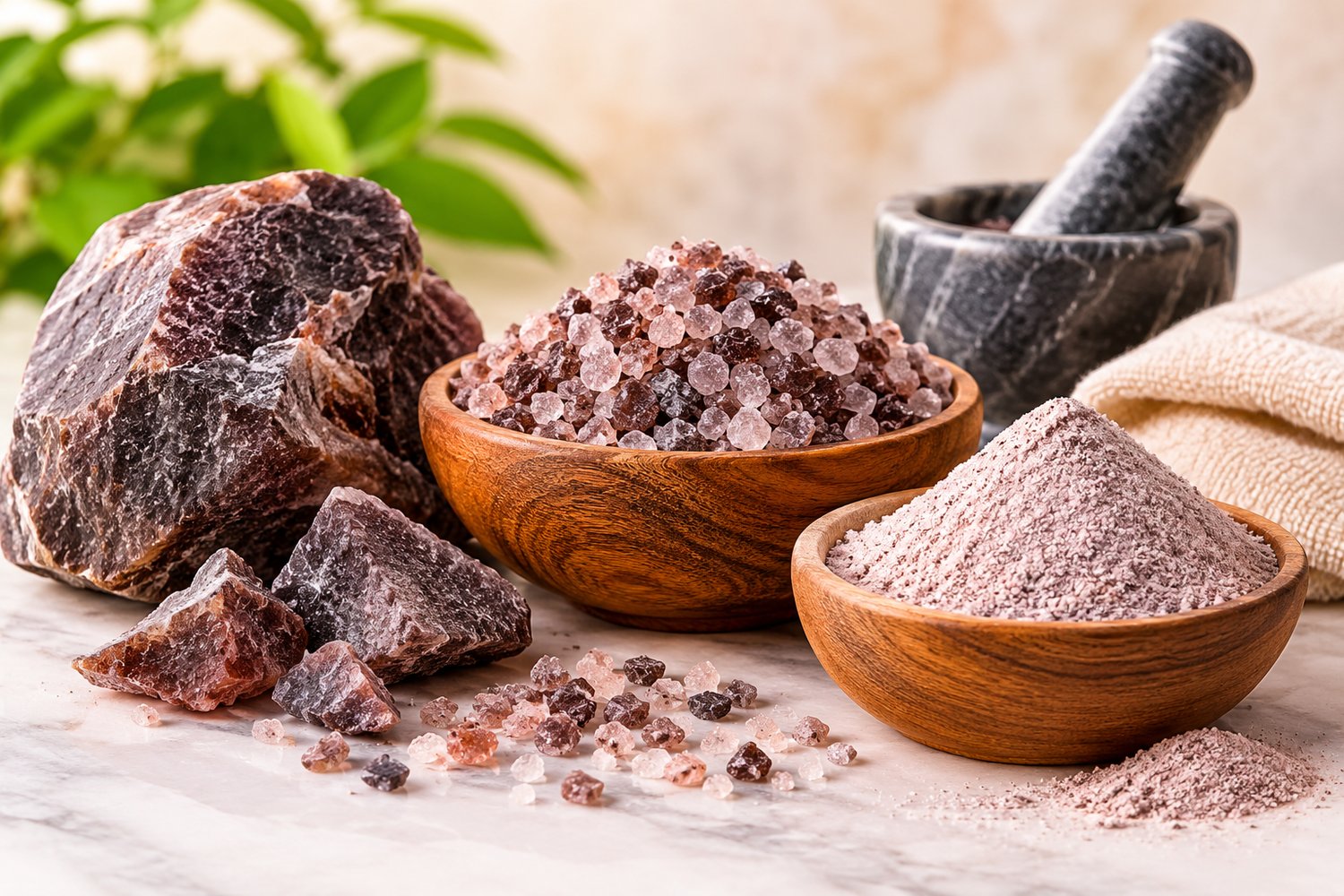
Himalayan black salt is also known as Kala Namak. It is found in Khewra Salt Mine in Punjab, Pakistan. It has a strong, distinctive smell and a tangy flavour similar to boiled eggs. Kala Namak is known for its unique taste due to its earthy, smoky, and savory taste rather than regular table salt. It is used in South Asian everyday cooking, baking, and seasoning. Black rock salt is not completely black in colour, it is dark brown, but when we grind it, it becomes a pinkish-grey powder because of the presence of iron sulphide and trace iron compounds. A Bath Salt Products Manufacturer may also offer different varieties of natural salts for bath and wellness applications.
How is Himalayan Black Salt Different from Other Salts?
Black salt and Himalayan pink salt both primarily consist of sodium chloride, but differ in their mineral composition, aroma, and processing. Natural black salt undergoes traditional heat processing with charcoal and herbal ingredients to develop its distinctive smell and flavour. While Pink salt is mined, cleaned, crushed, and ground with less processing. Black Himalayan Salt is used as a flavourful alternative in various dishes. On the other hand, Pink salt is excellent for health and also used as a salt lick for animals to supplement their mineral intake.
Is Himalayan Black Rock Salt Better Than Regular Salt?
Himalayan black salt is considered a healthier alternative to regular table salt. It contains minerals, but these may not provide significant health benefits because the body absorbs them poorly, and people use salt in small amounts. Black rock salt contains sodium, so eating too much can increase blood pressure. It may contain fewer additives than some table salts. Overall, Natural black salt is not necessarily healthier than regular salt. The most important thing is to limit salt intake.
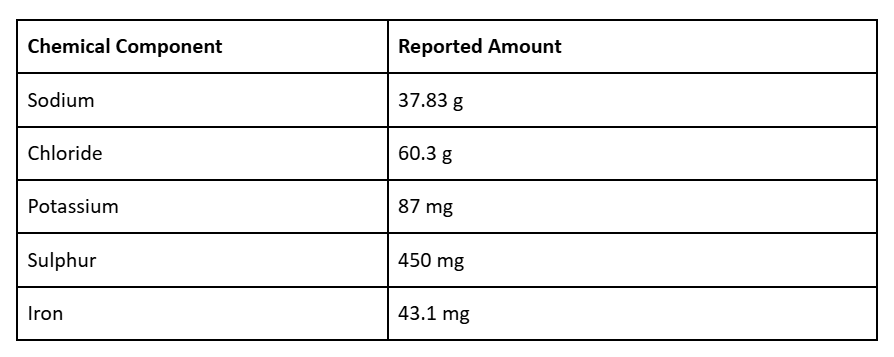
Chemical Composition of Black Himalayan Salt
Black Salt has a different chemical profile than table salt. It consists of Sodium, chloride, potassium, sulphur and iron, but the amounts of these may change depending on processing and product.
Natural Black Salt Benefits for Cooking and Food Businesses
Himalayan black rock salt offers different uses in cooking because of its distinctive flavour and available forms. Its applications range from everyday recipes to specialty food products, depending on the needs of cooks and food manufacturers.
1. Suitable for Plant-Based Dishes: Its sulphur-like flavour can add an egg-like taste to dishes such as tofu, scrambles, and vegan omelettes.
2. Different Forms for Different Uses: It is available in different grain sizes, including coarse crystals and fine powder. Fine salt is used in seasoning blends, while coarse crystals suit applications where a larger grain is preferred.
3. Commercial Product Applications: Food businesses can include Traditional black salt in products such as packaged snacks, spice mixes, chutney blends and ready-to-use seasonings.
4. Mineral Baths: Coarse crystals are mixed into bathwater for a relaxing soak, utilizing trace minerals like magnesium and iron.
5. Enhances Food Flavour: Traditional black salt adds a distinct savoury flavour to fruits, salads, chutneys and traditional South Asian dishes.
Common Uses of Himalayan Black Salt
Two main uses are included:
1. Cosmetics:
- Soaps prepared with Black Salt helps the recovery of oily, acne-prone, and blotchy skin.
- Black salt granules are added to scrub gels and creams to help cleanse and exfoliate the skin.
- Consuming black salt reduces hair loss or prevents dandruff.
2. Culinary:
- Himalayan black rock salt is widely used in dishes to add a distinctive flavour to food.
- Black salt has a sharp, tangy taste and is used in salads, chutneys, fruit chaat, and other dishes.
- Its sulfur-like aroma and egg-like flavour taste make it a popular ingredient in vegan dishes as an egg substitute.
Himalayan Black Salt Risks and Side Effects
Natural black salt (Kala Namak) is commonly used in cooking, but excessive consumption may have some drawbacks.
1. High Sodium Intake: Kala Namak contains sodium, and consuming too much can contribute to excessive sodium intake.
2. Increased Blood Pressure: Excessive sodium consumption may increase blood pressure, particularly in people who are sensitive to sodium.
3. Fluid Retention: Consuming too much salt can cause the body to retain excess water.
4. Kidney Strain: A consistently high sodium intake may put additional strain on the kidneys, especially in people with existing kidney problems.
5. Digestive Discomfort: Consuming excessive amounts of salt may cause stomach discomfort in some people.
Conclusion
Himalayan black salt can vary in composition, texture and quality depending on its source and processing. These differences matter when selecting a product for a specific purpose. Checking product specifications and composition helps buyers understand what they are purchasing. Clear product information also makes it easier to compare available options and choose according to individual requirements.
Frequently Asked Questions
1. Why does black rock salt smell like boiled egg?
It is different from table salt, as it has sulphur compounds and hydrogen sulphide.
2. What is the reason why it is called black salt when ground pink?
Unground crystals are brown or purple-black, due to the presence of iron sulphide. When finely ground, they are pinkish grey.
3. From where Kala Namak mined?
It is sourced from Himalayan rock salt, which is extracted in the Salt Range of Pakistan.
4. When should black salt be added while cooking?
Black salt is a seasoning added towards the end of cooking, because this is when its characteristic aroma will be noticed in the dish.
5. Is there a variety of black salt in different grain sizes?
Yes. It can be purchased as coarse crystals or finely powdered, allowing for the choice of grain size based on requirements.