
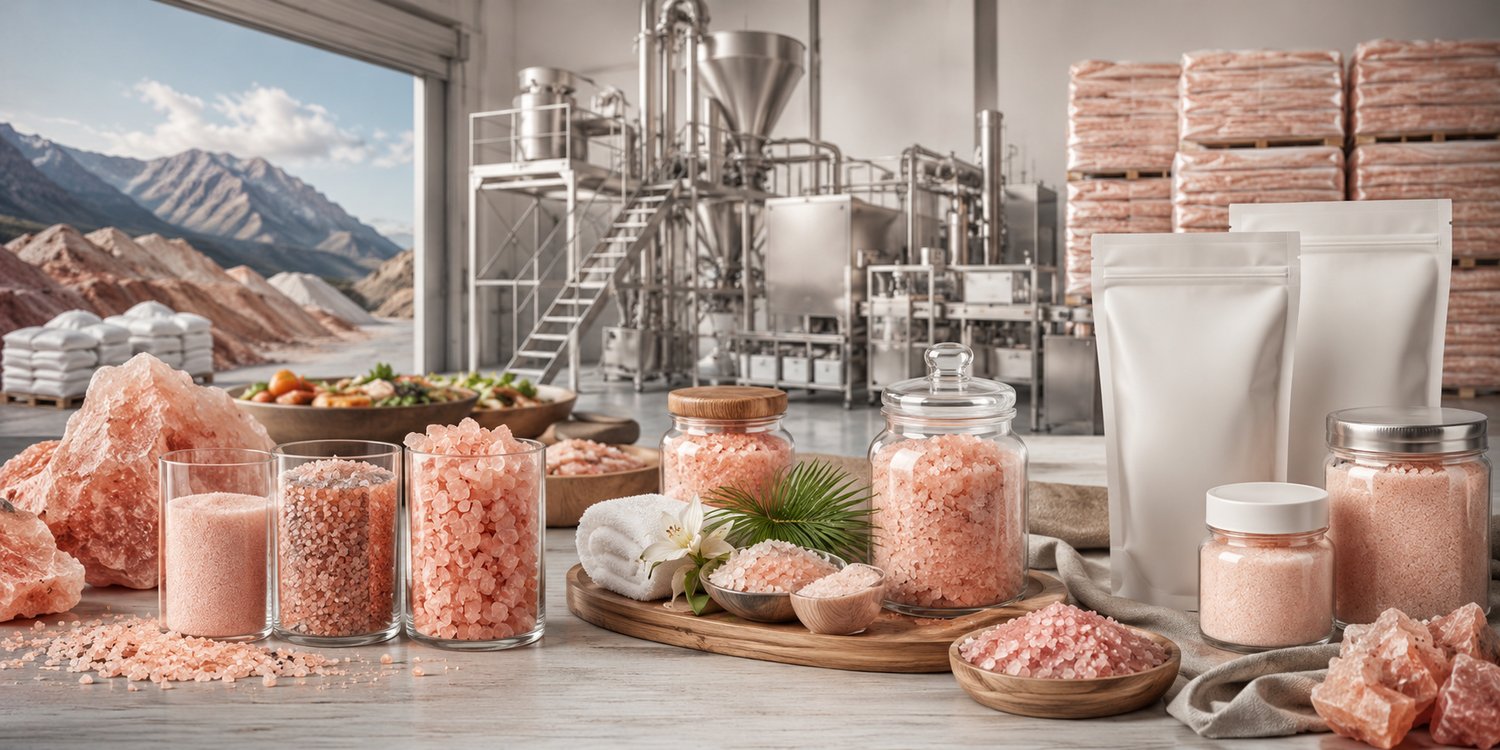
Demand for Himalayan salt keeps growing, driven by home cooks, food brands, spas, and wellness retailers who want natural, recognizable ingredients. But no two buyers need the same thing. A restaurant wants consistent fine grains, a bath brand may prefer coarse crystals, and a retailer might want its own labeled jars on the shelf. This is where a Himalayan Pink Salt Supplier becomes more than a vendor. The right partner understands grades, packaging, and specifications, and helps businesses turn raw salt into products that suit their market.
Choosing the Right Himalayan Pink Salt Supplier
Finding a reliable Himalayan Salt Supplier starts with knowing what to evaluate. Look closely at product quality, available salt grades, and processing capabilities such as crushing, sieving, and washing. Ask about packaging options, production capacity, and export experience. A supplier that ships regularly to international markets will understand documentation, container loading, and the timelines importers depend on.
Supporting Culinary Salt Products
Culinary buyers usually need a range of textures: fine, medium, and coarse grains, along with granules and larger chunks for grinders or cooking slabs. Food manufacturers, restaurants, and foodservice businesses all rely on consistency. A batch that differs in grain size or appearance can disrupt recipes and packaging lines. When you need retail-ready pouches or bulk sacks, clear specifications keep every shipment predictable.
Supplying Bath and Wellness Products
Bath salts and spa products are another major use. Wellness brands often work with different grain sizes, from fine blends that dissolve quickly to coarse crystals for soaking and scrubs. Packaging matters here too, since jars, pouches, and boxes affect shelf appeal and shipping costs. Bulk sourcing helps wellness businesses keep pricing stable while expanding their product lines.
Private-Label Product Opportunities
Private-label sourcing lets a retailer, distributor, or wellness brand sell salt under its own name without running a production facility. The supplier handles processing and packing, while the buyer controls branding. Custom packaging, custom labels, and even product development support are often available. Working with one manufacturing partner for all of this simplifies communication, reduces handoffs, and makes quality easier to control.
What Buyers Should Consider Before Ordering?
Before placing an order, clarify the practical details:
- Minimum order quantities
- Product specifications and grain sizes
- Packaging formats
- Certifications and documentation
- Quality control procedures
- Lead times
- Shipping and export support
Getting these answers early prevents delays and surprises, especially for first-time importers.
Building a Long-Term Sourcing Relationship
The best supplier relationships go beyond a single shipment. Reliable supply and consistent quality give buyers confidence to plan ahead. Open communication makes it easier to adjust specifications or timelines. As your business grows, a good partner can scale order volumes and support multiple product categories, from culinary salt to bath products and private-label ranges, without forcing you to start over with someone new.
Conclusion
Himalayan salt serves culinary kitchens, bath and wellness brands, and private-label businesses, each with its own requirements for grade, packaging, and consistency. Choosing a capable partner makes those differences easier to manage and gives your products a steadier foundation. For importers, distributors, and brands planning to grow, working with an experienced Himalayan Pink Salt Supplier can make sourcing simpler, more predictable, and better suited to the markets you serve.