
The Modeling using SAS Visual Statistics certification (A00-485) from SAS validates a professional's expertise in leveraging SAS Visual Statistics for advanced analytical tasks, including predictive modeling and statistical analysis. This credential is ideal for data scientists, statisticians, and business analysts who aim to solidify their skills in building and assessing robust statistical models within the SAS ecosystem. This comprehensive guide helps prospective candidates evaluate if pursuing the SAS Visual Statistics certification aligns with their career goals and provides insights into the exam structure, syllabus, and preparation strategies.
Defining SAS Visual Statistics Expertise
The SAS Visual Statistics certification focuses on validating practical skills in using the SAS Visual Statistics interface for complex data analysis. It covers the complete lifecycle of statistical modeling, from data preparation and model building to assessment and deployment. Professionals earning this credential demonstrate proficiency in utilizing SAS Visual Statistics to conduct in-depth statistical investigations, develop robust predictive models, and derive actionable insights from diverse datasets. This includes a strong emphasis on applying various modeling techniques to real-world business problems. Understanding the foundational capabilities of this tool is crucial for anyone working with large datasets and requiring visual, interactive analytical solutions. For more in-depth information about the official program, you can visit the official SAS certification page.
Core Capabilities Validated by the A00-485 Exam
Earning the A00-485 certification confirms a candidate's ability to perform several critical functions in a data-driven environment. These capabilities extend beyond theoretical knowledge, emphasizing hands-on application.
• Model Development: Constructing various statistical models, including regression-type and segmentation models, using the intuitive interface of SAS Visual Statistics.
• Model Assessment: Evaluating the performance and validity of developed models using appropriate statistical metrics and diagnostic tools.
• Data Exploration: Utilizing SAS Visual Statistics for interactive data exploration and visualization to understand underlying patterns and relationships.
• Predictive Analytics: Applying validated models to new data for accurate predictions and forecasts, supporting strategic decision-making.
• Cross-functional Application: Integrating statistical modeling into broader analytical workflows, demonstrating adaptability across different business contexts.
These skills are highly sought after in roles that demand a blend of statistical acumen and practical tool proficiency, marking certified individuals as valuable assets to any analytics team.
Exploring the A00-485 Exam Framework
The Modeling using SAS Visual Statistics exam (A00-485) is structured to comprehensively test a candidate's understanding and application of key concepts. Success in this exam signifies a candidate's readiness to tackle real-world analytical challenges using the SAS platform effectively. Familiarizing oneself with these specifics is the first step in any robust preparation plan.
Essential Examination Details
The A00-485 exam adheres to a standardized format designed to assess a broad range of skills within a defined timeframe.
• Exam Name: Modeling using SAS Visual Statistics
• Exam Code: A00-485
• Exam Price: $120 (USD)
• Duration: 110 minutes
• Number of Questions: 55-60 multiple-choice and interactive questions
• Passing Score: 68%
These details provide a clear outline for candidates to manage their time and expectations during the examination. It's crucial to practice time management during mock exams to ensure all questions can be addressed effectively within the allotted duration.
Deciphering the A00-485 Exam Curriculum: Core Domains
The A00-485 exam curriculum is divided into specific domains, each carrying a different weightage, reflecting their importance in real-world SAS Visual Statistics applications. A balanced study approach across these domains is essential for comprehensive preparation. A thorough review of the detailed content guide is highly recommended to understand each topic in depth.
• SAS® Visual Statistics Cross-functional Tasks - 22%: This section covers the fundamental operations and common tasks performed across different functionalities within SAS Visual Statistics. It includes data loading, data manipulation, and understanding the user interface.
• Building and Assessing Segmentation Models - 28%: Focuses on techniques for segmenting data into meaningful groups, understanding clustering algorithms, and evaluating the quality of these segmentation models. This is crucial for targeted analysis and personalized strategies.
• Building and Assessing Regression-type Models - 41%: This is the largest section, emphasizing various regression techniques such as linear, logistic, and generalized linear models. It delves into model fitting, interpretation of parameters, and comprehensive assessment of model performance and assumptions.
• Model Comparison and Scoring - 9%: The smallest yet vital section, covering methodologies to compare multiple models, select the best-performing one, and apply chosen models to new data for scoring and prediction.
A strong grasp of the higher-weighted sections, particularly regression-type models, is paramount for success, but neglecting smaller sections can also impact the overall score.
Who Benefits from SAS Visual Statistics Credentialing?
The SAS Visual Statistics certification is particularly advantageous for professionals looking to specialize in visual data exploration and advanced statistical modeling. It serves as a testament to their capability in harnessing a powerful analytical tool to drive business intelligence and predictive outcomes. This credential can open doors to specialized roles and enhance credibility within the analytics community.
Ideal Candidates for A00-485 Certification
Several professional profiles are particularly well-suited for pursuing this certification, given its focus on practical application and statistical rigor.
• Data Scientists: Those involved in developing, testing, and deploying statistical and machine learning models will find this certification directly relevant to their daily tasks.
• Statisticians: Professionals with a strong statistical background who wish to apply their knowledge using an intuitive visual interface for complex analyses.
• Business Analysts: Analysts transitioning into more technical, data-intensive roles who need to build predictive models to inform strategic business decisions.
• Predictive Modelers: Individuals whose primary role is to create and refine predictive models for various applications, such as risk assessment, customer churn, or fraud detection.
• SAS Users: Existing SAS users seeking to expand their toolkit with the visual and interactive capabilities offered by SAS Visual Statistics.
This credential confirms not just theoretical understanding but also practical proficiency with a specific, industry-relevant tool.
Cultivating Core Skills with SAS Visual Statistics
Achieving the SAS Visual Statistics certification goes beyond merely passing an exam; it signifies the cultivation of tangible skills highly valued in the analytics industry. These abilities enable professionals to perform more efficiently and contribute more strategically to their organizations. The certification process itself acts as a structured learning pathway, refining existing competencies and adding new ones.
Practical Application of Analytical Techniques
The certification emphasizes the hands-on application of statistical methods, ensuring that candidates are not just theoretically aware but functionally capable.
• Data Preparation and Exploration: Mastering the techniques to clean, transform, and visually explore datasets within SAS Visual Statistics, identifying outliers, missing values, and potential relationships.
• Model Selection and Implementation: Gaining proficiency in choosing the appropriate statistical model for a given business problem (e.g., linear regression for continuous outcomes, logistic regression for binary outcomes, clustering for segmentation).
• Diagnostic Analysis: Interpreting model outputs, residuals, and various statistical plots to diagnose model performance, identify limitations, and ensure robustness.
• Interpretation of Results: Translating complex statistical findings into clear, actionable business insights that can be communicated effectively to non-technical stakeholders.
• Automated Model Building: Leveraging the automated features within SAS Visual Statistics to efficiently build and compare multiple models, saving time and improving iterative analysis.
These skills collectively equip professionals to drive data-driven innovation and solve complex problems with confidence.
Unlocking Career Advancement with SAS Visual Statistics
A SAS Visual Statistics certification can significantly boost a professional's career trajectory, distinguishing them in a competitive job market. Employers often look for verifiable credentials as proof of specialized skills, and this certification serves as a strong indicator of expertise in a high-demand analytical area. It reflects a commitment to continuous learning and professional development within the SAS ecosystem.
Tangible Benefits for Professional Growth
The investment in obtaining this certification yields several long-term advantages that extend beyond immediate job requirements.
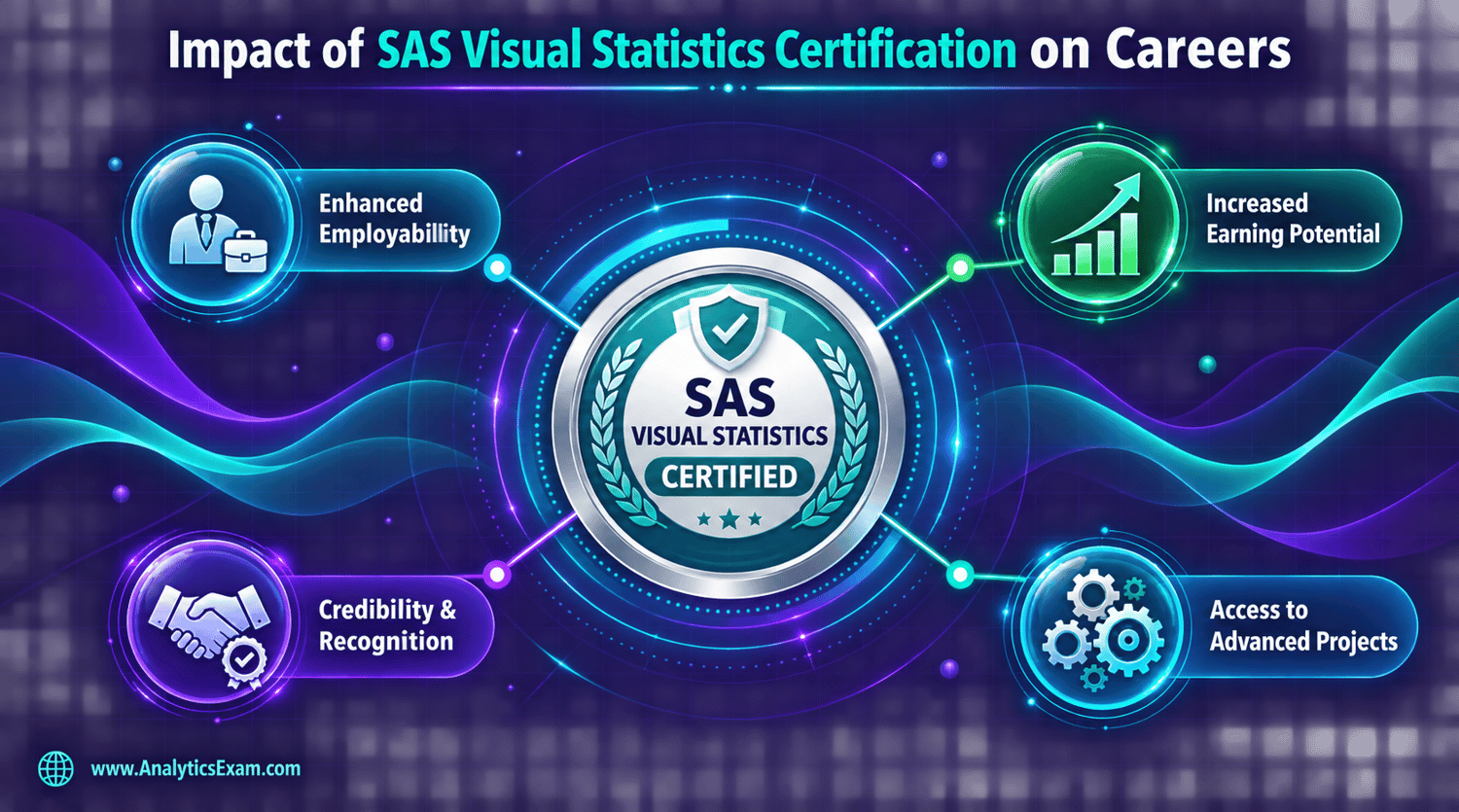
1. Enhanced Employability: Certified professionals stand out to recruiters, especially for roles requiring specific SAS Visual Statistics proficiency in data science and advanced analytics.
2. Increased Earning Potential: Specialized certifications often correlate with higher salaries, reflecting the value placed on certified skills by employers.
3. Credibility and Recognition: The SAS credential is globally recognized, validating your expertise and boosting your professional reputation within the analytics community.
4. Access to Advanced Projects: With proven skills in predictive modeling, certified individuals are often assigned more complex and impactful projects, leading to greater job satisfaction and further skill development.
5. Networking Opportunities: Being part of the SAS certified community can open doors to valuable networking opportunities and insights into industry best practices.
These benefits underscore the strategic value of investing time and effort into this specialized certification.
Crafting Your A00-485 Preparation Strategy
Effective preparation for the A00-485 exam requires a structured and disciplined approach. Simply reviewing topics is often insufficient; candidates must engage with the material, practice extensively, and understand the application of concepts within SAS Visual Statistics. A well-planned strategy minimizes stress and maximizes the chances of success. For comprehensive study materials and practice tests, explore comprehensive study materials designed to aid your preparation.
Key Pillars of an Effective Study Plan
Building a solid preparation strategy involves combining various learning methods and resources.
• Official SAS Resources: Start with the official SAS training courses and documentation related to Visual Statistics. These resources align directly with the exam objectives.
• Hands-on Practice: The most crucial aspect. Actively work with SAS Visual Statistics software, apply different models, and interpret results. Theory without practical application is rarely enough.
• Study Groups and Forums: Collaborate with other candidates, discuss challenging topics, and learn from diverse perspectives. Online forums often provide valuable tips and clarification.
• Mock Exams and Practice Questions: Regularly take practice tests to familiarize yourself with the exam format, question types, and time constraints. This helps identify weak areas for further study.
• Review Core Statistics: While the exam focuses on the tool, a solid understanding of underlying statistical concepts (regression assumptions, hypothesis testing, model evaluation metrics) is fundamental.
Consistency and a focus on understanding the "why" behind each analytical step are more important than rote memorization.
Essential Resources for A00-485 Readiness
Choosing the right study materials is a critical component of a successful preparation journey for the SAS Visual Statistics certification. With a multitude of options available, discerning between effective and less impactful resources can make a significant difference in your study efficiency and exam readiness. Prioritizing official and highly reputable sources is always a wise first step.
Optimizing Your Learning Toolkit
A diversified set of resources can cater to different learning styles and ensure comprehensive coverage of the A00-485 syllabus.
• SAS Documentation and Help: The in-built help features and online documentation within SAS Visual Statistics provide detailed explanations of procedures and functionalities.
• SAS Global Certification Program Website: This site offers the most current information regarding exam objectives, sample questions, and links to recommended training.
• Online Courses and Tutorials: Platforms offering structured courses specifically for SAS Visual Statistics can provide guided learning paths and hands-on exercises.
• Textbooks and Reference Guides: While software-specific, foundational statistical textbooks can reinforce the theoretical underpinnings of the models used in Visual Statistics.
• Community Forums and Blogs: Engaging with the broader SAS community through forums and specialized blogs can offer practical insights, troubleshooting tips, and alternative perspectives on challenging topics.
Mastering the A00-485 Exam Approach
Passing the A00-485 exam requires more than just knowing the content; it demands a strategic approach to the examination itself. Understanding how to tackle different question types, managing your time efficiently, and maintaining a calm demeanor can significantly impact your performance. This strategic mindset begins long before you enter the exam room.
Tactics for Test Day Success
Implementing specific tactics on the day of the exam can help you navigate the assessment with greater confidence and efficiency.
• Read Questions Carefully: Pay close attention to keywords such as "always," "never," "most," or "least," as these can subtly change the meaning of a question.
• Time Management: With 55-60 questions in 110 minutes, you have roughly two minutes per question. If a question is proving difficult, make an educated guess, mark it for review, and move on.
• Eliminate Incorrect Options: For multiple-choice questions, eliminate obviously wrong answers first to increase your chances of selecting the correct one.
• Leverage Your Strengths: Answer questions you are confident about first to build momentum and ensure you don't run out of time on easier points.
• Review Marked Questions: If time permits at the end, revisit any questions you marked for review. Sometimes, a fresh look or context from other questions can provide clarity.
A calm and focused approach, combined with thorough preparation, is your best asset on exam day.
Final Considerations for Your Certification Journey
Embarking on the SAS Visual Statistics certification journey is a significant step towards advancing your analytical career. It represents an investment in your skills and a commitment to becoming a proficient user of one of the industry's leading statistical software platforms. Before making your final decision, reflect on how this credential aligns with your long-term professional aspirations and the specific demands of your target roles.
The A00-485 certification is a powerful validation for professionals seeking to demonstrate their expertise in predictive modeling and statistical analysis using SAS Visual Statistics. Whether you are a data scientist aiming to refine your tool proficiency or a business analyst looking to deepen your analytical capabilities, this credential can be a valuable asset. The structured learning and rigorous examination process ensure that certified individuals possess the practical skills necessary to contribute meaningfully to data-driven decision-making.
If you're ready to enhance your expertise in statistical modeling with SAS Visual Statistics, consider this certification as a strategic move. Begin your preparation today by exploring the official resources and dedicated study platforms to confidently approach the A00-485 exam and unlock new professional opportunities. To further explore resources and specialized guidance, consider visiting dedicated learning platforms like Palak Mazumdar's resources.
FAQs
1. What kind of job roles require SAS Visual Statistics certification?
Roles such as Data Scientist, Statistician, Predictive Modeler, and Advanced Business Analyst often benefit from or require SAS Visual Statistics expertise. The certification demonstrates proficiency in applying statistical models and interpreting data visually.
2. How long does it typically take to prepare for the A00-485 exam?
Preparation time varies depending on your existing experience with SAS and statistical modeling. Typically, candidates with some prior knowledge might need 2-3 months of dedicated study, while beginners may require longer to grasp both the concepts and the tool usage.
3. Is the SAS Visual Statistics certification recognized globally?
Yes, SAS certifications are globally recognized and highly respected within the analytics and data science communities. They validate a professional's skills on a widely used enterprise analytics platform.
4. What is the format of the A00-485 exam questions?
The A00-485 exam primarily consists of multiple-choice and interactive questions. These questions are designed to test both theoretical understanding and practical application of SAS Visual Statistics functionalities.
5. What is the best way to gain hands-on experience for this exam?
The best way to gain hands-on experience is by using the SAS Visual Statistics software directly. Utilizing trial versions, academic licenses, or employer-provided access to practice building, assessing, and comparing models is crucial for success.