
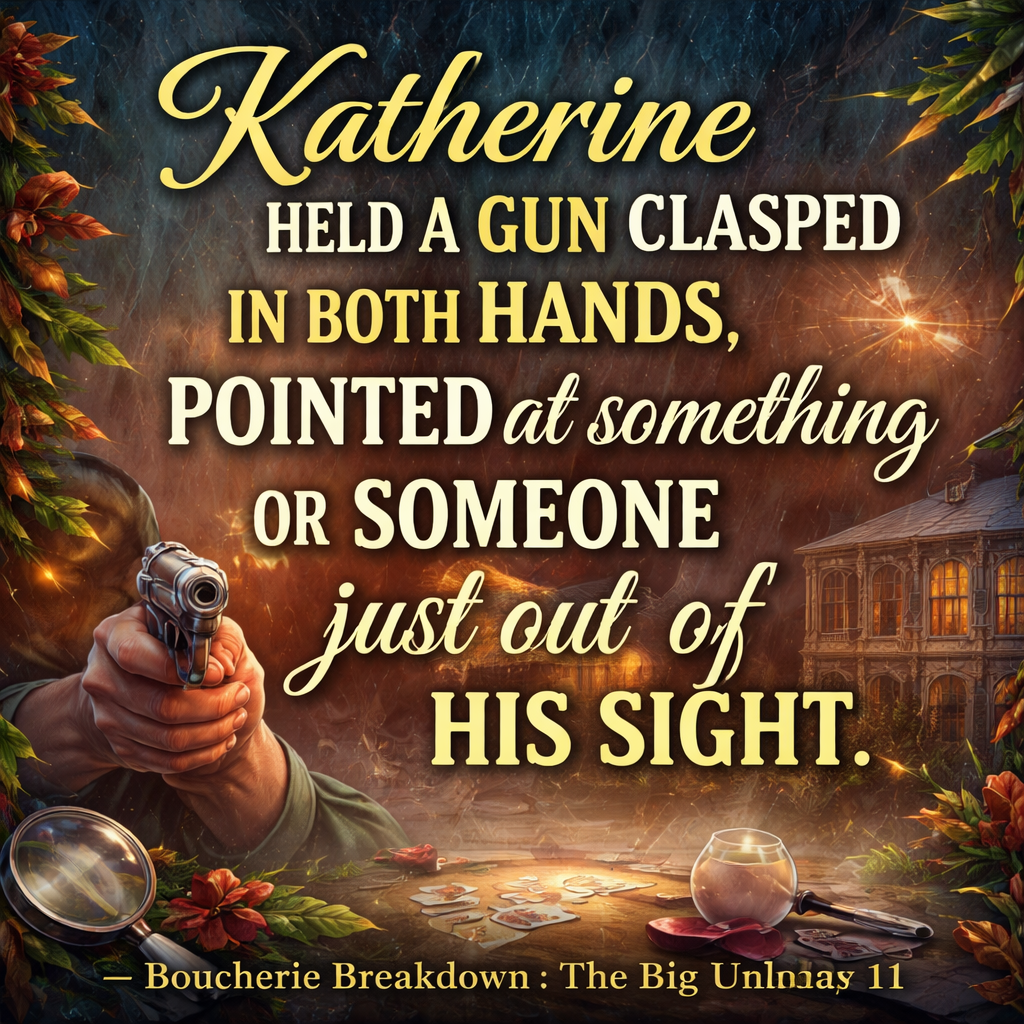
How do you build suspense when the characters can't leave? A look at the craft behind Boucherie Breakdown's locked-house chaos.
Locked-house mysteries are a timeless pleasure: a closed circle of suspects, rising tension, and the irrefutable logic of deduction. Writing one that feels fresh requires careful choreography, and Boucherie Breakdown leans into that challenge with a mix of planning and improvisation.
One of the first tasks was designing the house itself. Belvor House had to do more than hold people in; it had to reveal character. I mapped rooms, sightlines, and possible secrets so that a tossed aside shawl or a closed-door could become a clue. The mansion’s layout also determined pacing. A chase down a dark hallway, a whispered conversation in a study, or an overheard argument in another room — each spatial choice creates opportunities for revelation and misdirection.
Next came the storm. A weather event is an effective plot device because it changes circumstances instantly and plausibly. In Boucherie Breakdown, the storm cuts off the road and suspends normal consequences. That concentration of people in one place forces interactions that might not otherwise occur. But the storm also risks feeling like a contrivance, so I treated it as more than a backdrop: it heightens emotions, frays nerves, and justifies the escalating risks characters take.
Balancing humor with danger was another craftsman’s puzzle. To keep the tone consistent, jokes had to arise from character, not from mocking events. Humor is the way characters cope; it reveals who they are under pressure. I aimed for moments where a wry observation would defuse tension briefly, then let the next discovery pull the rug away. That ebb and flow keeps readers emotionally invested without reducing the stakes.
The Clue motif — Knife, Rope, Wrench, Candlestick — provided a playful structural backbone. Using familiar elements allows readers to play along, spotting parallels and red herrings. But recycling classic tools also requires inventiveness: giving each device a plausible role in the plot while avoiding predictability. The goal was to surprise even readers who are well-versed in whodunits.
Finally, writing the characters' relationships was essential. Katherine Baker's and Banks’ developing feelings add human consequences to every clue. When characters care about one another, a joke becomes meaningful and a threat becomes personal. That emotional currency is what turns a clever puzzle into a story that lingers.
At its core, crafting Boucherie Breakdown was about layering: a house that holds secrets, a storm that forces truth, a cast whose humor and heart deepen the suspense, and a mystery structure that invites readers to solve along. The result is a night you won’t forget — one where you’ll laugh, gasp, and maybe, for a moment, be convinced you know who did it.