
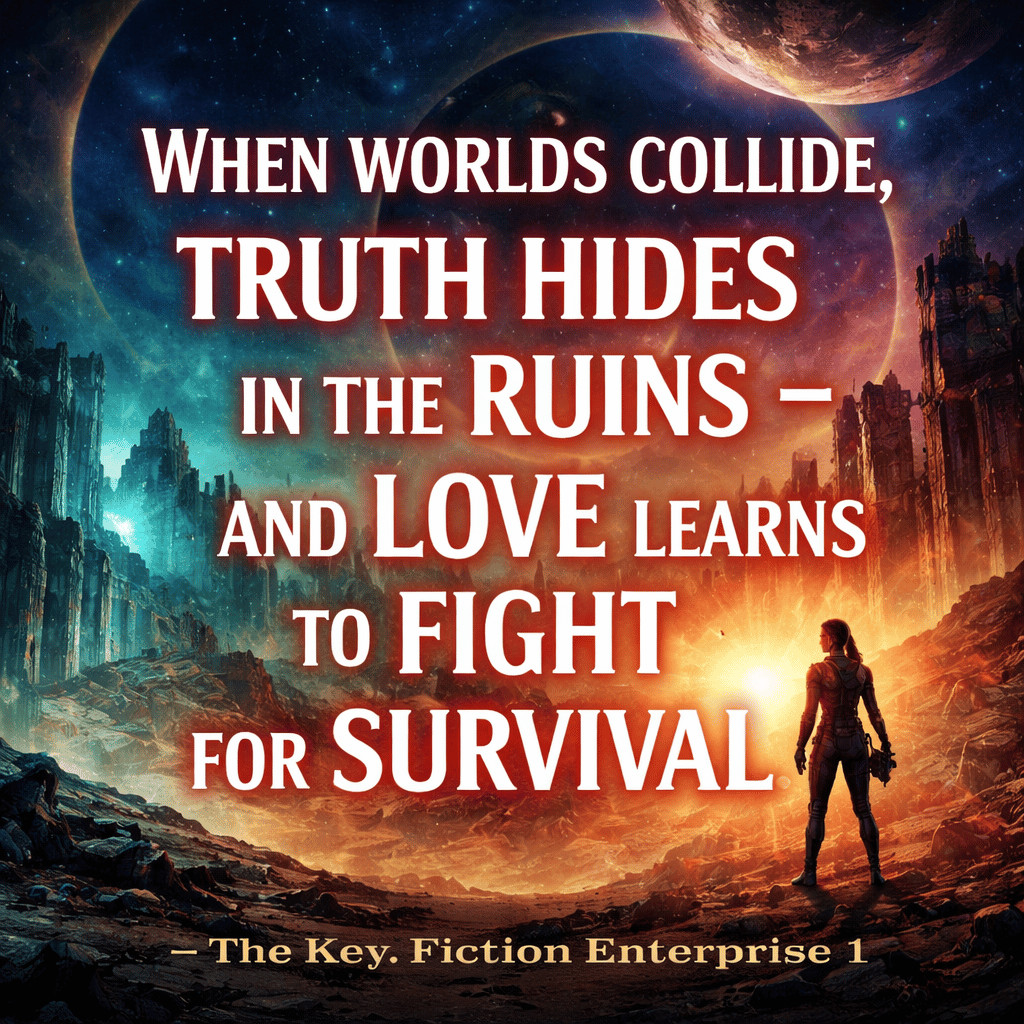
The Key explores what it means to belong—to a cause, to a people, and to oneself. Here’s a look at the themes that drive Sara Donovan’s journey.
* * *
The Key is a story that moves quickly through action and danger, but at its heart it’s about identity. Sara Donovan begins as an elite operative, molded by training and duty. When circumstances throw her onto an alien world and into the company of the resistance fighter Kiernan Fyn, the mission becomes more than tactics and survival. It becomes a voyage toward understanding who she is when the roles she was given no longer fit.
Duty is a persistent theme. Sara’s loyalty to Project Enterprise and to her country underpins many of her choices, even when following orders conflicts with what she learns on the ground. That tension—between the demands of institutions and the pull of conscience—creates a powerful dramatic engine. Readers who appreciate protagonists forced to balance personal ethics with professional obligation will find this conflict compelling and relatable.
Discovery operates on several levels. There’s the literal hunt for a long-lost civilization and a hidden city that could reshape interstellar power. There’s the uncovering of secrets about Sara’s mother and the baffling abilities that set Sara apart. And there’s the emotional discovery that emerges as Sara and Kiernan begin to trust one another. The novel shows how uncovering external truths often opens the door to unexpected internal revelations.
Another essential theme is moral complexity. The enemies in this story are not simply evil forces waiting to be destroyed; motives blur and loyalties shift. That nuance makes the stakes feel true—when both sides have reasons to fight, choosing a path forward requires more than firepower. It requires empathy and hard choices, and it tests characters in ways that feel authentic rather than contrived.
Finally, The Key balances action with intimacy. Explosions and chase sequences move the plot, but the quieter moments—confessions in the dark, shared vulnerabilities, and the small gestures that build trust—are what make the story resonate. For readers who love science fiction with a strong emotional center, this book offers both adrenaline and heart.
In short, The Key is about how crisis can reveal character, how past secrets shape present choices, and how connection can arise in the least likely places. It’s a reminder that discovering a lost city might unlock more than power—it might unlock a person.