
With so many crazy things happening in the world at the moment it must be hard for our students to know what to think and how to form their own opinions.
Discussion is an important part of helping students to form their beliefs and opinions, but this can often lead to confrontation.

A few years ago I wrote an article about why we should stop doing debates in the classroom and what we should do instead: https://peacheypublications.com/why-we-should-stop-doing-debates-in-the-classroom-and-what-we-should-do-instead
The article was sparked by some work I was doing on encouraging interfaith dialogue. As part of that I learned about some rules for productive discussion that avoid the kind of confrontation that only leaves people more embedded in their own beliefs.
Here is the list of rules. These are well worth teaching students and encouraging during any classroom discussion.
10 Rules for Calm and Respectful Discussion
- Respect different opinions Everyone has a right to their own views. Listen without judging.
- Listen to understand, not just to reply Focus on what the other person is saying before thinking about your response.
- Speak for yourself Use “I think…” or “In my experience…” to share your point of view without making generalisations.
- Avoid assumptions and labels Don’t assume you know what someone thinks or believes. Ask questions to learn more.
- Look for common ground Try to find things you agree on, even if your opinions are different.
- Be honest but respectful Share your thoughts clearly, but in a way that is kind and thoughtful.
- Stay curious and open-minded Be willing to learn something new or see things from a different perspective.
- Do not try to win The goal is understanding, not “winning” an argument or proving someone wrong.
- Create a safe space Make sure everyone feels comfortable to speak, even if they have a different opinion.
- Be patient Good conversations take time. Stay calm, and give others time to think and speak.
I think it's also worth ending any discussion and exchange of opinions with the critical thinking question I shared previously.
What if there was proof that you were wrong? What would you do differently? How would it change your life?
It's always important to at least consider that we may be wrong. The world isn't being destroyed by people with doubts, it's being destroyed by people who are certain they are right.
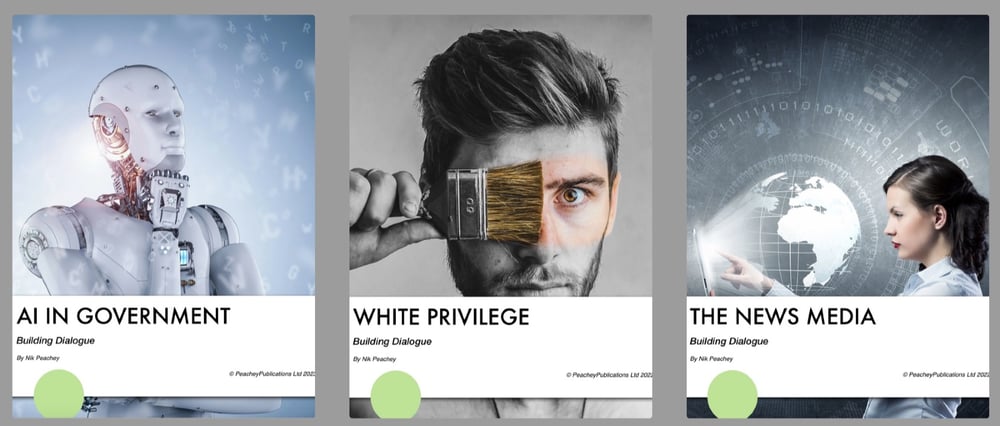
You can find a series of lesson that are dedicated towards building dialogue rather than debate here: https://payhip.com/peacheypublications/collection/building-dialogue
Comments ()