

There is a moment — maybe you know it — when you stand in the doorway of your own bedroom and feel nothing. No warmth, no personality, no sense that this space was made for you. The furniture is fine. The walls are neutral. But it could belong to anyone. The fastest, most affordable, and most satisfying way to fix that? Fabric, a sewing machine, and the right guidance.
Bedroom sewing projects have a unique power among all home décor crafts: they touch every surface in the room. The bed. The windows. The floor. The nightstand. Even what you wear to sleep. Unlike painting a wall or replacing furniture, sewing your own bedroom décor gives you complete control over color, texture, pattern, and scale — and the results are genuinely personal in a way that no store-bought collection ever can be.
This guide walks you through the why, the what, and the how of DIY bedroom sewing — from your very first throw pillow to a full, coordinated bedroom makeover. If you've been waiting for a reason to pick up your scissors and thread, this is it.
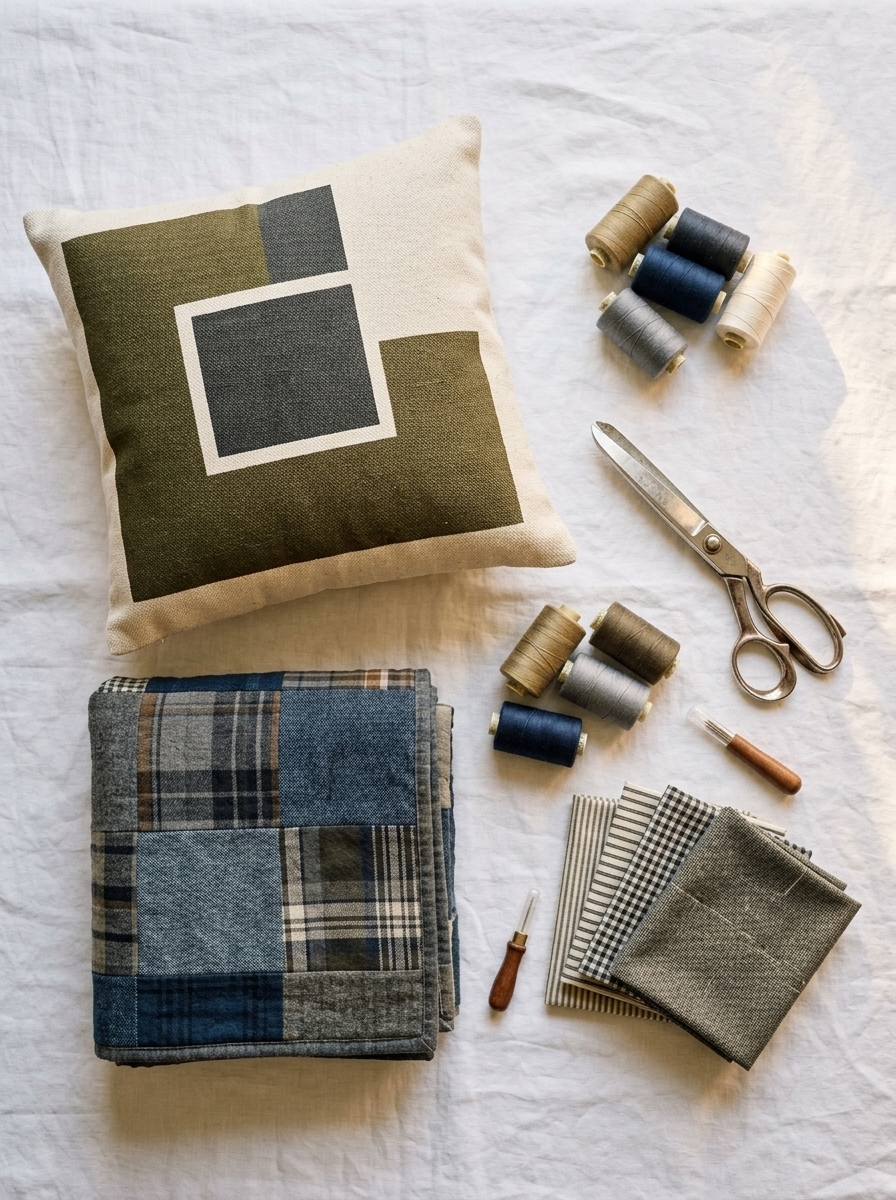
Why Bedroom Sewing Projects Outperform Every Other DIY Upgrade
Walk into any interior design showroom and you'll notice something immediately: the most expensive rooms in the world are built on fabric. Silk curtains. Hand-quilted bedspreads. Custom upholstered headboards. Layered linen bedding. Textile is where a room gets its soul — and yet, most people treat it as an afterthought, grabbing a duvet cover from a big-box store and calling it done.
The difference between a bedroom that feels designed and one that feels generic almost always comes down to the quality, specificity, and intentionality of the fabric choices. When you sew your own bedroom décor, you make decisions that no mass-market manufacturer ever will: the exact weight of cotton for your duvet cover, the precise shade of teal for your bolster pillow, the scale of the print on your window shade relative to the height of your ceilings.
Beyond aesthetics, bedroom sewing is one of the most economical home upgrades available. A set of four custom throw pillows from a high-end home goods brand can easily run $200 or more. The fabric to sew the same four pillows yourself — with better materials, better proportions, and your exact taste — might cost $30. A handmade patchwork quilt that would retail for $400 in a boutique costs a fraction of that in fabric from your stash, and it comes with the added value of being completely one-of-a-kind.
There is also the skill dimension. Every bedroom sewing project teaches you something transferable. Learning to sew an invisible zipper on a pillow cover means you can apply that skill to cushions, bags, garments, and beyond. Mastering French seams while making a duvet cover gives you a clean-finish technique that elevates every project you touch afterward. Bedroom sewing is not just décor — it's a craft education that compounds over time.
The Project Hierarchy: What to Sew First, Second, and Third
One of the biggest mistakes new bedroom sewists make is starting with the wrong project. Ambition is admirable, but jumping straight into a king-size patchwork quilt before you've ever sewn a pillow cover is a fast path to a half-finished project stuffed in a closet. Smart bedroom sewing follows a natural hierarchy: high-impact, low-complexity projects first; skill-building projects second; statement pieces last.
Start Here: Throw Pillow Covers
The single best first bedroom sewing project is a throw pillow cover — specifically one with an invisible zipper closure. Here's why it's perfect: the finished size is small and manageable, the fabric requirement is minimal (under half a yard per pillow), the project is achievable in two to three hours, and the impact on your bedroom's appearance is immediate and dramatic.
The technique involved — cutting, pinning, inserting an invisible zipper, and sewing the perimeter — covers the fundamental skills used in virtually every other bedroom sewing project. Get this right and everything else becomes easier.
For a boho-inspired bedroom, a round pillow with reverse appliqué and decorative shell buttons creates an authentic Moroccan-inspired statement piece. For a more luxurious direction, the Velvet Yo-Yo Cushion technique — in which small gathered circles of rich velvet fabric are arranged across a pillow front — produces a result so tactile and beautiful that guests will assume it came from a high-end boutique. For something graphic and modern, a Chain-Link Trapunto Pillow uses padded, raised geometric stitching on silk dupioni to create a three-dimensional sculptural surface that looks like a work of art.
These are not generic pillow projects. They are technique-specific, material-specific designs that teach you real skills while producing genuinely beautiful results.
Build From There: Quilts and Duvet Covers
Once you're comfortable with pillow construction, the logical next step is the bed itself. A duvet cover is, structurally, not much more than a very large pillowcase — two pieces of fabric sewn together with an opening for inserting a duvet. But the details matter enormously.
The India Cotton Duvet Cover uses French seams throughout, which means every seam inside the cover is enclosed and finished cleanly — no raw edges, no fraying, just the kind of interior finish you'd find in a $300 retail bedding set. French seams require an extra step (sew wrong sides together first, trim, then sew right sides together), but the result is worth every minute.
For those ready to take on quilting, the Color Block Quilted Duvet is one of the most achievable and visually striking projects in this category. Twelve large rectangles of cotton solid — in colors like Buttercup yellow, Dusty Blue, Papaya orange, Pear green, Snow white, and Champagne — are sewn into two columns and heavily machine-quilted with closely spaced vertical lines. The result is bold, modern, and completely customizable: choose your own solids to match your bedroom's palette perfectly. The quilt top is then washed and dried after quilting, which causes the cotton to shrink slightly and the quilting stitches to pucker softly — creating that beloved "antique quilt" texture that makes handmade quilts feel so different from anything you can buy.
For a more intricate challenge, the Shoofly Quilt uses one of the most classic and beloved quilt block patterns in American textile history. The block combines half-square triangles with a center square to create a pinwheel-like design that repeats across the quilt surface in a rhythmic, satisfying pattern. If you've never done quilt piecing before, this is an excellent introduction: the math is manageable, the shapes are straightforward, and the result is a bedroom heirloom.
The Room-Completing Projects: Windows, Floors, and Finishing Touches
Here's what separates a bedroom with nice bedding from a bedroom that feels truly designed: window treatments and floor-level accents. These are the projects that most DIY sewists skip — and that's exactly why they have such a dramatic visual impact when done well.
The Hearts Aglow Silk Curtain is built on the traditional log cabin quilt block pattern, translated into silk douppioni and organza. Red silk centers — representing the hearth, as in traditional log cabin design — are surrounded by strips of metallic gold and silver silk, creating a curtain that shimmers and glows as light moves through it. Working with silk requires specific tools (microtex needles, fusible web tape for seaming, a careful hand with the iron), and this book provides the exact specifications: needle size 75/11, quarter-inch lightweight fusible web tape to prevent shifting, and a precise cutting system using a 5-by-24-inch acrylic quilter's ruler and rotary cutter. These are not vague suggestions — they are the actual specifications that make the difference between silk that behaves and silk that frays, distorts, and frustrates.
For window treatments in a more relaxed style, the Simple Butterfly Shade uses gathered fabric to create an elegant, relaxed roman shade with a soft gathered bow at the center. Unlike structured roman shades that require mounting hardware and cord systems, the butterfly shade hangs simply and beautifully — a project well within reach of any intermediate sewist.
At floor level, the Moroccan Pouf and the Tufted Floor Pillow anchor the room in a way that throw pillows and quilts simply can't. The Moroccan Pouf is a sculptural, stuffed floor cushion inspired by traditional North African furniture — geometric surface stitching gives it its distinctive texture and visual interest. The Tufted Floor Pillow is large, plush, and uses button tufting to create that satisfying dimpled surface characteristic of the best reading-corner accessories. Both projects require more fabric and time than pillow covers, but neither is technically complex — they're mostly about patience, careful cutting, and precise stuffing.
The Techniques That Separate Good Bedroom Sewing From Great Bedroom Sewing
Knowing which projects to sew is one thing. Knowing how to execute them at a level that produces genuinely beautiful, durable results is another. Several techniques appear repeatedly across bedroom sewing projects, and mastering them early pays dividends across every project you'll ever make.
Invisible Zipper Insertion
The invisible zipper is the single most important closure technique in bedroom sewing. A well-inserted invisible zipper is invisible on the finished pillow front — you see only a clean seam line, with no zipper teeth visible. The key steps: press the zipper tape flat with an iron before installation (the teeth naturally curl inward; you need to uncurl them), sew from the top of the zipper down on each side without exception (sewing bottom-to-top creates distortion), and finish the lower seam using a regular zipper foot positioned slightly to the left of where the invisible-zipper stitching ended. This overlap is what prevents the telltale gap at the bottom of an invisible zipper.
Trapunto Quilting
Trapunto is an ancient Italian technique in which specific areas of a quilt surface are padded from behind to create a raised, sculptural relief. In modern bedroom sewing, it's most commonly used on pillow covers and decorative cushions. The process involves layering additional batting behind only the design motifs (not the background), then quilting around those motifs to trap the extra padding inside. The result is a design that literally stands off the fabric surface — deeply textural, shadow-catching, and utterly unlike anything that can be mass-produced on an industrial scale.
French Seams
A French seam encloses its own raw edges inside the seam itself, producing a narrow, clean-finished seam visible on the inside of the project. For bedroom linens — duvet covers, pillow shams, flat sheets — French seams are the professional standard. The technique: sew wrong sides together at a narrow seam allowance (typically 3/8 inch), trim to 1/8 inch, press the seam to one side, fold right sides together along the seam, and sew again at 1/4 inch, enclosing the trimmed raw edges inside. The total seam allowance is 5/8 inch — standard — but the interior finish is immaculate.
Sewing With Silk
Silk is the fabric that intimidates most home sewists — and unnecessarily so, once you know the ground rules. Silk shifts during cutting (use weights, not pins, on the pattern pieces, or pin only within the seam allowance). Silk frays rapidly (finish seam allowances immediately after cutting, or use fusible web tape). Silk requires sharp, fine needles (size 75/11 microtex) and a reduced presser foot pressure. A test seam on scraps before beginning the project proper is non-negotiable. None of these rules is difficult — they just require deliberate attention, which is exactly what distinguishes a confident silk sewist from one who gives up after the first frayed edge.
DIY Felting
Felting — the process of matting wool fibers together using hot water, agitation, and pressure — is used in the Cozy Wool-Felt Slipper project to create a dense, flexible, insulating sole material. The process can be done in a washing machine (hot wash, cold rinse, high agitation) using purchased wool fabric or knitted wool pieces, and the result is a fabric that doesn't fray, holds its shape, and provides genuine insulation underfoot. It's one of those techniques that feels almost magical the first time you do it: something soft and open-weaved goes in, and something dense, warm, and perfectly workable comes out.
Building a Coherent Bedroom Through Sewing: The Design Strategy Most People Miss
Sewing individual projects is satisfying. Sewing a coherent bedroom is transformative. The difference is intentionality at the design level — a strategy for how the projects relate to each other visually before any fabric is cut.
The most effective approach is to establish your palette first, then your anchor piece, then your supporting pieces.
Define Your Palette
Choose three to five colors that will appear across all your bedroom sewing projects. One dominant (the color that covers the most surface area — typically the bedding), one secondary (window treatments and larger floor accessories), one accent (pillows, small accessories, trim details). This three-part structure creates visual coherence without rigidity.
The India Cotton Duvet Cover in aqua geometric print becomes the anchor. The Simple Butterfly Shade in a coordinating dusty blue linen becomes the secondary. The Boho Pillow in orange and pink becomes the accent — a warm counterpoint to the cool blues that prevents the room from feeling cold.
This is exactly how professional interior designers approach a room, and it's exactly how the most beautifully executed bedroom sewing projects work together: not by matching perfectly, but by relating intentionally.
Establish Your Anchor Piece
The anchor piece is the project that sets the visual tone for everything else. In a bedroom, this is almost always either the quilt or duvet cover — it covers the largest visible surface area in the room and is the first thing your eye is drawn to when you walk in.
Choose your anchor project based on your skill level and timeline. If you're a beginner, the India Cotton Duvet Cover (all straight seams, no piecing, finished with French seams) is an achievable anchor that looks genuinely sophisticated. If you're intermediate, the Color Block Quilted Duvet (12 large rectangles, machine quilting, no curves) produces a bold, modern statement that dominates a room in the best possible way. If you're confident and ambitious, the Dare-to-Be-Different Quilt — which uses scraps from your personal fabric collection in an intentionally eclectic, non-matching arrangement — is the kind of anchor piece that makes a bedroom feel completely singular.
Build Supporting Layers
Once the anchor is established, every subsequent project is a conversation with it. Pillows that echo its colors. A window treatment that uses one of its fabrics in a solid form. A floor accessory that anchors the color palette at room level. A boudoir accessory — slippers, an eye mask, a kimono wrap — that brings the same fabric story into your personal wardrobe.
This layered approach is what transforms a sewing project list into a bedroom design. And it's entirely achievable, project by project, over weeks or months, because each piece you complete makes the room progressively more coherent and beautiful.
The Boudoir Accessories That Complete the Picture
The most beautifully sewn bedroom in the world is incomplete if the experience of being in it doesn't feel luxurious. That's where boudoir accessories come in — small-scale sewing projects that extend your bedroom's handmade story into the daily rituals of sleep and rest.
The Cozy Wool-Felt Slippers are made using the DIY felting technique, creating a sole that's dense enough to insulate against cold floors while remaining light and flexible. They're finished with optional polymer-clay buttons — a project within a project that lets you create entirely custom closures in any color or shape.
The Zzzakka Eye Mask is a small-scale project that sews up in under an hour: a shaped piece of soft fabric, lined and weighted slightly, with an elastic strap and a small decorative detail at the center. It's the kind of project that makes an excellent handmade gift, and it's genuinely useful in a way that purely decorative sewing isn't always.
The Good-Night Nightie and Kimono Wrap, both designed by Charise Randell, extend the bedroom's handmade story into wearable form. The nightie is a graceful A-line silhouette in soft cotton, achievable at the intermediate level. The kimono wrap is even more approachable — essentially a rectangle with sleeves, finished with a simple sash — but the result, in a luxurious silk or soft cotton print, is something that genuinely elevates the everyday experience of your bedroom.
These are not afterthought projects. They're the finishing layer of a handmade bedroom environment — the difference between a room that looks beautiful and one that feels beautiful to live in.
What You Actually Get: A Closer Look at the Resource Behind This Guide
Everything in this article draws from Best of Stitch: Beautiful Bedrooms, a curated collection edited by Amber Eden, editor of Stitch magazine. This is not a beginner-only book padded with vague instructions, nor an advanced-only collection that leaves most readers behind. It's a deliberately curated range of 20 projects — 15 chosen from the best of Stitch magazine's bedroom content, plus 5 completely new designs — organized by room zone and skill progression.
What makes this collection stand apart from generic sewing books is the specificity of its instruction. Every project lists exact fabric quantities, exact fabric types (not just "cotton" but "cotton douppioni," "silk organza," "wool felt"), exact tool specifications, and exact seam allowances. The technique sidebars — Invisible Zipper Application, Making Piping, Sewing a French Seam, Sewing with Silk, DIY Felting, Easy Piecing, Constructing a Log Cabin Block — are not vague overviews. They are step-by-step process instructions with the kind of detail you'd get from an experienced teacher standing beside you at the machine.
The full-size pattern pieces and templates are included at the back of the book. The Sewing Basics section provides foundational reference material for readers at any level. The contributor list reads like a who's-who of contemporary American craft publishing: Malka Dubrawsky, Kevin Kosbab, Ruth Singer, Linda Lee, Rebeka Lambert, Charise Randell, and more.
This is a reference book you'll return to repeatedly — not a book you work through once and shelve. The projects span enough techniques and styles that a sewist at any level will find projects that challenge them appropriately, and the design range — from the global-chic Moroccan Pouf to the vintage-inspired Shoofly Quilt to the sleek modern Color Block Duvet — means it serves genuinely diverse aesthetics.
Your Bedroom Is One Project Away From Extraordinary
The distance between the bedroom you have and the bedroom you want is not measured in renovation budgets or furniture upgrades. It's measured in fabric yards and sewing hours. A well-chosen throw pillow changes the energy of a bed. A handmade quilt makes a room feel like a sanctuary rather than a hotel. Curtains you sewed yourself, in fabric you chose specifically for the light in your room at a particular time of day, make a window feel like art.
Bedroom sewing is not a hobby for people with unlimited time or advanced skills. It's a practice for anyone who wants to live in a space that was made with intention — and who is willing to invest the hours to make that happen, one project at a time.
The tools you need are probably already on your table. The skills you need are in the projects themselves. The only thing missing is the right collection to guide you through it.
Start Sewing Your Dream Bedroom Today
Best of Stitch: Beautiful Bedrooms is available now as a digital download — instant access, full content, all 20 projects, complete patterns, and every technique tutorial you need to begin.
Whether your bedroom needs a single statement quilt or a complete handmade makeover from pillow to curtain to slipper, this collection has the project, the instruction, and the inspiration to get you there.
Download your copy today and start your first project this weekend.
Every beautiful bedroom begins with a single cut of fabric. Yours is waiting.