
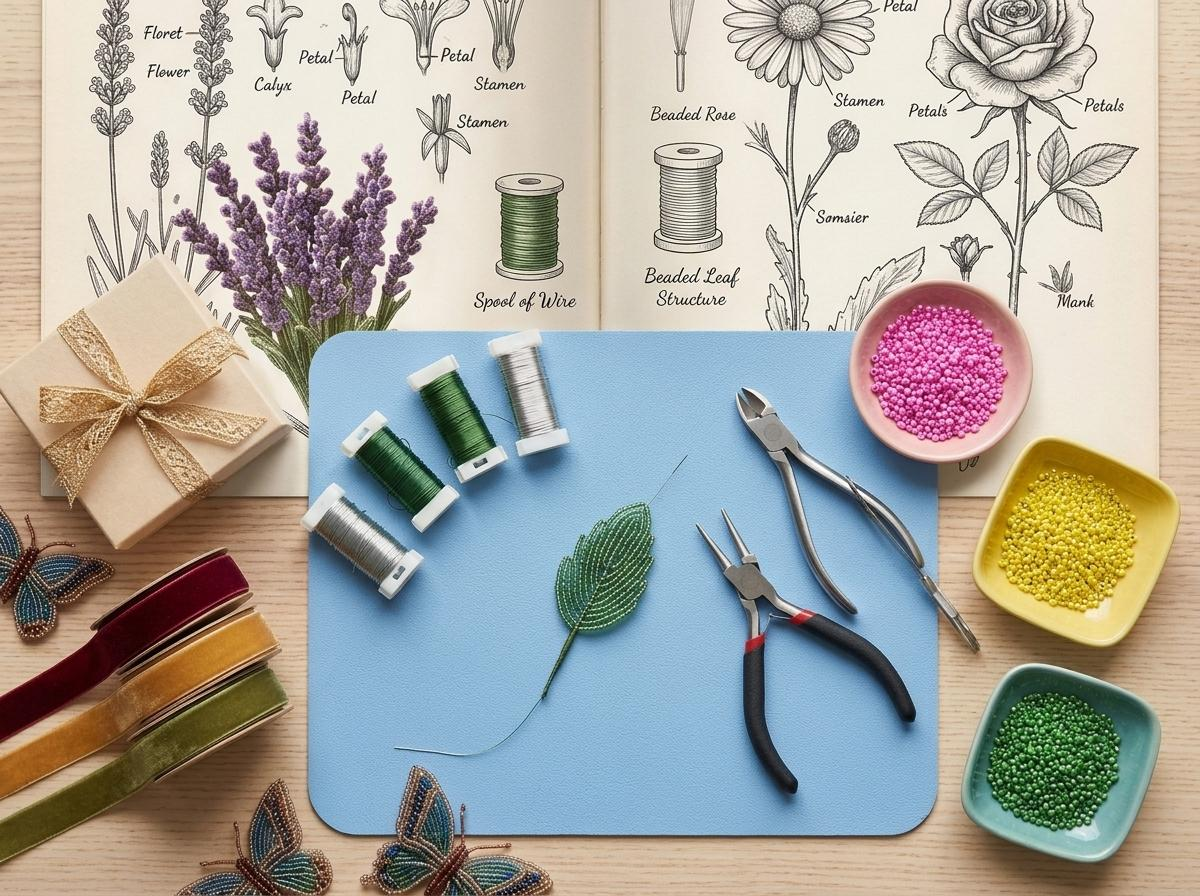
Have you ever admired the delicate, intricate beauty of floral arrangements that never wilt? French beaded flowers offer a timeless way to capture the elegance of nature using just wire and tiny seed beads. This traditional craft transforms simple materials into stunning, lifelike botanical art. For beginners, the process might seem daunting, but with the right approach, anyone can master the foundational skills. By understanding the essential tools, selecting the proper materials, and learning the basic wire loops, you can begin creating your own permanent floral masterpieces. Whether you are looking for a relaxing new hobby or a way to create handmade gifts, the world of French beading is incredibly welcoming.
Essential Tools and Materials for Beading
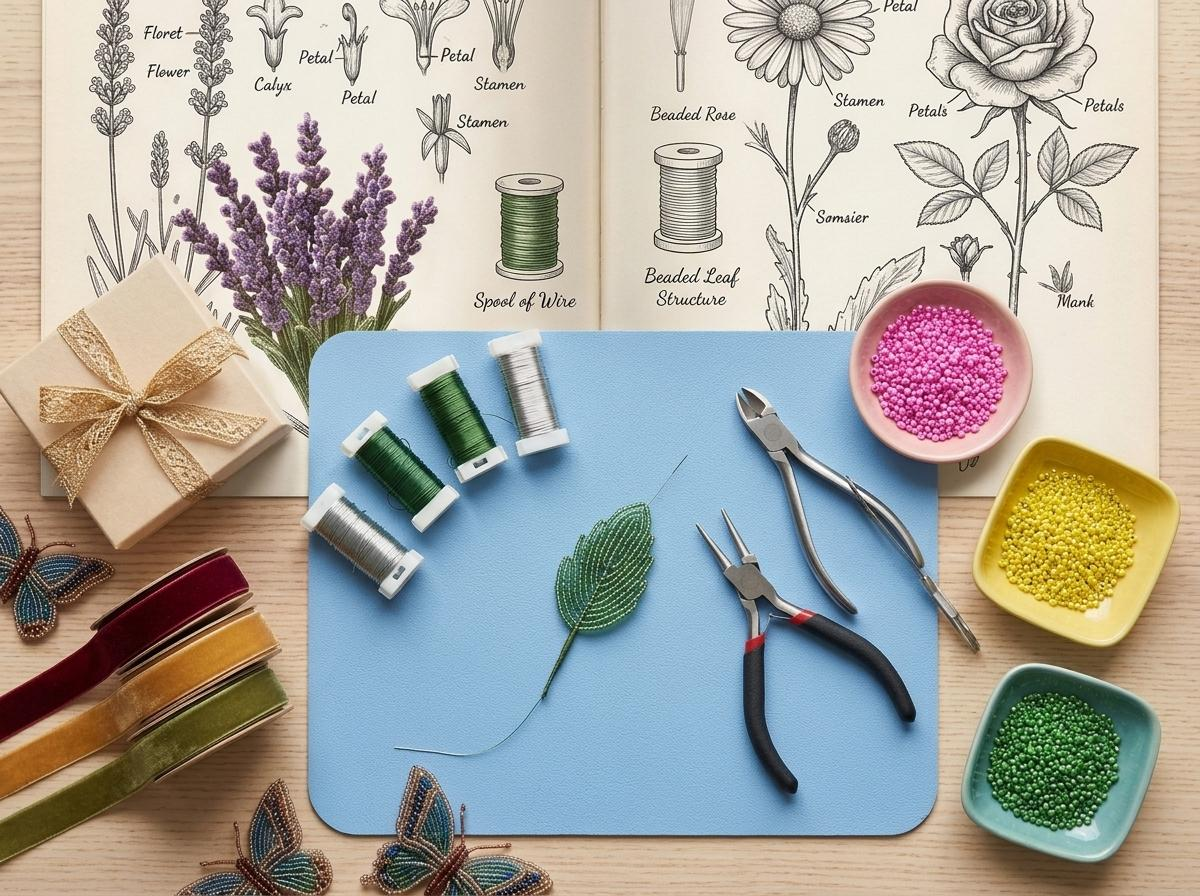
Before you twist your first wire, setting up your workspace is critical. The foundation of French beading relies on high-quality floral wire. You will need a sturdy unit support wire, typically 24 or 26 gauge, which acts as the armature for your petals and leaves. For the stem, a thicker 18 or 20 gauge wire is necessary to hold the weight of the finished flower. Finally, you need a very fine 30 to 34 gauge lacing wire to weave the beaded pieces together securely. When selecting your beads, high-quality seed beads are essential. Bead sizes such as 10/0 or 11/0 are standard, offering uniformity that ensures your petals look smooth and professional. Beyond the wire and beads, a comfortable workspace is a must. A non-fraying bead mat will catch rolling beads and prevent them from scattering across the floor. A pair of precision wire cutters and round-nose pliers are essential for twisting and cutting without damaging your materials. Setting up a dedicated, organized area allows you to focus entirely on the meditative process of stringing and shaping.
The Single Loop and Basic Frame
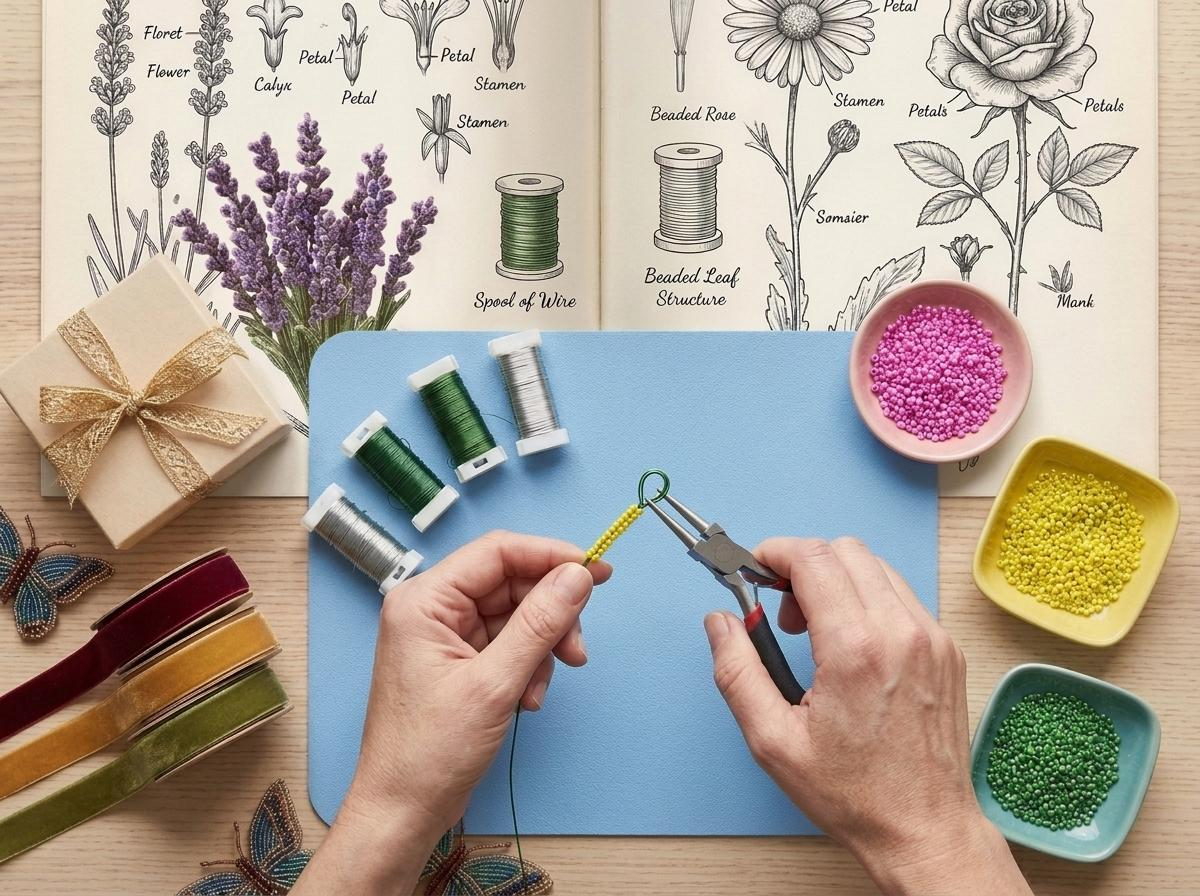
The core of French beading lies in its foundational techniques. The easiest starting point is the single loop, which is used to create simple petals, leaves, and stamens. To make a single loop, you count out a specific number of pre-strung beads, slide them down the wire, and cross the wire over itself to form a loop, twisting the base to secure it. It is vital to leave a small amount of bare wire between each loop to prevent the wire from breaking. Once you are comfortable with the single loop, you can advance to the basic frame. This technique involves creating a central wire frame and wrapping strung beads back and forth across it to fill the space. The basic frame allows for larger, more structured petals and leaves, forming the backbone of countless flower patterns. As you practice wrapping the beads around the frame at the correct angle, you will learn how to create pointed or rounded tips and bottoms, giving your floral components the natural shapes they need to mimic real blossoms.
In conclusion, starting your French beading journey is an exciting endeavor that requires patience and the right foundational knowledge. By gathering the correct wire gauges, choosing uniform seed beads, and practicing the single loop and basic frame techniques, you set yourself up for success. Do not be afraid to make mistakes; every twist of the wire teaches you something new about tension and shaping. Take your time, enjoy the meditative rhythm of stringing beads, and soon you will be well on your way to crafting stunning, permanent floral art. Grab your pliers and a spool of wire today to begin your very first beaded flower project.