

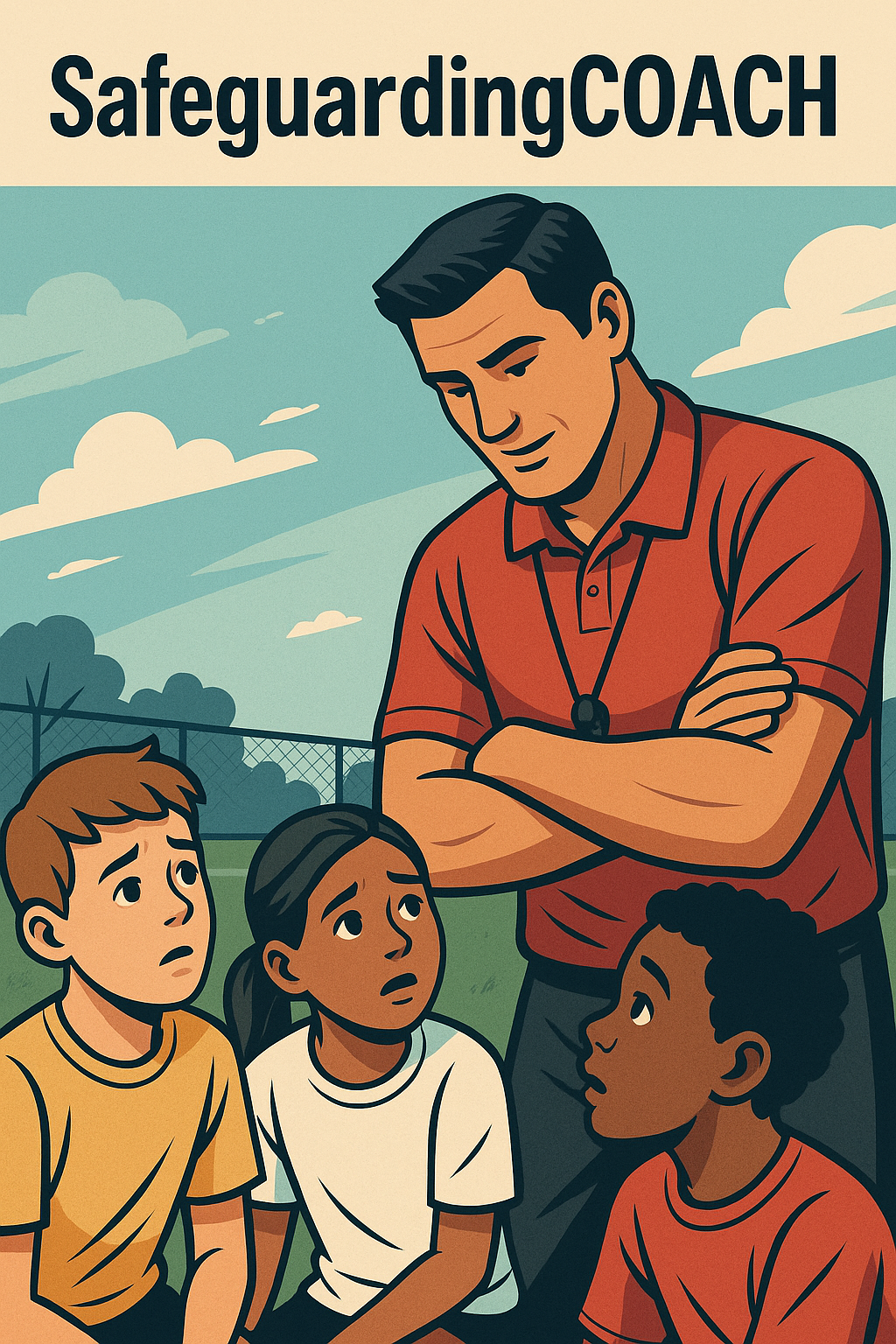
Extracts taken from the SafeguardingCOACH online training
Designed and Developed by Paul M. Critchlow © 2025,
“The Safeguarding Blueprint – Coach Programme”, released 25 Nov 2025.
The phrase “duty of care” is used often in sport, but many coaches don’t fully understand what it means in practice. At its core, duty of care means taking reasonable steps to ensure the physical, emotional, and psychological safety of every player under your supervision. It’s the foundation of ethical coaching — and central to safeguarding.
Duty of care does not mean a coach becomes a parent, counsellor, or therapist. Rather, it means the coach acknowledges their influence and accepts the responsibility that comes with it.
So what does this look like?
Firstly, it means creating an environment where players feel safe, respected, and valued.
This includes how you speak to players, how you correct them, and how you manage mistakes or poor performance.
A coach who uses humiliation, shouting, or belittling may believe they are “motivating”, but they are actually creating fear — and fear never produces long-term growth.
Duty of care also involves awareness. A coach who notices early warning signs — changes in behaviour, anxiety, sudden withdrawal, unexplained injuries, or anger — is better positioned to intervene correctly.
You don’t need to diagnose the problem. You simply need to recognise that something has changed and follow the appropriate reporting process.
Another part of duty of care is setting clear boundaries. Professional boundaries protect both the coach and the player.
These include physical boundaries (knowing when contact is necessary and when it isn’t), emotional boundaries (not becoming overly familiar), and digital boundaries (no private chats, no late-night messaging, no disappearing messages).
When boundaries are strong, trust grows.
Duty of care also has a legal dimension. Coaches are obligated to prevent foreseeable harm. This includes managing risks, ensuring equipment is safe, supervising effectively, and addressing bullying or unsafe behaviour. Turning a blind eye makes a situation worse — and puts both the player and the coach at risk.
Finally, duty of care means accountability. A coach must be willing to report concerns, record incidents accurately, and follow the chain of command.
Reporting is not betrayal. It is protection. Proper documentation safeguards the player and the coach.
Duty of care is not about perfection. It is about intention, awareness, and consistency. A coach who understands duty of care creates a space where players flourish not because they are pushed, but because they feel safe enough to try, fail, grow, and succeed.
When duty of care becomes part of your coaching identity, everything changes — performance improves, behaviour improves, trust improves, and the entire team culture lifts.
#DutyOfCare #SafeguardingCoach #SafeSportCulture #PMCBlueprint #ProtectOurPlayers