

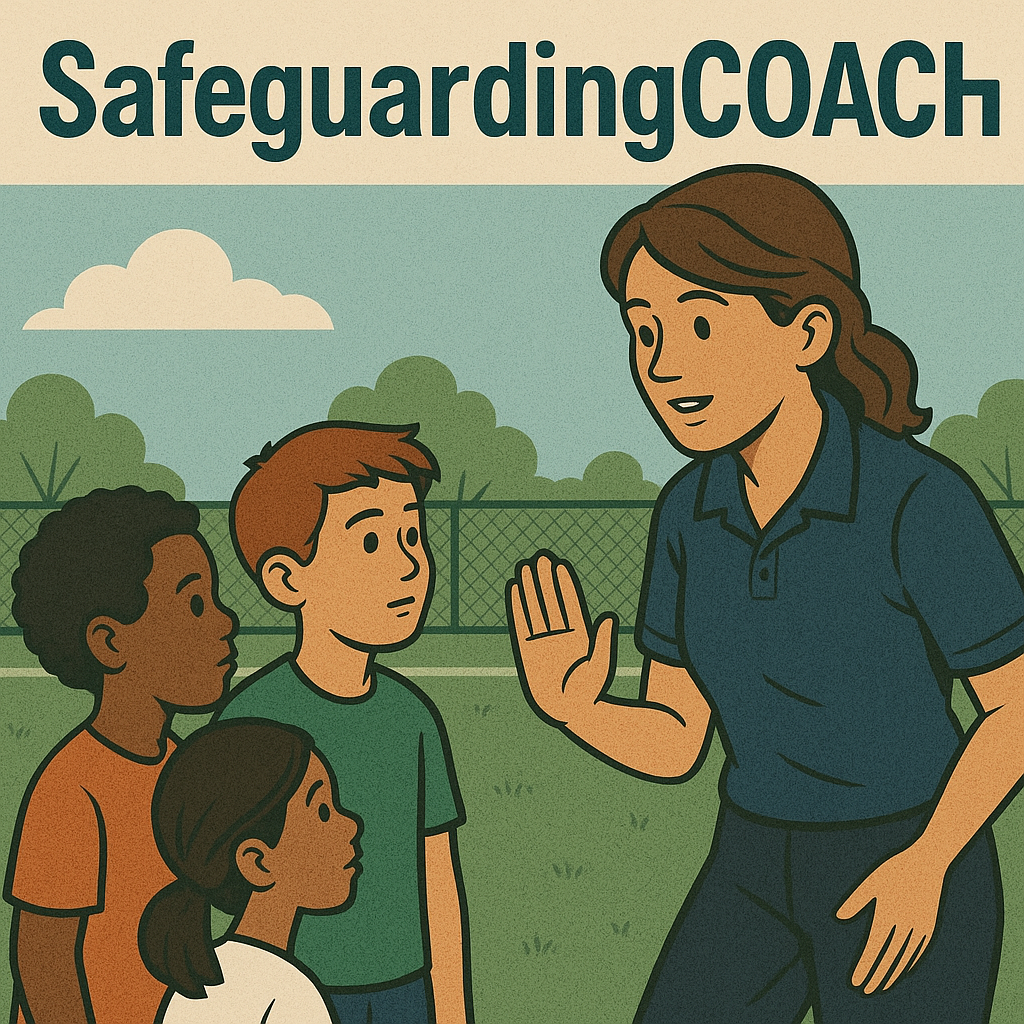
Extracts taken from the SafeguardingCOACH online training
Designed and Developed by Paul M. Critchlow © 2025,
“The Safeguarding Blueprint – Coach Programme”, released 25 Nov 2025.
Boundaries can feel like restrictions, but in reality they are the strongest form of protection in a coaching environment.
Boundaries keep relationships professional, expectations clear, and communication safe.
They protect players from harm — and they protect coaches from allegations, misinterpretations, and unnecessary risk.
Healthy boundaries begin with understanding your role. A coach is a leader, mentor, and instructor — not a friend, rescuer, or replacement parent.
Over-familiarity may feel innocent at first, but it can blur lines until the relationship becomes confusing or unsafe.
The foundation of safeguarding is clarity.
One of the biggest areas of boundary risk is communication. How a coach speaks, when they speak, and through what channels matters.
For example, private messaging with young athletes creates vulnerability for both sides. Even the most well-intended message can be misinterpreted.
Boundaries guide communication back to a safe, transparent space: messages sent to groups, communication through parents, or communication through official platforms.
Another boundary challenge is physical contact. Sport sometimes requires contact for demonstration, guidance, or first aid.
But contact must always be:
Explainable, Justifiable, Visible, and Proportionate.
If it does not meet these four criteria, it is not safe contact.
Boundaries also apply to emotional involvement. Coaches often care deeply about their players — and should.
But emotional boundaries prevent the coach from becoming so involved that their judgement becomes compromised. The goal is to remain supportive but objective.
Why are boundaries so powerful?
Because they build trust.
Player’s trust coaches who are consistent, fair, and predictable.
Parents trust coaches who separate professional and personal roles.
Teams thrive when everyone knows where the lines are.
A coach with strong boundaries creates a culture where respect, clarity, and safety flourish.
Here’s a quick reflection:
Do you ever give players lifts home alone?
Do you message players privately?
Do you treat some players differently because of personal preference?
Do you ever confide personal problems to your athletes?
Do you ever demonstrate techniques behind closed doors?
If any of these feel familiar, it’s time to strengthen your boundaries. The goal is not to restrict you — it is to protect you and the players you serve.
Boundaries are the backbone of safe coaching. When they are strong, everything else becomes easier: discipline, communication, conflict resolution, and even performance.
#BoundariesMatter #SafeguardingCoach #SafeSport #RespectfulCoaching #PMCBlueprint