

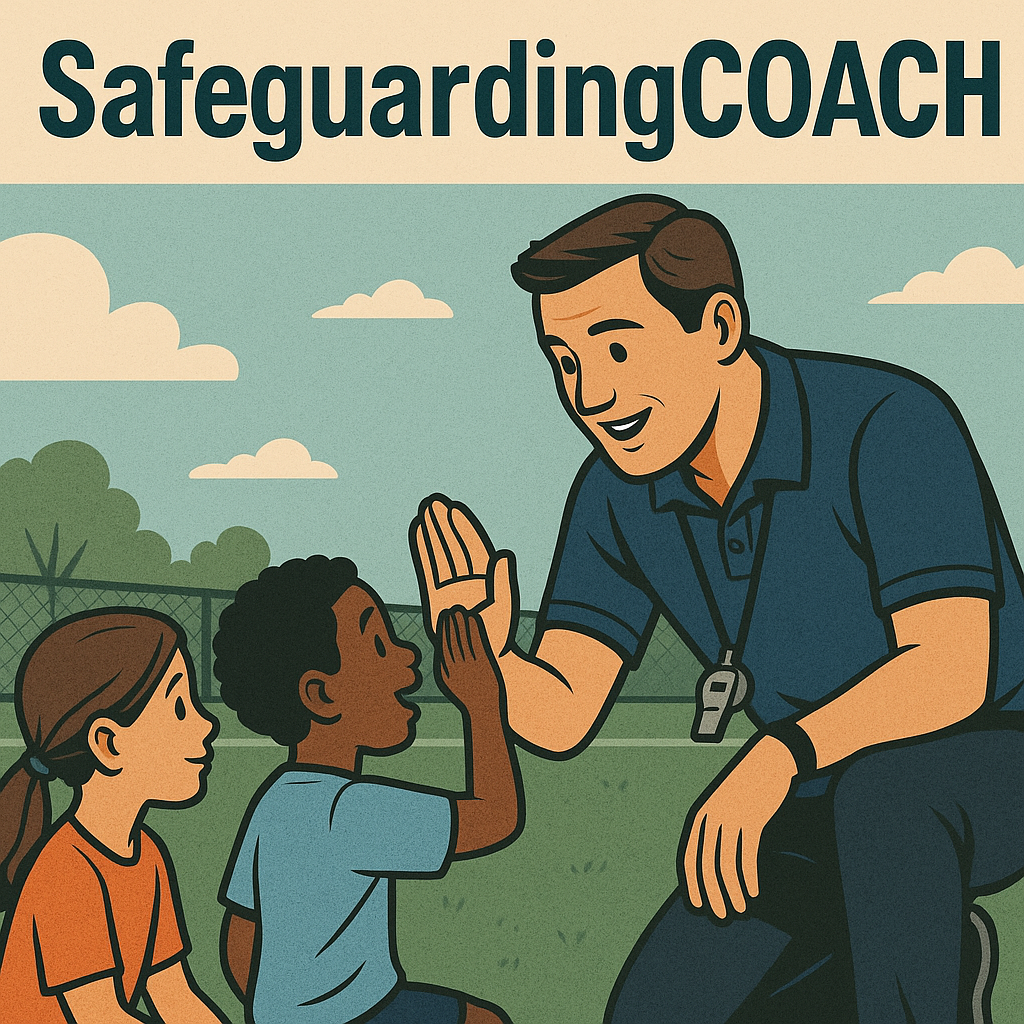
Extracts taken from the SafeguardingCOACH online training
Designed and Developed by Paul M. Critchlow © 2025,
“The Safeguarding Blueprint – Coach Programme”, released 25 Nov 2025.
Sport has always been a place where children grow, learn and discover who they can become. Behind every confident athlete is usually a coach who cared, encouraged, and created a safe space for that young person to thrive.
But in today’s world, coaching is no longer only about drills and tactical sessions.
Coaches now carry a deeper responsibility — to safeguard the emotional, physical, and psychological wellbeing of every player they work with.
Safeguarding is not just something for social workers or school officials. It sits at the heart of good coaching.
A coach is often one of the most influential adults in a young athlete’s life.
They see things parents may miss. They hear things that may be said only in passing but carry serious weight.
They guide not only performance, but character, confidence, and identity.
This is why safeguarding training is essential.
When coaches understand their duty of care, they become more than instructors.
They become protectors.
They learn how to recognise early signs of struggle — fear, withdrawal, emotional shifts, or sudden changes in performance.
They learn how to communicate in ways that build trust instead of fear.
They learn to set boundaries that protect not only the player, but the coach as well.
Safeguarding training also removes uncertainty. Many coaches worry about “getting it wrong” or being accused unfairly. Training gives clarity: what is appropriate, what isn’t, how to respond to concerns, and who to report to.
When a coach is informed, confident, and structured, misunderstandings are reduced and accountability becomes part of the culture.
Another crucial benefit is emotional intelligence. Coaches often deal with conflict, frustration, behaviour challenges, and intense pressure.
Safeguarding training teaches coaches how to manage these moments professionally and calmly. An emotionally regulated coach becomes a role model — shaping the entire atmosphere of the team.
Finally, safeguarding protects the integrity of the sport. When safety is prioritised, trust grows.
When players feel safe, they develop faster. When parents trust the coach, communication improves.
When clubs embrace safeguarding, the entire environment becomes healthier and more resilient.
Coaches who invest in safeguarding are not just better leaders — they are guardians of the game.
· If you are a coach, ask yourself:
· Do my players feel safe enough to speak up?
· Do I know what to do if something concerns me?
· Am I modelling the behaviour I expect from others?
· Do I manage my emotional responses well?
· Do I understand my boundaries?
If not, safeguarding training is your next step. It will raise your standard, protect your reputation, and transform the culture of your team.
A safe coach creates safe players.
And safe players become champions — on and off the field.
#SafeguardingCoach #SafeSport #ProtectTheGame #PMCBlueprint #SafeguardingMatters