
As a parent, I've seen how interactive reading tools capture young minds. They foster a love for reading. In today's technology-driven world, it's key to know the benefits of digital storybooks on kids' reading skills.

My experience shows these tools are very effective. Digital storybooks use engaging narratives and interactive elements. They make reading fun and immersive for kids.
Key Takeaways
- Digital storybooks can improve children's reading skills through interactive elements.
- They offer a personalized reading experience tailored to individual children's needs.
- Digital storybooks can increase children's engagement and motivation to read.
- They provide an opportunity for children to develop their reading skills at their own pace.
- Digital storybooks can be an effective tool for parents and educators to support children's reading development.
My Journey into the World of Children's Digital Reading
I started looking for a better way for my child to read. Seeing them struggle with old methods, I knew I had to try something new.
How I Discovered Their Impact on My Child's Reading
I found interactive children's books online. These digital books caught my child's eye with their interactive features and immersive storytelling. It was amazing to see how they made reading fun.
children's digital reading
The Reading Transformation I Witnessed Firsthand
The change in my child's reading was huge. They showed:
- Better understanding
- More words in their vocabulary
- More fun with reading
This reading transformation was incredible. It was all thanks to the interactive nature ofchildren's digital reading. We made reading a fun, interactive adventure.
What Are Digital Storybooks and Why They Matter
Digital storybooks have changed how kids read, offering a deep dive into stories that old books can't. They're key in making reading fun and improving reading skills.
Evolution from Traditional to Digital Format
The move from old books to digital ones is big. Digital books bring interactivity and personalization to the table. This makes stories more alive and engaging for kids.
Interactive Elements That Enhance Engagement
Digital storybooks stand out because they add interactive elements that grab kids' attention. These include:
- Touch-responsive features that let kids play with the story
- Sound effects and music that make the story come alive
Touch-Responsive Features
Touch-responsive features let kids tap, swipe, or pinch the screen. This fun interaction boosts their fine motor skills and hand-eye coordination.
Sound Effects and Music
Sound effects and music in digital books make reading more exciting. They create a rich atmosphere that pulls kids into the story.
Digital storybooks mix interactive elements, sound, and music for a unique reading adventure. This can spark a lifelong love of reading in kids.
The Science Behind Digital Reading and Brain Development
Digital storybooks can really help kids improve their reading skills. Studies show how digital reading shapes their brains.
Research Supporting Digital Reading Benefits
Studies say digital reading boosts kids' reading skills, especially with interactive parts. A study in the Journal of Educational Psychology found that interactive digital books help kids understand better. Dr. Julia Parish-Morris says, "Interactive e-books are great for kids' reading, if they're made right."
Research highlights:
- Interactive digital books improve reading skills
- They make kids more excited to read
- They help kids remember what they read better
Expert Opinions on Digital Literacy Development
Experts say digital literacy is key today. Dr. Kathy Hirsh-Pasek believes, "Digital literacy is more than reading. It's about understanding the world through different media." Digital books help kids get ready for the digital world.
"The future of reading is not just about text on a page; it's about interactive, immersive experiences that engage children on multiple levels."
Dr. Maria Konnikova
Key Reading Skills Enhanced by Digital Storybooks
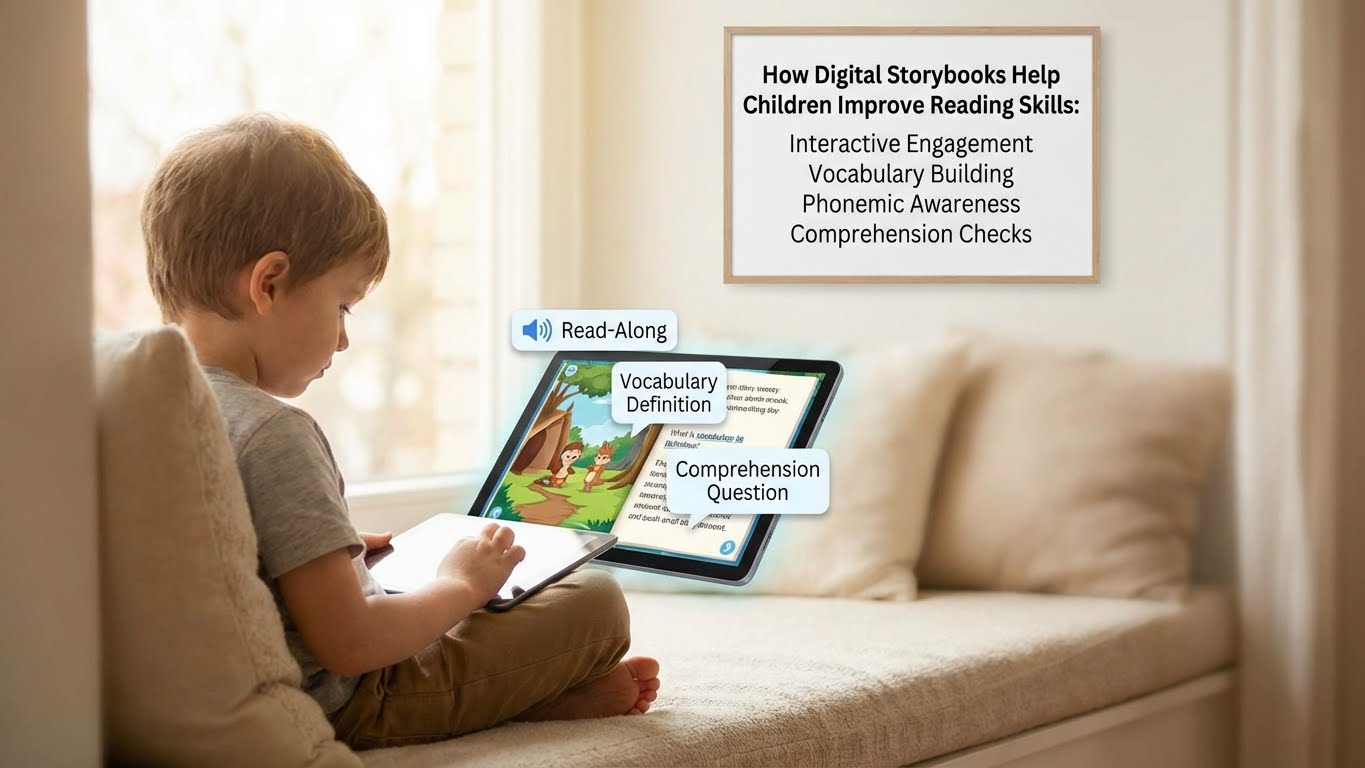
As a parent, I've seen how digital storybooks boost reading skills in kids. They have cool interactive features. These help with phonological awareness, comprehension, and growing vocabulary.
Phonological Awareness and Word Recognition
Digital storybooks really help with phonological awareness and word recognition. Word highlighting lets kids connect sounds with written words. This makes it easier for them to read and recognize words.
Comprehension and Critical Thinking
Digital storybooks also improve comprehension and critical thinking. They have interactive quizzes and checks. These help kids dive deeper into the story, boosting their understanding and analytical skills.
"Interactive digital content can significantly enhance a child's ability to comprehend complex narratives."
Education Expert
Vocabulary Expansion Through Interactive Context
Digital storybooks are great for expanding vocabulary. They have built-in dictionaries and word highlighting. Kids learn new words in context, which helps them grasp their meanings.
Word Highlighting Features
The word highlighting feature is super effective. As the narrator reads, words are highlighted. This helps kids follow the text and see the connection between spoken and written words.
Built-in Dictionaries
Built-in dictionaries give instant definitions for unknown words. This helps kids learn new words without stopping the story. They can learn at their own pace.
Digital storybooks use interactive features to boost reading skills. They make reading fun and effective for kids.
Creating an Immersive Reading Experience Through Technology
Digital advancements have changed how we tell stories. Now, young readers get an interactive and immersive experience. Digital storybooks use technology to grab kids' attention and make reading more fun.
Audio Narration and Its Impact on Pronunciation
Audio narration is a big part of digital storybooks. It helps kids improve their pronunciation. By hearing a narrator, kids learn how to say words correctly.
This is especially helpful for young readers who are still learning to read.
Visual Animations That Bring Stories to Life
Visual animations make stories come alive. They help kids see the plot and characters. This makes the story more real and easy to remember.
Interactive Quizzes and Comprehension Checks
Digital storybooks often have interactive quizzes and comprehension checks. These help kids understand the story better. They can test their knowledge and improve their critical thinking skills.
In conclusion, technology makes reading more engaging and fun for kids. Features like audio narration, visual animations, and quizzes make reading an enjoyable experience.
How I Use Digital Storybooks to Support Different Learning Styles
Digital storybooks are great for helping kids learn in different ways. They have fun, interactive parts that make reading fun for everyone. This makes reading a fun and inclusive activity for all.
Benefits for Visual Learners
Visual learners love the cool animations and pictures in digital storybooks. These things grab their attention and help them understand the story better. Interactive visuals like animations and videos make the story come alive.
Advantages for Auditory Learners
Auditory learners enjoy listening to stories in digital books. They get to hear the story read aloud. This helps them with speaking and understanding better.
Support for Kinesthetic Learners
Kinesthetic learners get to do fun, hands-on activities in digital books. These activities help them learn by moving and touching the screen.
Touch-Based Activities
Touch-based activities let kids interact with the book by tapping the screen. They can play games and answer quizzes. This makes learning more fun.
Movement-Oriented Stories
Digital storybooks are a great way to teach kids to read. They help kids learn in their own special way. This makes them a valuable tool for parents and teachers.
Selecting the Best Educational E-Books for Your Child's Age
Finding the right educational e-books is key to unlocking your child's reading potential. It's important to pick e-books that match their age and reading level. As a parent, you should look for e-books that are both fun and educational.
Recommendations for Preschoolers (Ages 3-5)
E-books for preschoolers should be simple and interactive. Look for e-books with:
- Colorful illustrations and animations
- Simple, rhyming text
- Interactive elements like tapping and swiping
ABC mouse and Starfall are great options. They offer interactive e-books for young learners.
Suggestions for Early Elementary (Ages 6-8)
E-books for early elementary readers should encourage reading aloud and comprehension. Look for e-books with:
- Engaging stories with relatable characters
- Read-aloud narration
- Quizzes and comprehension checks
Reliable platforms like Epic! have a vast library for this age group. They offer popular titles and educational content.
Options for Advanced Readers (Ages 9-12)
Advanced readers need e-books that challenge their skills. Look for e-books with:
- More intricate storylines and character development
- Thematic content that resonates with pre-teens
- Features like bookmarking and note-taking
Content Complexity Considerations
When choosing e-books, think about the content's complexity. Make sure the vocabulary, sentence structure, and themes fit your child's reading level and age.
Interest-Based Selection Strategies
Choosing e-books that match your child's interests can make reading more fun. Whether they love animals, space, or adventure stories, there's an e-book for them.
By picking e-books that fit your child's age, reading level, and interests, you can make reading a fun and engaging experience. This can help them develop a lifelong love of reading.
Popular Online Storytelling Platforms I've Tried and Recommend
As a parent, I've looked into many online storytelling platforms to help my child enjoy reading more. These sites have cool features that make reading fun and interactive for kids.
Choosing the right platform can be tough, but I've found some great ones. I'll share the different types I've tried and suggest the best ones.
Worthwhile Subscription-Based Services
Subscription services have lots of content, including cool animations and interactive parts. Epic! is a top choice, offering a huge library of e-books and educational stuff. It's great because it suggests books based on your child's interests and has a read-aloud feature.
"Epic! has been a game-changer for our family. The variety of books and the read-aloud feature have kept my child engaged and excited about reading."
Valuable Free Digital Libraries
If you're watching your budget, free digital libraries are a good option. Project Gutenberg and have lots of free e-books, including classics for kids. They're perfect for finding different stories without spending money.
Platform Content Type Cost Epic! E-books, Educational Content Subscription-Based Project Gutenberg E-books (Classic Literature)Free Many Books E-books (Classic Literature)Free
Platforms for Reluctant Readers
For kids who find reading hard, special platforms can really help. Reading A-Z is a great choice, with lots of e-books at different levels. It also has quizzes and checks to see if your child understands the story.
Using these online platforms, parents can give their kids a fun and engaging reading experience. It meets their unique needs and interests.
Animated Picture Books: The Gateway to Reading Engagement
I've seen how animated picture books grab young readers' attention. They mix lively animations with classic stories. This mix creates a world that draws kids into the story, making them love to read.
How Animation Enhances Story Comprehension
Animations in picture books help kids get the story better. They show visual clues that help follow the plot and characters. This makes the story easier to understand and fun to follow.
Finding the Right Balance of Animation and Text
It's key to balance animations and text in picture books. Too many animations can take away from the story. But too few animations miss out on the digital storytelling's power. The best mix lets animations add to the story without taking over.
My Child's Favorite Animated Storybooks
My child loves animated storybooks that get the mix just right. They have interactive quizzes and games that help kids learn and read more. These books are both fun and educational, adding value to our digital collection.
Building a Digital Library for Kids: My Approach
As a parent, I've learned how vital a digital library is for kids. It offers a wide range of books and educational content. This can greatly improve their reading habits.
To build an effective digital library, I focus on three main areas. These are organizing content by reading level, curating a diverse collection of genres, and managing subscriptions and purchases.
Organizing Content by Reading Level
It's important to organize books by reading level. This ensures my child can find books that match their reading skills. I use various tools to categorize books, making it easier for them to find what they need.
Curating a Diverse Collection of Genres
Having a diverse collection of genres is key to keeping my child interested in reading. I make sure to include fiction, non-fiction, fantasy, and adventure books. This way, they can explore different interests.
Managing Subscriptions and Purchases
Managing subscriptions and purchases is crucial for a relevant digital library. I regularly check our subscriptions and purchases. This helps us get the most value from our digital library.
Some strategies I use include:
- Monitoring my child's reading habits to identify areas of interest
- Regularly reviewing and updating our digital library to ensure it remains relevant
- Using a combination of free and paid resources to maximize our library's diversity
By using these strategies, I've created a digital library that supports my child's reading development. It also fosters a love of reading.
Balancing Screen Time with Virtual Storytime
In today's world, finding a balance between screen time and virtual story time is key. It helps kids develop a love for reading. With digital storybooks getting more popular, parents face the challenge of managing screen time. They must also encourage healthy reading habits.
Setting Healthy Boundaries
It's important to set healthy boundaries for screen time. I suggest limiting the time spent on digital devices. Encourage kids to play outside and be active. This helps them have a balanced routine with both digital and physical activities.
Integrating Digital and Physical Books
Mixing digital storybooks with physical books enriches the reading experience. Try alternating between the two to keep kids interested. For example, read a physical book in the morning and a digital one before bed. This balance is great.
Creating a Positive Digital Reading Environment
To make digital reading positive, use the device only for reading. Turn off notifications and find a cozy reading spot. Using reading apps with a kid-friendly interface and fun features is also a good idea.
Tips for Balancing Screen Time Benefits Set screen time limits Promotes physical activity and outdoor play Alternate between digital and physical books Creates a rich reading experience
Minimize distractions during digital reading Enhances focus and comprehension
Conclusion: Embracing the Future of Children's Reading
Reflecting on my journey into children's digital reading, I see a big change. Digital storybooks are changing how kids read. They make reading more fun and help kids learn better.
The future of reading for kids is digital. It's important for parents to keep up with this change. Digital storybooks make reading more exciting and effective for kids. I've seen how they can change a child's reading habits for the better.
We need to find a good balance between screen time and reading. This ensures a positive digital reading space. By doing this, we help our kids love reading for life. The future of reading for kids looks bright, thanks to digital storybooks.
FAQ
What are digital storybooks, and how do they differ from traditional books?
Digital storybooks are interactive books for kids that use technology to make reading fun. They have animations, sound effects, and interactive parts. This makes them different from old-fashioned books.
How do digital storybooks support reading development in children?
Digital storybooks make reading fun and interactive. This helps kids improve their reading skills. They can get better at recognizing words, understanding stories, and thinking critically.
Can digital storybooks be used for children of all ages?
Yes, digital storybooks are for kids of all ages. There are books for little ones and older readers. They match different ages and reading levels.
How do I choose the best digital storybooks for my child?
Pick digital storybooks that fit your child's age and reading level. Look for ones with cool features, fun stories, and learning content.
Are there any online platforms that offer digital storybooks for kids?
Yes, many websites offer digital storybooks for kids. Some need a subscription, while others are free. You can find online platforms and educational e-book sites.
How can I ensure that my child is using digital storybooks in a healthy and balanced way?
Set limits on screen time and watch how your child reads. Encourage them to read both digitally and in print.
Can digital storybooks be used to support children with different learning styles?
Yes, digital storybooks can help kids with different learning styles. They offer interactive features for visual, auditory, and kinesthetic learners.
Are animated picture books a type of digital storybook?
Yes, animated picture books are a type of digital storybook. They use animations to make stories come alive. They're a fun way to read with your child.
How can I build a digital library for my child?
Start by picking digital storybooks that your child likes and can read. Look at online platforms and subscription services for a wide range of books.