
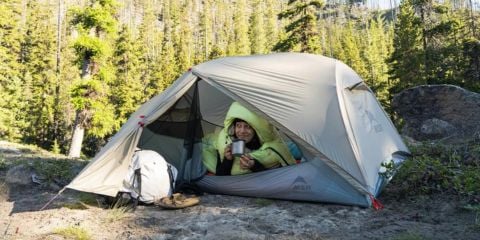
What do you picture when someone says national park camping? Probably a gate, a ranger, a map handed through a car window. Now picture none of that. The North Cascades hands you a highway, a wall of peaks and very little ceremony-which is exactly why first-timers get caught out. If you're planning to camp Camping in Cascade National Park, navigating this open landscape requires a completely different mindset.
Where Does the Park Actually Begin?
Harder to answer than you would expect. The complex covers 684,000 acres across three units-North Cascades National Park, Ross Lake National Recreation Area and Lake Chelan National Recreation Area-and Highway 20 runs straight through the middle of it without an entrance station. Newhalem, the visitor center, the Gorge and Diablo stops and Ross Dam access all carry no entrance or trailhead parking fee.
Much of what people call "the park" is really three overlapping jurisdictions with different rules about fees, camping and permits. A campsite on one side of a line needs a reservation on a federal booking system; a trailhead a few miles away needs a pass from a different agency entirely. Nobody hands you a diagram on the way in.
That free access misleads people into assuming everything nearby is free too. Forest Service trailheads just outside the boundary often charge a day-use fee, which needs a Northwest Forest Pass or an America the Beautiful pass. A Washington Discover Pass does not cover federal land, whatever the sticker on the windscreen suggests.
Why Do Campgrounds Fill Before You Arrive?
Because the supply is genuinely small and demand has climbed. Preliminary park service figures put 2025 at roughly 47,000 recreation visits, up 185 percent on 2024. Even that number undercounts the pressure, since the park has no entry gates and many people simply pull into a lay-by and walk. Car campers at Colonial Creek often fall outside the official tally altogether, because that ground sits in a recreation area rather than the park proper, as SFGate reported earlier this year.
Supply has not moved to match. The complex holds five drive-in campgrounds along the highway plus one group site, and the largest of them tops out at 107 sites. A single warm weekend can absorb the entire corridor. Travel writers now compare these peaks to the Alps and the Dolomites, and the booking calendar for North Cascades tent camping has started to reflect that comparison.
What Belongs in the Car Before Marblemount?
Marblemount is the last practical stop for supplies before the corridor, so load up there rather than hoping. Before you drive east, check you have:
- Drinking water for every night, since some campgrounds supply none at all
- A Washington state fishing licence if you plan to fish the Skagit-Marblemount holds the nearest counter
- A Northwest Forest Pass for Forest Service trailheads outside the park boundary
- Hard-sided food storage, because black bears work these campgrounds actively
- Offline maps and a paper backup, as mobile coverage disappears past town
- Warm layers for the evening, whatever the forecast promised at sea level
Is a Basecamp Smarter Than Moving Camp?
For most first visits, yes. Packing a tent every morning costs you the two hours of the day when the light is best and the trailheads are emptiest. Picking one site near Marblemount and driving out from it each morning gives you hot water at the end of the day, a shop within reach and a fixed point to return to when a road closes or the weather turns.
The North Cascades reward people who plan their sleeping arrangements as carefully as their hiking. Sort that part first, and the rest of the trip stops feeling difficult.
Why Does Having a Backup Plan Save Your Trip?
Even the most prepared campers face unpredictable mountain weather, sudden trail closures, or filled campgrounds. Having a reliable riverfront campground near Marblemount as your core anchor ensures that no matter how wild the high-country gets, you always have a comfortable, secure place to recharge. When you eliminate the uncertainty of where you are sleeping each night, you give yourself the freedom to fully immerse in the majestic landscapes of the Cascades.
The North Cascades reward people who plan their sleeping arrangements as carefully as their hiking. Sort that part first, and the rest of the trip stops feeling difficult.