
Choosing the right photo is one of the most important steps when creating a family painting. The photograph serves as the main reference for the finished artwork, so it should show the people clearly while capturing a meaningful moment. A great image can help preserve facial details, natural expressions, and the connection shared between family members.
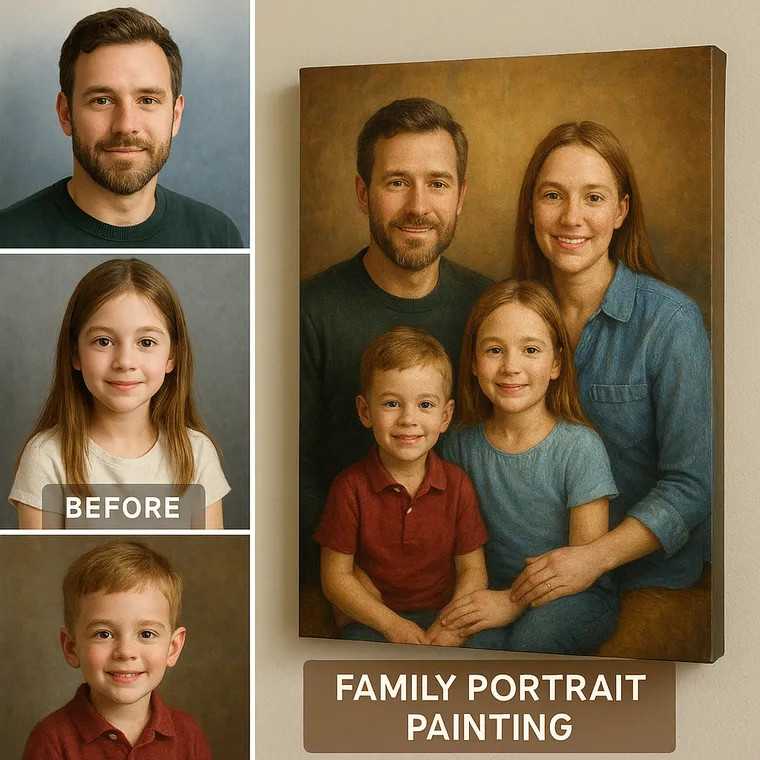
Choose a Clear and High Quality Photo
Start with an image that is sharp and easy to see. High-quality photographs provide more details for the artist to work with, especially around the eyes, hair, facial features, and clothing.
A professional camera isn't necessary. A clear smartphone photo can also work well when it has enough resolution and isn't overly compressed.
Avoid images that are heavily pixelated, blurry, or cropped around important facial features.
Pay Attention to Lighting
Good lighting can make a major difference. Look for photographs where faces are evenly illuminated and easy to recognize.
Natural daylight is often helpful because it can show skin tones, hair color, and facial details more clearly. Try to avoid images with extremely dark areas, harsh shadows, or bright light directly covering someone's face.
The goal is simple: choose a photograph where every important person can be seen comfortably.
Look for Natural Expressions
The best family artwork isn't always based on the most formal photograph. Sometimes a candid image with genuine smiles or relaxed expressions can create a more emotional result.
Think about what you want the finished artwork to communicate. A joyful family gathering may call for a warm, happy image, while a quiet family moment might feel more intimate.
Choose an expression that feels authentic to the people in the portrait.
Consider the Composition
Look carefully at how everyone is positioned in the photograph.
A good reference image should make it easy to identify each person. Faces shouldn't be hidden behind objects, other people, sunglasses, or extreme shadows.
If you don't have one photograph showing everyone together, separate images may sometimes be used to create a single composition. This can be useful when family members live far apart or when the perfect group photograph was never taken.
Choose a Photo With Emotional Meaning
Technical quality matters, but emotional value matters too.
Maybe it's a photograph from a family vacation, wedding, birthday, anniversary, holiday, or reunion. It could even be an ordinary afternoon that became special because of the people involved.
The image that brings back the strongest memory may be the best choice, even if it isn't technically perfect.
A personalized portrait should tell a story, and meaningful photographs often make the most memorable artwork.
Can Old Family Photos Be Used?
Absolutely. Older photographs can be valuable references for personalized artwork, especially when they preserve memories that cannot be recreated.
An old photo may have fading, scratches, or slight damage. That doesn't automatically make it unsuitable. What matters most is whether important facial features and expressions remain recognizable.
If you have several photographs of the same person, consider providing the clearest image available. Multiple references may also help when one photograph has a detail that another doesn't.
Can Pets Be Included?
For many families, pets are part of the family story too. A beloved dog or cat can often be included in a personalized portrait alongside parents, children, or other relatives.
When selecting a pet photograph, look for clear eyes, recognizable markings, and a natural pose. These details can help capture the animal's personality and make the finished artwork feel more personal.
What Photos Should You Avoid?
Some images can be more challenging to work with. When possible, avoid:
- Extremely blurry photographs
- Very low resolution images
- Faces hidden by objects
- Heavy filters
- Extreme shadows
- Photos where subjects are very far away
- Images with important features cropped out
You don't need a perfect photograph. You simply want enough visible detail for the important features to be recognized.
Think About the Finished Artwork
Before choosing the final photo, consider where the artwork will be displayed.
A wide family photograph may work well for a horizontal canvas, while a closer portrait might suit a vertical format. Think about the available wall space, the number of people included, and how much background you want visible.
It can also help to decide whether you prefer a traditional portrait appearance or something more artistic.
What Makes the Best Reference Photo?
The best image usually combines three things: clarity, emotion, and meaning.
A sharp photograph helps preserve recognizable details. Natural expressions make the portrait feel authentic. Most importantly, a meaningful moment gives the artwork a personal story.
These qualities can make paintings of family portraits feel more than decorative pieces. They can become reminders of people, relationships, and moments that matter.
Final Thoughts
Choosing the best photo for personalized artwork doesn't have to be complicated. Start with a clear image, check the lighting and expressions, consider the composition, and choose a photograph that carries genuine emotional value.
Even if you don't have one perfect group photo, separate references may provide another way to bring loved ones together in one beautiful portrait.
Ready to transform a favorite family memory into artwork? Snappy Canvas can help turn your cherished photograph into a personalized portrait that brings meaningful moments to life.