
The Irish Wolfadoodle is a fascinating designer dog that combines the gentle nature and impressive size of the Irish Wolfhound with the intelligence, trainability, and often curly coat of the Poodle. As interest in hybrid and doodle breeds continues to grow, more families are searching for information about the Irish Wolfadoodle, including its temperament, size, grooming needs, exercise requirements, health considerations, and suitability as a companion dog.
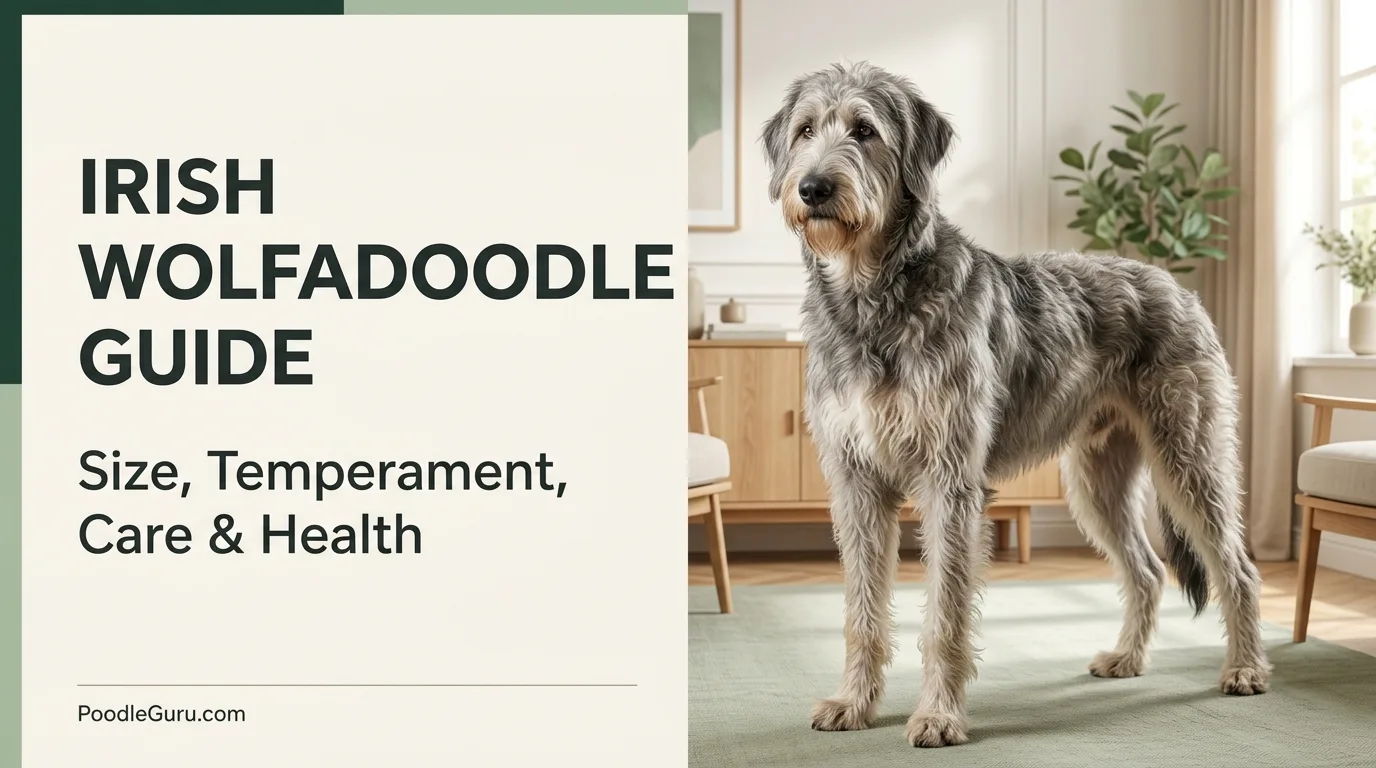
Known for its affectionate personality and striking appearance, the Irish Wolfadoodle can be an excellent choice for people who appreciate large dogs with a friendly and loving nature. However, owning a large hybrid breed requires preparation, time, space, and a clear understanding of its needs. This article explores the characteristics of the Irish Wolfadoodle dog, its personality, appearance, care requirements, and important considerations for prospective owners.
Irish Wolfadoodle Appearance and Breed Characteristics
The Irish Wolfadoodle is generally a cross between an Irish Wolfhound and a Poodle. Because it is a hybrid rather than a standardized purebred breed, individual dogs can differ considerably in size, coat texture, coloring, facial features, and personality. The particular Poodle parent, genetics, and generation of the cross can all influence the final appearance of an Irish Wolfadoodle puppy.
One of the most noticeable characteristics of an Irish Wolfadoodle puppy is its potential size. Irish Wolfhounds are exceptionally large dogs, while Standard Poodles are also considerably larger than many other popular companion breeds. As a result, an adult Irish Wolfadoodle can become a substantial dog that needs adequate living space and appropriate equipment.
The coat may range from wavy to curly, depending on which parent's coat characteristics are more prominent. Some Irish Wolfadoodles may have a softer, more Poodle-like coat, while others can display a texture that resembles the Irish Wolfhound more closely. Coat colors can also vary, with possible shades including gray, black, cream, white, brown, and combinations of these colors.
Their overall appearance is often elegant and distinctive. Long legs, a large frame, a relatively long muzzle, and a shaggy or curly coat can give the Irish Wolfadoodle a memorable look. However, appearance should not be the only factor considered when choosing this type of dog. The dog's size, energy level, grooming requirements, and long-term care needs are equally important.
The Irish Wolfadoodle size can make this hybrid especially appealing to people who love gentle giant dogs. At the same time, a large dog can require more food, larger sleeping arrangements, stronger walking equipment, and greater attention to safe exercise than a smaller breed.
Irish Wolfadoodle Temperament and Family Life
The temperament of an Irish Wolfadoodle can be one of its most attractive qualities. Both parent breeds are known for characteristics that can contribute to a friendly and affectionate companion. Irish Wolfhounds are often associated with gentle personalities, while Poodles are recognized for intelligence and responsiveness to training.
Many Irish Wolfadoodles can develop strong bonds with their families and enjoy spending time around people. They may be playful when young and become calmer as they mature. Their affectionate nature can make them appealing to families looking for a companion that enjoys being involved in everyday activities.
Early socialization is particularly important for an Irish Wolfadoodle puppy. Introducing a young dog gradually and positively to different people, appropriate animals, environments, household sounds, and everyday experiences can help support confident behavior as the dog grows.
Training should also begin with age-appropriate expectations. A large dog that has learned good manners is much easier to manage than a large dog that has never learned basic household boundaries. Positive reinforcement, consistency, patience, and short training sessions can help make learning enjoyable.
Because Poodles are highly intelligent, some Irish Wolfadoodles may enjoy mental stimulation as much as physical activity. Simple obedience training, interactive games, scent-based activities, and appropriate puzzle toys can provide useful mental engagement.
Despite their size, these dogs are not necessarily suited to being left alone for long periods every day. A family considering an Irish Wolfadoodle dog should think carefully about the amount of companionship and attention they can realistically provide.
Irish Wolfadoodle Grooming, Exercise, and Daily Care
Caring for an Irish Wolfadoodle involves more than regular walks and feeding. Grooming can be an important part of ownership, particularly if the dog inherits a dense, curly Poodle-like coat. Curly and wavy coats can become tangled or matted when they are not maintained properly.
Regular brushing can help keep the coat cleaner and more manageable. Depending on the dog's coat type and length, professional grooming may also be necessary. The grooming schedule should be based on the individual dog's coat rather than relying solely on a fixed timetable.
Exercise is another important consideration. An Irish Wolfadoodle may enjoy daily walks, outdoor exploration, and age-appropriate play. However, because this is potentially a very large dog, exercise should be suitable for its age and development. Growing puppies should not be pushed into strenuous activity simply because they appear energetic.
Adult dogs can benefit from regular movement combined with mental stimulation. A balanced routine can include walks, supervised play, training activities, and opportunities to explore safely. Owners should also remember that large dogs need comfortable resting areas and enough room to move around without constantly bumping into furniture or confined spaces.
Nutrition deserves careful attention as well. A rapidly growing Irish Wolfadoodle puppy needs an appropriate diet designed for its developmental stage. Because large-breed growth has particular nutritional considerations, owners should discuss feeding choices with a veterinarian rather than relying entirely on generic feeding advice.
Veterinary care is another essential part of responsible ownership. Like other dogs, Irish Wolfadoodles can potentially inherit health concerns associated with their parent breeds. Prospective owners should ask breeders about health screening, veterinary records, family history, and the health of the parent dogs.
The potential lifespan of an Irish Wolfadoodle can vary because this is a hybrid dog rather than a breed with one universally established standard. Responsible breeding, appropriate nutrition, veterinary care, healthy exercise, and overall lifestyle can all contribute to a dog's well-being.
Irish Wolfadoodle Cost, Puppies, and Responsible Ownership
The Irish Wolfadoodle price can vary substantially depending on factors such as breeder reputation, location, lineage, puppy generation, health testing, veterinary care, coat characteristics, and demand. A lower purchase price does not necessarily represent better value, particularly if important health screening or early care has been neglected.
When searching for an Irish Wolfadoodle puppy, prospective owners should focus on responsible breeding practices rather than choosing solely based on appearance or price. A reputable breeder should be willing to discuss the health and temperament of the parent dogs and provide appropriate documentation.
It is also important to understand that the initial puppy price is only one part of the overall cost of owning an Irish Wolfadoodle. A large dog can have higher ongoing expenses because of its food requirements, grooming, veterinary care, bedding, transportation needs, and appropriately sized accessories.
Before bringing an Irish Wolfadoodle puppy home, families should consider whether their home environment is suitable for a very large dog. Space, fencing, transportation, daily schedules, grooming commitments, and long-term financial responsibilities all deserve consideration.
Training and socialization should continue throughout the dog's development. A puppy that receives consistent guidance can grow into a well-mannered companion, while an owner who understands the breed's potential size and personality can prepare for the challenges before they become difficult.
Conclusion: Is the Irish Wolfadoodle a Good Companion?
The irish wolfadoodle can be an impressive and affectionate companion for the right household. Combining the characteristics of the Irish Wolfhound and Poodle, this hybrid may offer intelligence, friendliness, a distinctive appearance, and a loving family-oriented personality. Its potentially large size and grooming needs, however, mean that it is not a low-maintenance choice.
Anyone considering an Irish Wolfadoodle puppy should research responsible breeders, understand the potential adult size, prepare for grooming and exercise requirements, and budget for long-term care. Early socialization, positive training, proper nutrition, veterinary attention, and plenty of companionship can help support a happy and well-adjusted dog.