

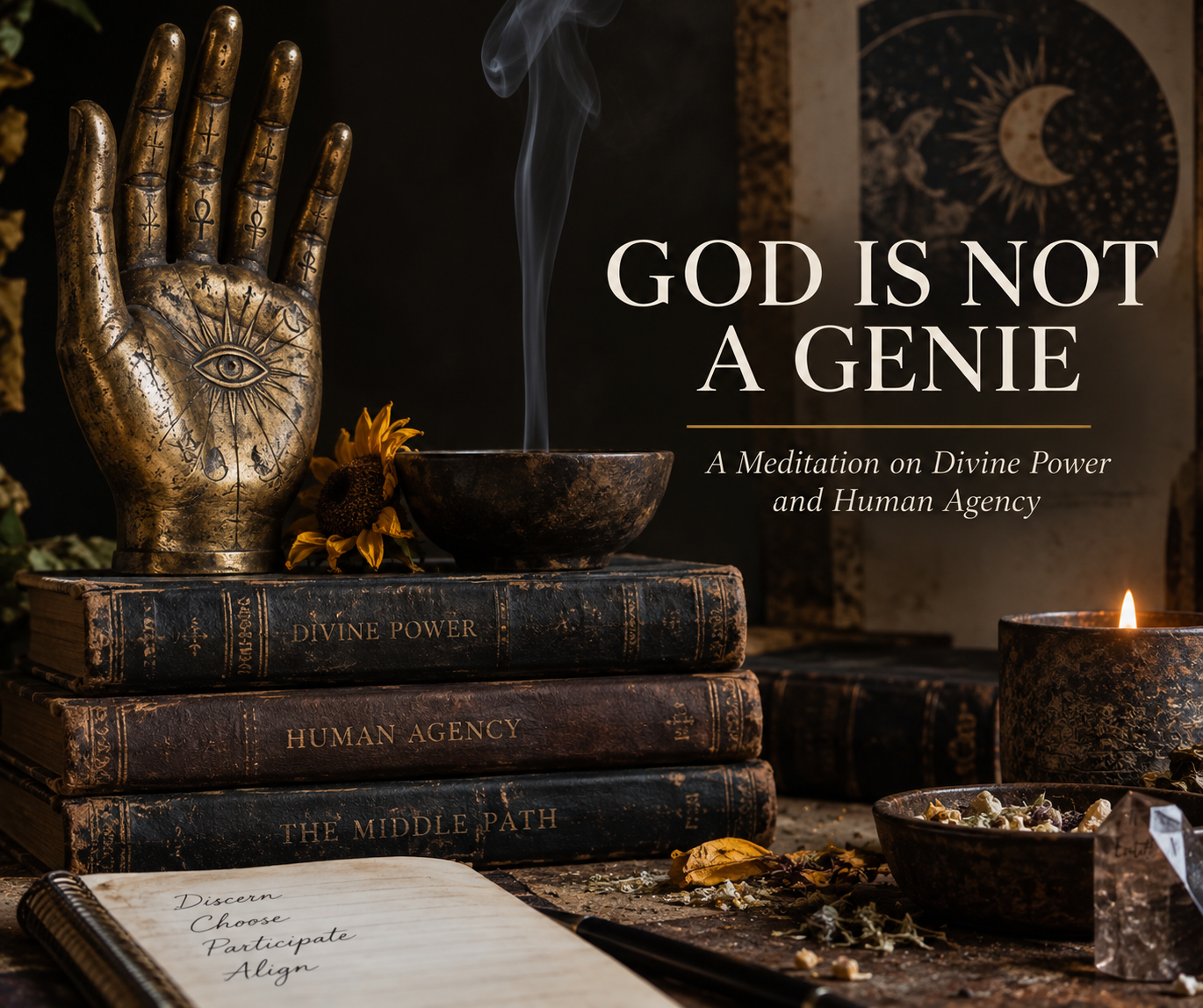
In the quiet hours before dawn, when the weight of generations seems heaviest, an ancient question echoes through time: Where is divine intervention in the face of sustained suffering? Across centuries of prayer, struggle, and creation, the persistence of systemic oppression forces us to confront uncomfortable truths about divinity and human agency.
The revelation arrives not as a whisper but as a thunderclap: No one is coming to save us. Not the divine, not the ancestors, not a prophesied deliverer, not the systems we've built, not even the promise of tomorrow's generation. This truth, stark as morning light, demands we reassess everything we understand about spirituality and power.
Yet this realization, painful as it may be, opens a door to profound understanding. We have fundamentally misunderstood the divine role in human affairs. Our ancestors aren't cosmic rescue workers but living memory, reminding us who we are and what we're capable of achieving. The divine force we call God isn't a supernatural wish-granter but rather the infinite potential dwelling within each of us, waiting to be awakened and expressed.
Consider how our spiritual traditions have been shaped by the forces of history. Christianity, brought to many through colonization, shifted from a theology of liberation into a tool of compliance. African spiritual systems, rich with wisdom about personal power and cosmic connection, were deliberately demonized and suppressed. Even Eastern traditions, when they reached our communities, came filtered through lenses of cultural bias and racism.
Yet the power inherent in these spiritual traditions persists, like a river flowing beneath layers of rock. When individuals manage to break through the accumulated sediment of disempowering interpretations, they tap into something profound and transformative. The tragedy isn't that these spiritual systems lack power—it's that we've been conditioned to approach them as supplicants rather than as vessels of divine authority.
The path forward requires a fundamental shift in perspective. Instead of waiting for divine intervention, we must recognize ourselves as divine instruments. Rather than hoping for ancestral rescue, we must embody the strength our ancestors have already gifted us. This isn't a rejection of spirituality but rather its deepest embrace—understanding that divine power manifests through human action.
We find ourselves in a battle that extends beyond the physical realm into the spiritual and psychological. The sensation of abandonment by divine forces isn't a reflection of cosmic reality but rather evidence of systemic design—abandoned people, after all, often stop fighting. But this very design contains the seeds of its own transformation: when we cease waiting for external salvation and embrace our own divine agency, we discover power that has always been present.
The reality we inhabit was constructed to maintain disempowerment, but this constructed nature reveals its vulnerability. By creating our own systems, building our own communities, and charting our own spiritual paths—without seeking external validation—we tap into authentically transformative power. This isn't about hoping for ancestral support; it's about acting with the certainty that ancestral wisdom already flows through our veins.
The truth emerges with crystal clarity: we were never meant to be saved because we already possess everything needed for our own liberation. The persistent attacks against awakening consciousness reveal a profound fear—not of divine intervention, but of human beings recognizing and reclaiming their inherent divine power.
When we fully grasp this truth—when we stop waiting and start creating, stop hoping and start knowing—we don't just change our circumstances. We transform the very foundation of reality itself. This is the power they fear, the awakening they resist, and the transformation that becomes inevitable once we understand: God is not a genie, but rather the infinite potential waiting within us all.