
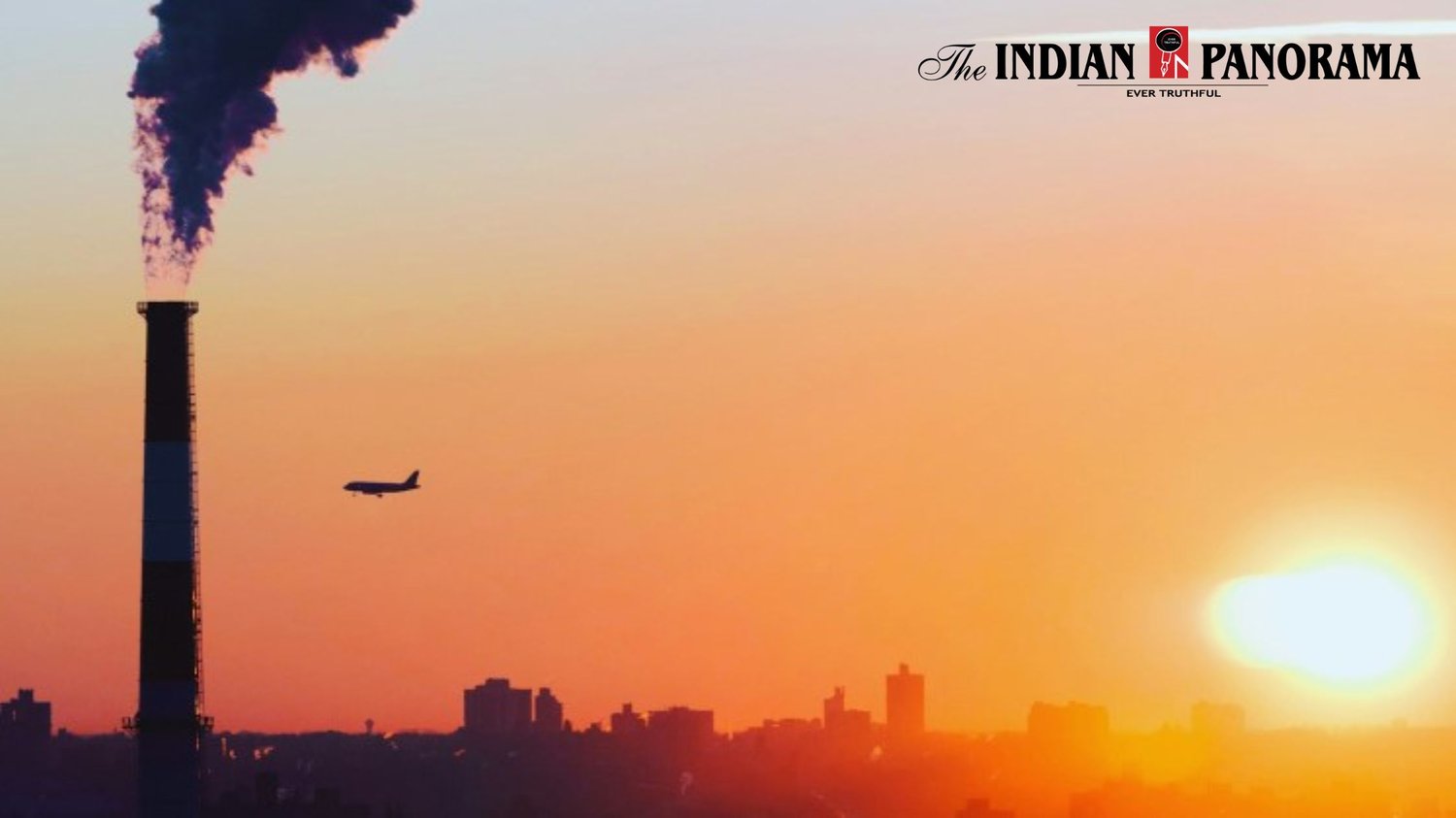
By February 2026, the atmospheric reality of urban India has evolved into a paradox: as our skylines grow taller, our "breathable" air space is shrinking. The conversation surrounding Urban Pollution and Public Health Concerns has traditionally been a seasonal grievance, peaking with the winter stubble burning. However, current data reveals a far more insidious permanent state of crisis. For The Indian Panorama, the narrative of 2026 is no longer about "stopping the smog"; it is about the structural failure of urban design that has turned our most productive cities into respiratory traps.
The False Dawn of Seasonality: A Year-Round Siege
The primary misconception in the public discourse is that pollution is a winter phenomenon. Recent 2026 data from the National Clean Air Programme (NCAP) monitors tells a different story. In cities like Ghaziabad and Noida, $PM_{2.5}$ levels remained "Poor" or "Very Poor" for over 280 days in the preceding year.
This persistent toxicity is driven by what we call the "Urban Heat-Pollution Feedback Loop." Rising urban temperatures, exacerbated by the lack of green cover, trap vehicular and industrial emissions at the street level, creating a permanent "pollution dome" over high-density zones.
The Silent Inflation: The Economic and Biological Toll
While the visual impact of haze is obvious, the biological impact is a silent inflation of our public health debt. In 2026, air pollution is the second leading risk factor for death in India, trailing only high blood pressure.
- Life Expectancy Deficit: The average Indian's life expectancy is shortened by 3.5 years due to current $PM_{2.5}$ levels. In the Indo-Gangetic Plain, this deficit widens to nearly 8 years.
- The ₹24 Lakh Crore Drain: A landmark study from February 2026 estimates the annual economic cost of air pollution—including lost workdays, healthcare expenses, and premature mortality—at ₹24.3 lakh crore ($260 billion). This represents roughly 6% of India’s GDP, effectively canceling out a significant portion of the nation's economic growth.
"We are essentially paying a 'breath tax' that is invisible but devastating. When 6% of your GDP vanishes into thin air—literally—it is no longer an environmental issue; it is a macroeconomic catastrophe."
— Economic Commentary, The Indian Panorama, Feb 2026
A Structural Audit: Why NCAP is Stalling
Despite the deployment of over ₹13,000 crore under the NCAP, the results are uneven. As of February 26, 2026, only 23 out of 131 non-attainment cities have met the target of a 20-30% reduction in particulate matter.
The failure is largely due to a "Siloed Approach." Municipalities often prioritize cosmetic solutions—like anti-smog guns and water sprinklers—which offer temporary relief but do not address the source. For instance, in Delhi, only 33% of allocated pollution funds were utilized in the last fiscal year, with the majority spent on road dust management rather than tackling industrial bypass or vehicular transition.

The 2026 Pivot: From Mitigation to Resilience
The narrative is shifting toward "Smart Urbanism." On February 25, 2026, the Pune Municipal Corporation set a new benchmark by launching a Clean Air Portal that integrates real-time satellite data with hyper-local sensors. This allows for "micro-zonal lockdowns" on construction and industrial activity when localized AQI hits hazardous levels, rather than shutting down the entire city.
Furthermore, the Commission for Air Quality Management (CAQM) has initiated the "Green Buffer" mandate, requiring every new urban housing project over 10 acres to dedicate 25% of its land to "Vertical Forests" and dense Miyawaki plantations to act as natural air scrubbers.
The Final Word: Reclaiming the Right to Breathe
At The Indian Panorama, we argue that Urban Pollution and Public Health Concerns will remain the defining challenge of the 2020s. We cannot continue to treat air as a "free" dumping ground for progress. Success in the next decade will not be measured by the number of smog towers installed, but by the number of days a city's AQI remains in the "Good" category.
Until we align our urban planning with our respiratory health, the great Indian city will remain a place of immense opportunity—but at an increasingly unacceptable human cost. The air we breathe is the ultimate equalizer; it is time our policies reflected that.