
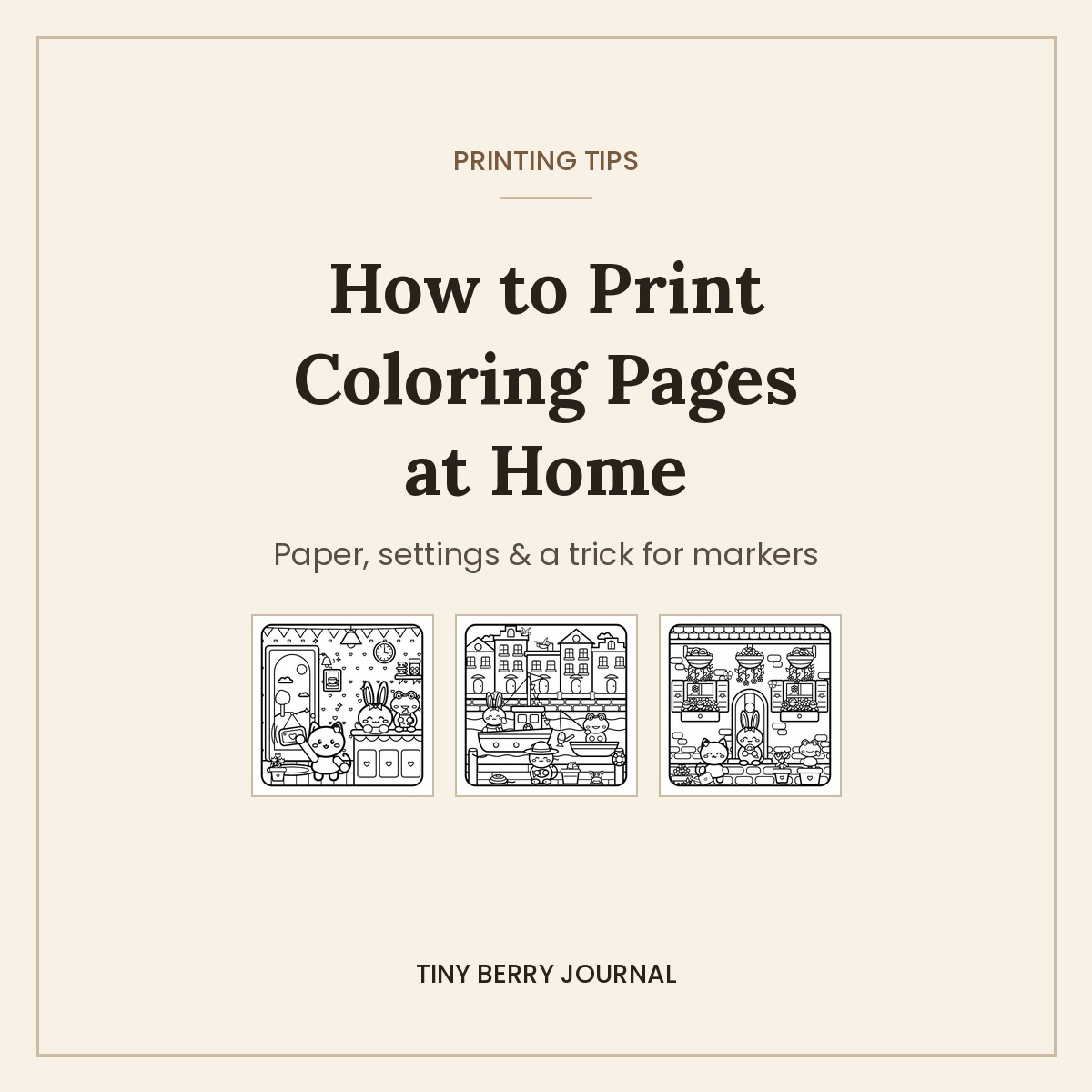
Printable coloring books are wonderful: buy once, print as often as you like. But a few small choices make a big difference to how your pages look and feel. Here's what we've learned.
1. Pick paper for what you'll color with
- Colored pencils and crayons: regular printer paper is fine. A slightly heavier sheet (24 lb, about 90 gsm) feels nicer and takes more layers.
- Alcohol markers and gel pens: use light cardstock, about 65 to 80 lb cover (176 to 216 gsm). It stops ink soaking through and keeps the page flat.
- Watercolor or brush pens: try mixed-media paper, if your printer can feed it.
Check your printer's manual for the heaviest paper it takes. Most home printers handle light cardstock if you feed one sheet at a time.
2. Use these printer settings
- Fit to page (or "Scale to fit"), so nothing gets cut off. Our square 8.5 x 8.5 inch pages fit on both US Letter and A4.
- Black and white / grayscale, so you save your color ink for the coloring.
- High or best quality, for crisp, smooth outlines.
- Print one page at a time. Pick the design you're in the mood for today and save paper.
3. The marker trick
Even on cardstock, alcohol markers can bleed. Slip a spare sheet of paper (or a piece of card) behind the page you're coloring. It protects your table and the next page in your pile.
4. Test your colors first
Every Snug Days book has a test-your-colors page. Swatch your markers or pencils there first: colors often look different on paper than on the cap.
5. Keep a cozy folder
Keep a simple folder or binder for finished pages. It turns a stack of loose sheets into a little book you made yourself, and it's lovely to flip back through.
Quick checklist
- Right paper for your pens or pencils
- Fit to page, grayscale, high quality
- A spare sheet behind the page for markers
- Colors tested on the test page
Ready to print?
Our printable coloring books are instant PDF downloads, from the cozy Snug Days series for adults and teens to big, easy pages for kids. Every product page shows real pages from inside.