
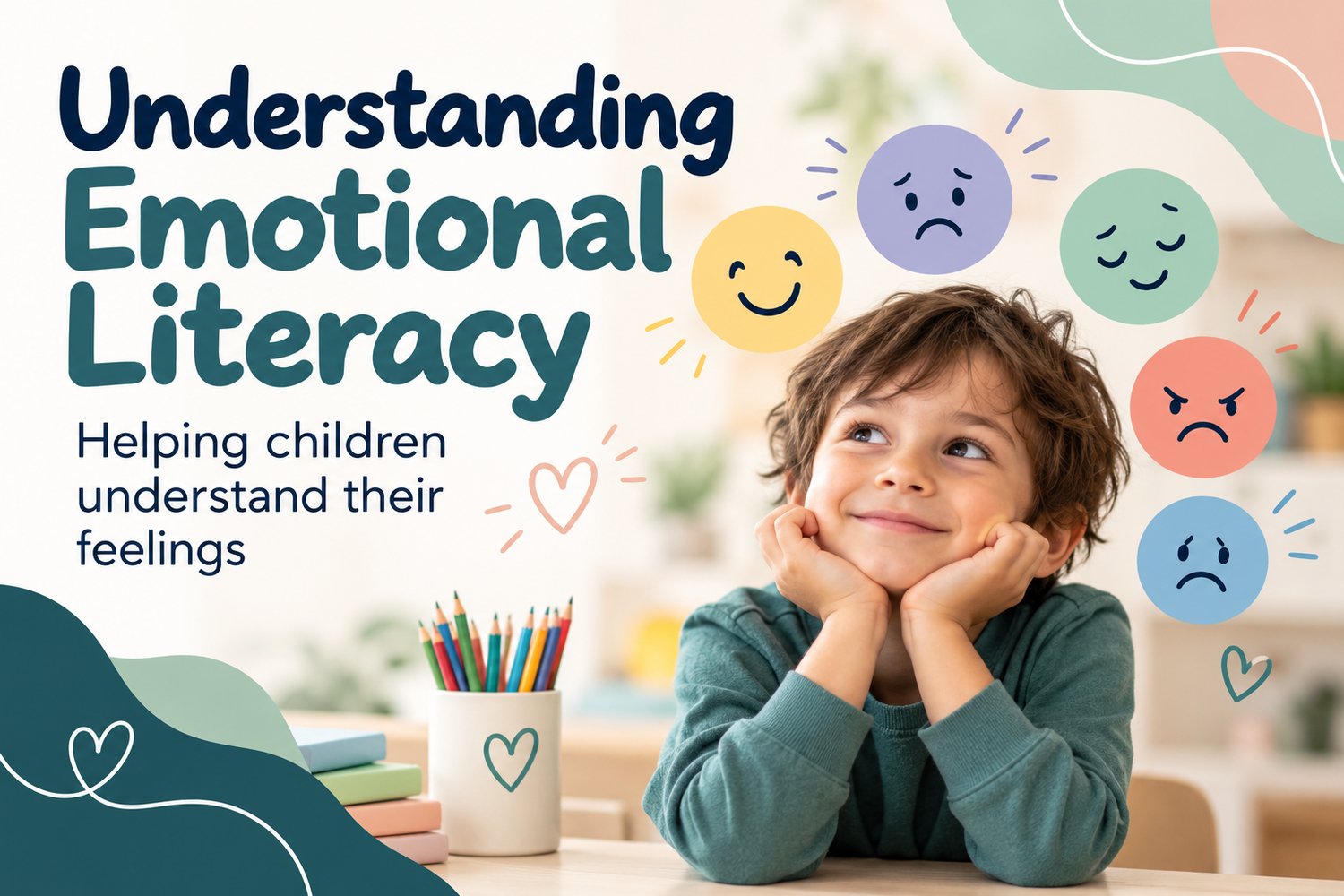
What is emotional literacy?
We all experience emotions, but understanding what we're feeling isn't always easy.
For children, learning to recognise and name emotions is something that develops over time.
Emotional literacy is about helping children notice, understand and express their feelings.
It isn't about expecting children to always be calm or happy. It's about helping them understand what is happening for them and giving them the language and confidence to communicate it.
Why can understanding feelings be difficult?
Sometimes children know that something doesn't feel right, but they don't have the words to explain why.
They might notice a tummy ache, feel restless, become very quiet or find themselves becoming upset without understanding what has triggered the feeling.
Our emotions can also affect our bodies. A racing heart, tense muscles, butterflies in our tummy or feeling hot and overwhelmed can all be part of how emotions show up for us.
Learning to notice these signals can be an important part of understanding feelings.
Helping children talk about emotions
There isn't one right way for children to express how they feel.
Some children might be happy to talk. Others may find it easier to use pictures, colours, emotion cards or another visual way of communicating.
Sometimes simply having the words available can help a child begin to make sense of what they are experiencing.
And we don't need to have all the answers.
Being curious about how your child is feeling can be a helpful place to start.
Emotional literacy develops over time
Children don't learn emotional literacy all at once.
They build these skills through everyday experiences, conversations, relationships and opportunities to practise. Emotional_Literacy_Toolkit_42_P…
There may be days when talking about feelings feels easy, and others when it feels much harder.
That's okay.
Small, consistent opportunities to notice and talk about emotions can help children build their understanding and confidence over time.
Understanding feelings can support emotional regulation
When children begin to recognise what they are feeling, it can become easier to think about what they might need.
That might mean recognising when they need a break, asking for help, finding a calming activity or connecting with someone they trust.
The aim isn't to stop children experiencing difficult emotions.
All emotions have a purpose.
It's about helping children understand their feelings and gradually develop ways of responding to them.
Want to explore emotional literacy further?
Our Emotional Literacy Toolkit for Parents brings together practical tools, visual resources and activities to help you support your child as they develop their understanding of emotions.