
A room can look clean and still be unready for the next guest. A missing towel, an empty soap dispenser, an unlocked window or an unresolved maintenance issue can survive a basic cleaning checklist.
The useful question at the end of a turnover is not merely, “Was it cleaned?” It is: Is the property ready, what proof supports that decision, and what still needs attention?
A dependable turnover handoff should answer that question in a few minutes. The following structure works for hosts and cleaning teams managing a small number of properties without adopting another subscription platform.
1. DEFINE THE TURNOVER WINDOW BEFORE WORK BEGINS
Record the checkout time, earliest cleaner access and hard completion deadline. If the next guest arrives the same day, identify the time by which unresolved issues must be escalated.
The handoff should also identify the property using a short internal code. Avoid placing guest names, access codes or payment details inside a reusable checklist.
2. SEPARATE REQUIRED CHECKS FROM OPTIONAL WORK
A long list is not automatically a useful list. Mark the observations that must pass before the property can be called ready.
Typical required checks include:
• Entry door, windows and other guest-access points secured
• Beds made with the correct linen and visible hair or stains checked
• Bathroom fixtures, mirrors, drains, towels and paper supplies checked
• Kitchen surfaces, sink and guest-facing appliances checked
• Trash removed and liners replaced
• Thermostat, lights and arrival presentation reset
• Lost property, new damage and unusual odours reviewed
Seasonal or deep-cleaning work can remain in the same system, but it should not obscure the smaller set that controls the guest-ready decision.
3. ASK EVERY PHOTO TO PROVE SOMETHING
Random room photos create a large camera roll without creating much certainty. Define the views in advance and use the same view each turnover.
A compact photo-proof map might request:
• Entry and lock condition
• Kitchen counters, sink and guest-supply area
• Each made bed from the foot of the bed
• Each bathroom from the doorway with towels and paper visible
• Main living area from a consistent corner
• Restock shelf or cabinet
• Close-up and context photos for any exception
Photos should record operational observations, not private guest information. Remove personal items, documents and access details from the frame whenever possible.
4. REPLACE “RESTOCKED” WITH WRITTEN PAR LEVELS
“Restocked” means different things to different people. Give each item a target quantity and record what remains.
Refill quantity = maximum of zero and target quantity minus quantity on hand
If the coffee-pod target is 12 and four remain, the handoff should say “refill eight,” not “coffee is low.” Apply the same rule to toilet paper, soap, trash bags, dishwasher tablets and other promised consumables.
5. GIVE EVERY EXCEPTION AN OWNER AND DEADLINE
An issue note without ownership is only a warning. A useful exception record includes:
• Area and item affected
• Plain-language observation
• Whether the property can still be released
• Person or role responsible for the next action
• Due time
• Proof reference
• Open, resolved or accepted status
For example: “Bedroom lamp does not turn on. Property remains usable. Replacement assigned to host before tomorrow at 3 p.m. Photo EX-04.”
Do not use a checklist to make safety, sanitation, legal or inspection certifications. If an observation suggests a genuine safety or regulatory issue, stop and escalate it to the appropriate qualified person.
6. USE THREE READINESS OUTCOMES
• READY: all required checks passed and no open exception needs a decision
• READY WITH EXCEPTION: required checks passed, but a visible non-blocking exception needs acknowledgment or follow-up
• NOT READY: a required check is incomplete or an unresolved issue blocks release
This gives the host a decision, not another message to interpret.
7. KEEP THE FINAL HANDOFF SHORT
The final summary should fit on one screen or page:
• Property code and turnover date
• Required checks completed
• Restock items and quantities
• Open exceptions
• Readiness outcome
• Next action and owner
A PRACTICAL STARTING POINT
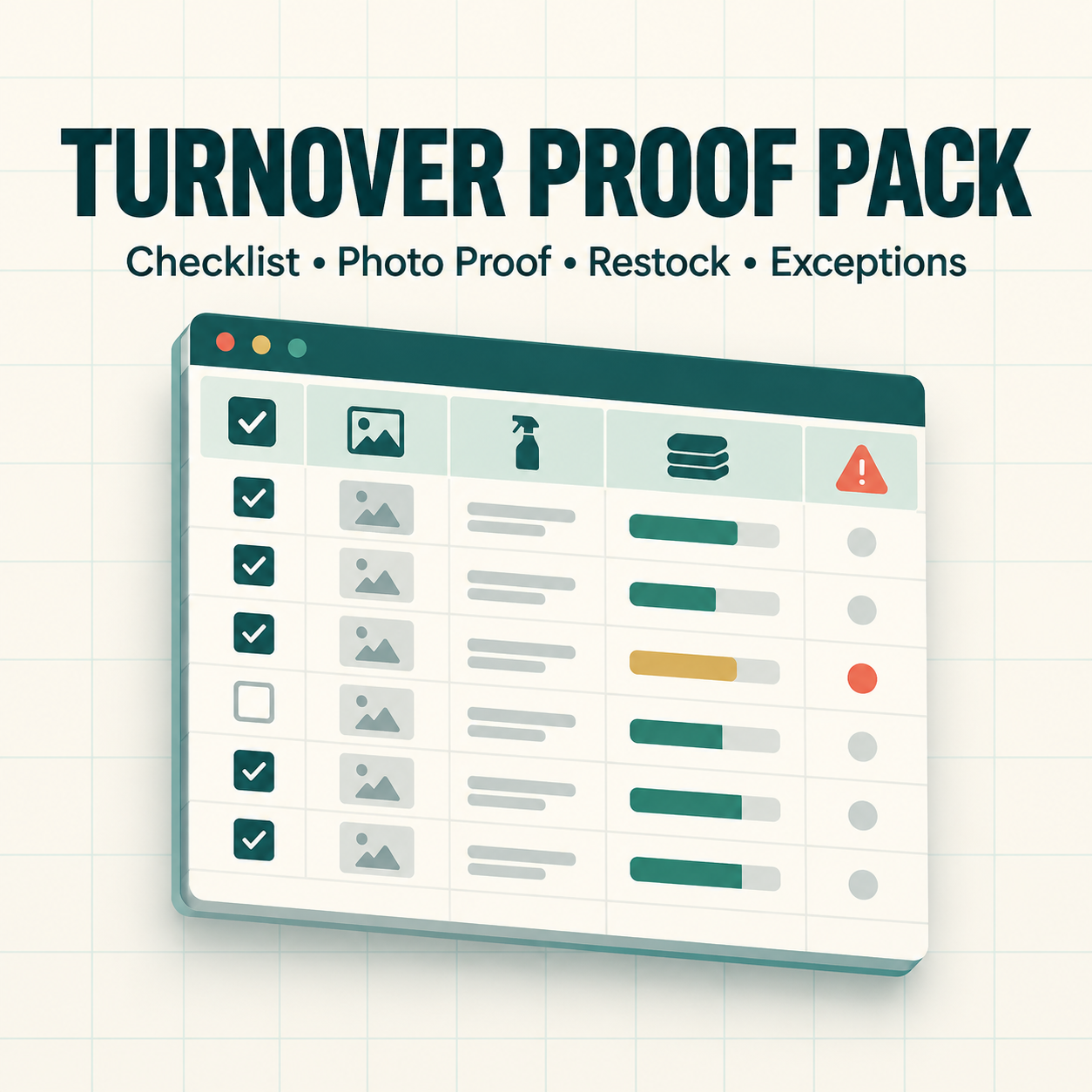
Turnover Proof Pack is a reusable Excel workbook built around this workflow. It includes a live readiness report, a 32-task room checklist, a 16-item photo-proof map, a 17-item restock tracker and an exception log.
It is designed for hosts and cleaning teams managing one to five short-term rentals who prefer a one-time, platform-independent file instead of another recurring app account.Get Turnover Proof Pack for CAD $39:
https://payhip.com/b/6VL3s
The workbook records operational observations. It is not a sanitation, safety, inspection, legal or property-management certification.