
Pickleball has a way of surprising people. At first glance, it looks simple — a paddle, a plastic ball, a court that’s smaller than tennis. But spend a little time around a busy community park or sports complex and you’ll see something interesting: people absolutely love it. Courts fill up quickly, laughter echoes across the nets, and games stretch late into the evening.
Part of the charm comes from how approachable the sport feels. You don’t have to be a seasoned athlete to enjoy it. In fact, many players pick up a paddle for the first time and manage a decent rally within minutes. That kind of accessibility is rare in sports.
But behind that relaxed vibe is a lot of thoughtful design, especially when it comes to the courts themselves. A well-built pickleball court isn’t just a patch of pavement with lines painted on it. The surface, the color layout, the materials used — every little choice plays a role in how the game feels.
And if you talk to players who spend a lot of time on the court, they’ll tell you quickly: details matter.
The Court Surface Is the Foundation of the Game
Let’s start with the obvious but often overlooked part of a pickleball facility — the surface beneath your feet.
Players are constantly moving. Short bursts of speed, quick stops near the kitchen line, sudden pivots to chase a lob. If the surface doesn’t provide the right balance of grip and smoothness, the whole experience changes.
That’s why many modern sports courts rely on synthetic acrylic flooring materials for their playing surfaces.
These specialized coatings are layered over a base structure, usually asphalt or concrete. The goal is to create a surface that provides consistent ball bounce while also offering enough traction to keep players safe during quick directional changes.
Acrylic coatings have become popular because they’re durable and adaptable. They can withstand weather exposure, resist fading under sunlight, and maintain their texture even after years of play. In outdoor courts especially, that resilience is essential. Rain, heat, dust — all of it can wear down a poorly designed surface surprisingly fast.
Some facilities even incorporate cushioned layers beneath the acrylic coatings. These extra layers help absorb impact, which reduces stress on players’ knees and ankles during long matches. For regular players, that comfort can make a noticeable difference over time.
Why Color Matters More Than You’d Expect
At first, court colors might seem like a purely aesthetic choice. After all, a court just needs lines and a net to function, right?
Not exactly.
Color contrast actually plays a big role in how players track the ball and judge boundaries during fast rallies. That’s why designers pay careful attention to pickleball court colors when planning new courts.
Most courts use a two-tone or sometimes three-tone system. The main playing area is usually one color — often blue or green — while the surrounding zones are painted in a contrasting shade. This difference helps players quickly recognize whether a ball is inside the playing area or drifting out of bounds.
Lines are typically painted bright white or yellow for maximum visibility. During a quick exchange near the baseline, those clear visual markers help players make split-second decisions.
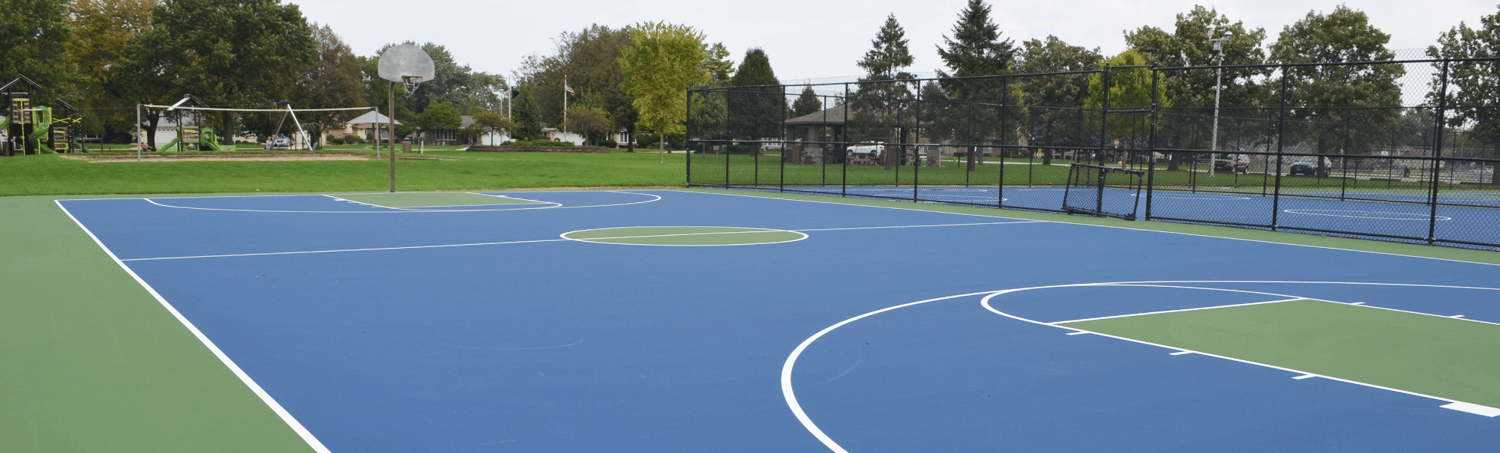
Beyond functionality, color also shapes the overall feel of a facility. Bright, vibrant courts tend to create an energetic atmosphere. Softer tones can make a space feel calmer and more relaxed. Communities sometimes choose colors that reflect local identity, school colors, or branding for sports complexes.
So yes, colors look nice — but they’re doing more work than people realize.
Planning a Court Layout That Works
Building a pickleball court involves more than picking a surface and painting lines. The entire layout of the facility needs careful thought.
For starters, spacing around the court is crucial. Players often run beyond the baseline while chasing deep shots, and they’ll move laterally when defending wide angles. Ideally, there should be several feet of clearance on all sides to allow for safe movement.
Fencing is another important element. Proper fencing keeps balls contained within the court area and prevents interruptions from neighboring games. It also creates a sense of boundary without making the space feel closed off.
Orientation matters too, especially for outdoor courts. Courts are usually aligned north to south whenever possible. This positioning minimizes glare from the rising and setting sun, which can otherwise make it difficult for players to track the ball.
It’s the kind of detail that most players never notice — until they play on a poorly oriented court and spend half the match squinting.
Indoor vs Outdoor Courts
Pickleball started primarily as an outdoor activity, often played in parks or converted tennis courts. But as the sport has grown, indoor facilities have become increasingly popular.
Indoor courts offer predictable conditions. No wind affecting the ball, no sudden rain delays, and a comfortable playing environment year-round. Many competitive players appreciate that consistency.
Outdoor courts, though, still carry a special kind of charm. The open air, the sound of multiple games happening at once, the occasional breeze drifting across the court — it all adds to the social experience.
Construction priorities shift slightly depending on the setting. Outdoor courts require proper drainage systems to handle rainfall and prevent water from pooling. Indoor courts place greater emphasis on lighting design and acoustic control, since the echo of paddles striking the ball can become surprisingly loud inside large facilities.
Maintenance Keeps Courts Playing Smoothly
Even the best-designed courts need a little maintenance.
Over time, dust, leaves, and debris can accumulate on outdoor surfaces. Regular cleaning helps maintain traction and keeps the ball bouncing predictably. Facility managers also check periodically for small cracks or surface wear, addressing issues before they grow into bigger repairs.
Resurfacing typically happens every few years depending on usage levels. Fresh acrylic coatings restore both the color and performance of the court, giving players that satisfying “like new” feel again.
The good news is that pickleball courts are generally easier to maintain than many other sports surfaces. With routine care, they can stay in excellent condition for a decade or more.
The Real Value of a Good Court
In the end, a pickleball court isn’t just a place for exercise. It becomes something more social — almost a little gathering spot within the community.
Players meet there regularly. Friendly rivalries form. Newcomers learn the game from experienced players who are usually happy to offer advice between matches.
That kind of environment doesn’t happen by accident. It grows from spaces that are welcoming, well-designed, and enjoyable to use.
A thoughtfully built court quietly supports all of that. The smooth surface, the comfortable colors, the reliable bounce — they fade into the background while the fun takes center stage.
And maybe that’s the best sign of a great pickleball court. When everything works exactly as it should, players stop thinking about the court itself.
They just keep playing.