
🛍️ What Platforms Should You Sell Your Items On?
One of the biggest questions new business owners ask is:
“Where should I sell my products?”
The answer depends on what you're selling, who you're trying to reach, and how you want customers to shop with you.
Whether you're selling baked goods, clothing, beauty products, digital downloads, recipes, e-books, templates, or handmade products, choosing the right platform can make running your business much easier.
But here's something important: you do not need to be everywhere.
💕 Start With Where Your Customers Are
Before choosing a selling platform, think about your customer.
Where are they already spending their time?
If people discover your products through social media, you need somewhere simple to send them when they're ready to purchase.
Your social media can attract attention, but your storefront should make it easy to browse, buy, pay, and receive their order.
💻 Selling Digital Products
Digital products can be one of the easiest ways to add another income stream because you create the product once and can potentially sell it repeatedly.
Digital products can include:
E-books • Recipes • Canva templates • Business guides • Checklists • Planners • Classes • Printable resources
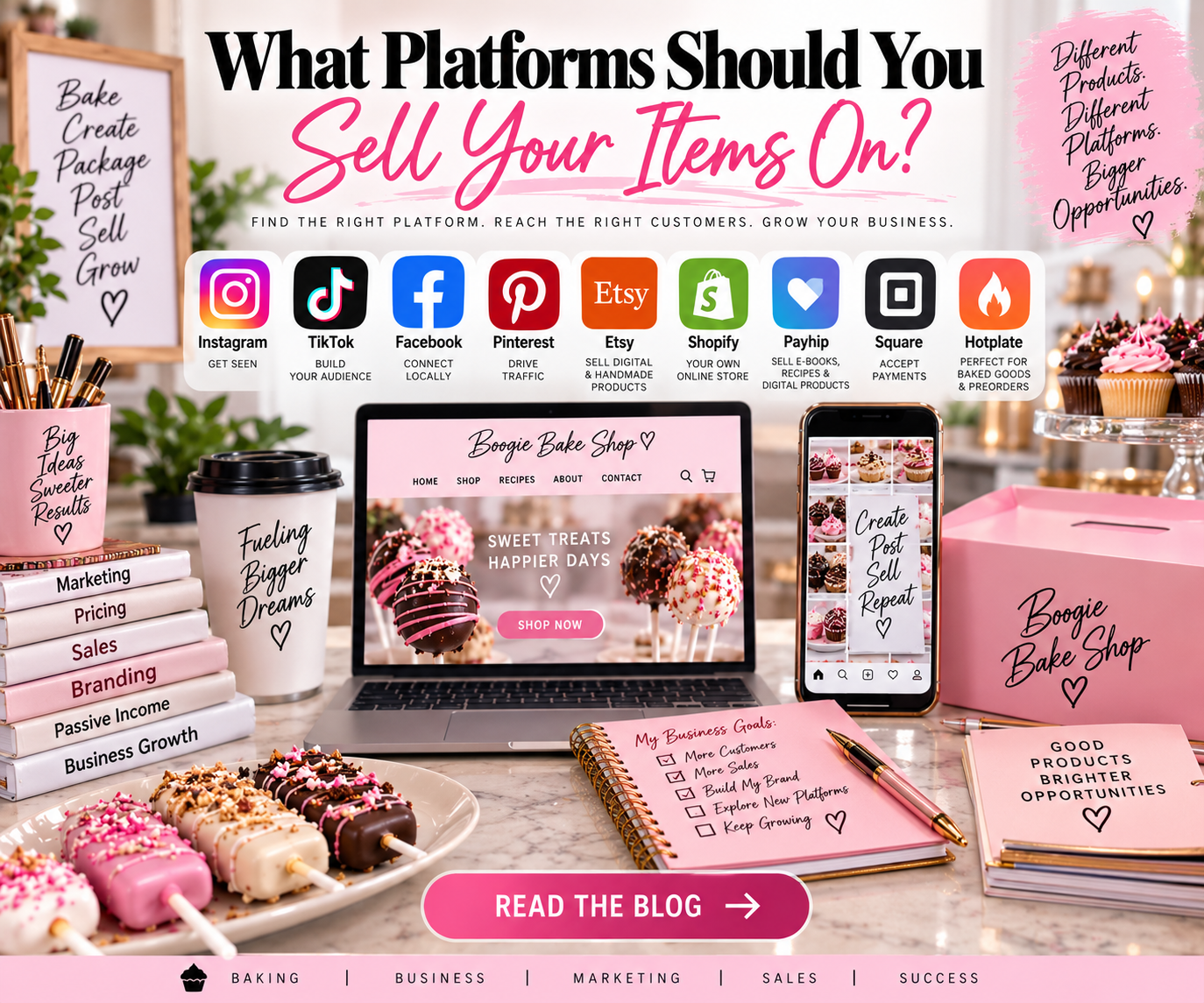
Platforms such as Payhip, Etsy, Gumroad, and Shopify can be used to sell digital products.
The important part isn't simply uploading something.
You still have to market it.
🍰 Selling Baked Goods
If you're a baker, you may need something different from someone selling an e-book.
Your customers may need to select:
Flavors • Quantities • Pickup dates • Delivery options • Customizations
Platforms such as Square can help businesses accept online and in-person payments, while Hotplate is designed around food businesses offering preorders, scheduled drops, and pickups.
And remember to check the cottage-food or food-business rules that apply where you operate before offering products for sale.
👗 Selling Clothing, Beauty Products & Physical Products
If you're building a product-based brand, having your own online store can give you more control over the shopping experience.
Shopify is one option for creating a dedicated e-commerce storefront.
Marketplaces can also help customers discover products, but building your own audience and customer relationships remains important.
📱 Don't Forget Social Media
Instagram, TikTok, Facebook, Pinterest, and YouTube can all play a different role.
You don't necessarily need to treat them as your actual store.
Think of them as your marketing tools.
Your content gets someone interested.
Your link sends them to your store.
Your store makes the sale.
CONTENT → INTEREST → STORE → PURCHASE
That's the journey you want to make as simple as possible.
🚨 Don't Make This Common Mistake
New entrepreneurs sometimes create accounts on every platform they can find.
Then they become overwhelmed trying to maintain all of them.
More platforms do not automatically equal more sales.
I'd rather see a business owner learn how to use one or two platforms effectively than have seven abandoned storefronts.
Start with what makes sense for your business. Learn it. Market it. Then expand when there's a reason to expand.
💰 Your Platform Doesn't Create Your Business
This is something every entrepreneur should understand.
You can have a beautiful website and still make no sales.
You can open an Etsy shop and still make no sales.
You can upload an e-book and still make no sales.
A platform gives customers somewhere to purchase.
You still have to give them a reason to purchase.
That's where your products, branding, content, customer experience, marketing, and consistency come together.
✨ The Goal Isn't to Be Everywhere
The goal is to be where your customers can find you—and make it incredibly easy for them to buy from you.
Choose your platform based on your business instead of simply choosing whatever everyone else is using.
Start small.
Build your audience.
Learn what your customers respond to.
And as your business grows, allow your selling strategy to grow with it.
Boogie Bake Shop
Create • Build • Sell • Grow 💕