
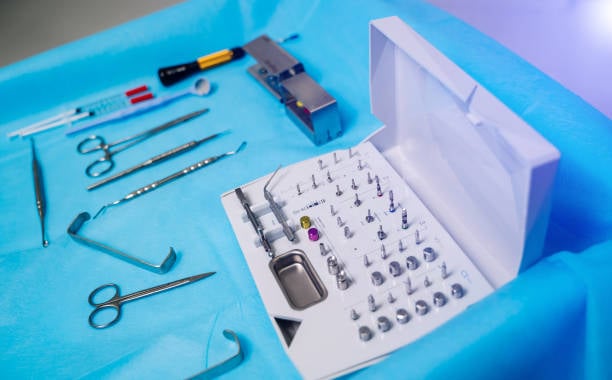
Dental implants have become a widely used option for replacing missing teeth and restoring oral function. One of the most important stages of implant placement is preparing the jawbone to receive the implant. This involves carefully planned bone drilling for dental implants, which creates the space required for the implant fixture while aiming to preserve the surrounding bone.
Understanding how this process works can help patients and dental professionals appreciate why precision, planning, and appropriate surgical techniques are important during implant treatment.
What Is Bone Drilling for Dental Implants?
Bone drilling for dental implants is the surgical process of preparing an opening, commonly called an osteotomy, in the jawbone. The opening is designed to accommodate the dental implant according to the planned size, position, and angulation.
Unlike ordinary drilling, implant osteotomy preparation requires careful control of factors such as drilling sequence, depth, diameter, angulation, and heat generation. The goal is to create an appropriate implant site while maintaining the health and structure of the surrounding bone.
Why Is Precise Bone Preparation Important?
The jawbone provides the foundation that supports a dental implant. For this reason, accurate preparation is essential to the overall treatment process.
If the osteotomy is positioned incorrectly, it may affect the implant's relationship with neighbouring teeth, nerves, blood vessels, or other anatomical structures. Insufficient preparation may also make implant placement difficult, while excessive removal of bone can compromise the available support.
Careful treatment planning allows the dental professional to determine the appropriate location and dimensions of the implant site before drilling begins.
Planning Before Implant Site Preparation
Bone drilling does not normally begin without preparation. The dentist first evaluates the patient's oral health, bone volume, tooth position, and relevant anatomical structures.
Dental imaging, including three-dimensional imaging when appropriate, can help assess the available bone and identify important structures. Digital treatment planning may also assist with determining the desired implant position.
The implant's dimensions and the characteristics of the patient's jawbone influence the preparation protocol. This means that drilling techniques can vary considerably from one case to another.
The Bone Drilling Process
During implant surgery, the dentist generally begins with an initial osteotomy that establishes the planned position. Additional drills may then be used progressively to enlarge and shape the site.
The sequence depends on the implant system, surgical approach, bone characteristics, and treatment plan. Each stage is intended to maintain the planned direction and depth while preparing the site for implant placement.
The final osteotomy should correspond appropriately with the implant being placed. Precision is particularly important when working in areas where available bone is limited or important anatomical structures are nearby.
Managing Heat During Drilling
One of the major considerations during bone drilling for dental implants is heat generation. Excessive heat during osteotomy preparation can potentially damage bone tissue and interfere with normal healing.
For this reason, dental professionals use techniques designed to control temperature during drilling. Irrigation, appropriate drilling protocols, suitable instruments, and controlled operating conditions can all contribute to effective heat management.
The exact approach depends on the clinical situation and the equipment being used.
Choosing the Appropriate Implant Drills
Implant drilling systems may contain several types and sizes of drills designed for different stages of osteotomy preparation. Some systems include specialised drills for specific bone conditions or anatomical requirements.
The choice of drill depends on factors such as implant dimensions, bone density, surgical technique, and the planned position of the implant.
Using appropriate instrumentation can help the clinician maintain control over the preparation process and achieve the desired osteotomy dimensions.
Bone Density and Drilling Technique
Jawbone density is not identical in every patient or every area of the mouth. Some regions contain relatively dense bone, while others may have softer or less dense bone.
Because bone characteristics can vary, the drilling sequence and preparation technique may need to be adapted accordingly. The clinician must balance adequate site preparation with preservation of available bone.
This is one reason why implant surgery should be individually planned rather than approached with exactly the same drilling protocol for every patient.
Importance of Drill Accuracy
Accuracy is an important consideration throughout implant site preparation. The drill should follow the planned position and angulation so that the final implant can be placed appropriately.
Modern implant workflows may combine imaging, digital planning, surgical guides, and carefully designed instrumentation to improve consistency. These technologies can be particularly useful in complex cases where anatomical limitations require precise positioning.
What Happens After Bone Preparation?
Once the osteotomy has been prepared, the dental implant can be placed according to the treatment plan. The implant is positioned within the prepared bone site, and the surgical area is managed according to the procedure.
The next stage is healing and osseointegration, during which the implant gradually becomes integrated with the surrounding bone. The duration of healing varies between patients and depends on several clinical factors.
After the appropriate healing period, the restorative portion of the treatment can continue, eventually providing the replacement tooth.
The Role of Professional Training and Equipment
Bone drilling for dental implants requires appropriate clinical training, planning, and instrumentation. Dental professionals must understand implant positioning, anatomy, bone characteristics, surgical protocols, and the specific equipment being used.
High-quality implant drills should also be selected and maintained according to the manufacturer's recommendations. Proper instrument handling and maintenance are important for predictable surgical workflows.
Conclusion
Bone drilling for dental implants is a critical part of preparing the jaw for implant placement. The process involves much more than simply creating a hole in the bone. It requires careful planning, accurate positioning, appropriate drilling sequences, heat management, and consideration of individual bone characteristics.
With appropriate assessment and professionally planned techniques, osteotomy preparation can provide the foundation needed for successful implant placement and subsequent restoration. Understanding this process also highlights why precision instrumentation and experienced clinical decision-making are important throughout implant treatment.