


Muslims may find planners beneficial for daily activities and religious duties for several reasons:
1. Time Management: Balancing daily activities and religious duties requires effective time management. A planner helps allocate time slots for prayers, Quran recitation, and other religious obligations alongside work, study, and personal tasks.
2. Consistency: Regularity and consistency are vital in practicing Islam. A planner aids in establishing a routine for daily prayers, fasting during Ramadan, and other religious practices, promoting a more disciplined and consistent approach to worship.
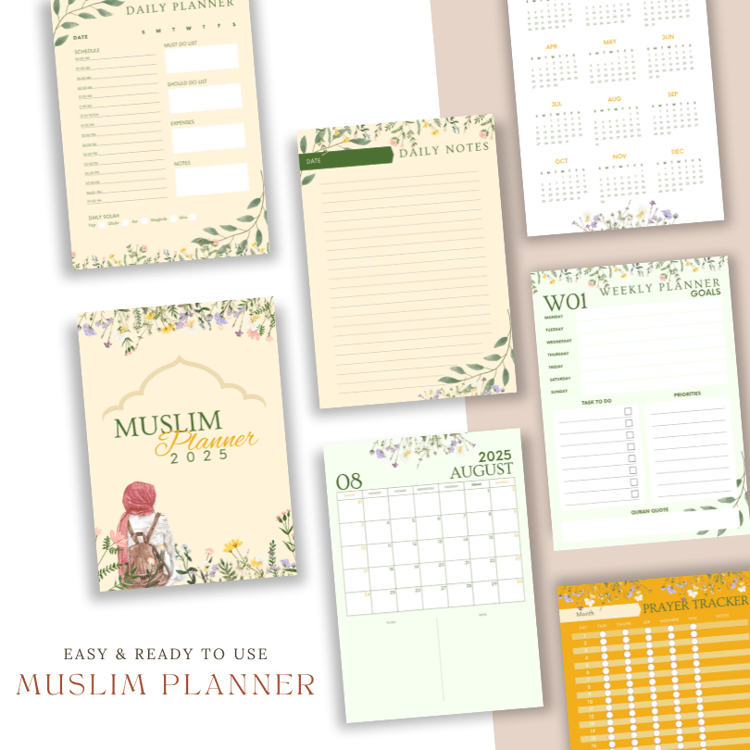
3. Prioritization: With numerous commitments in modern life, prioritizing religious duties can sometimes be challenging. A planner allows Muslims to prioritize their religious obligations alongside other tasks, ensuring that they give due importance to their spiritual well-being.
4. Reflection and Progress Tracking: A planner can serve as a tool for self-reflection and progress tracking in one's religious journey. Muslims can use it to record their thoughts after prayers, track their Quran memorization progress, or set spiritual goals, fostering personal growth and development.
Overall, a planner provides structure, organization, and accountability, helping Muslims effectively manage their daily activities while fulfilling their religious responsibilities.