
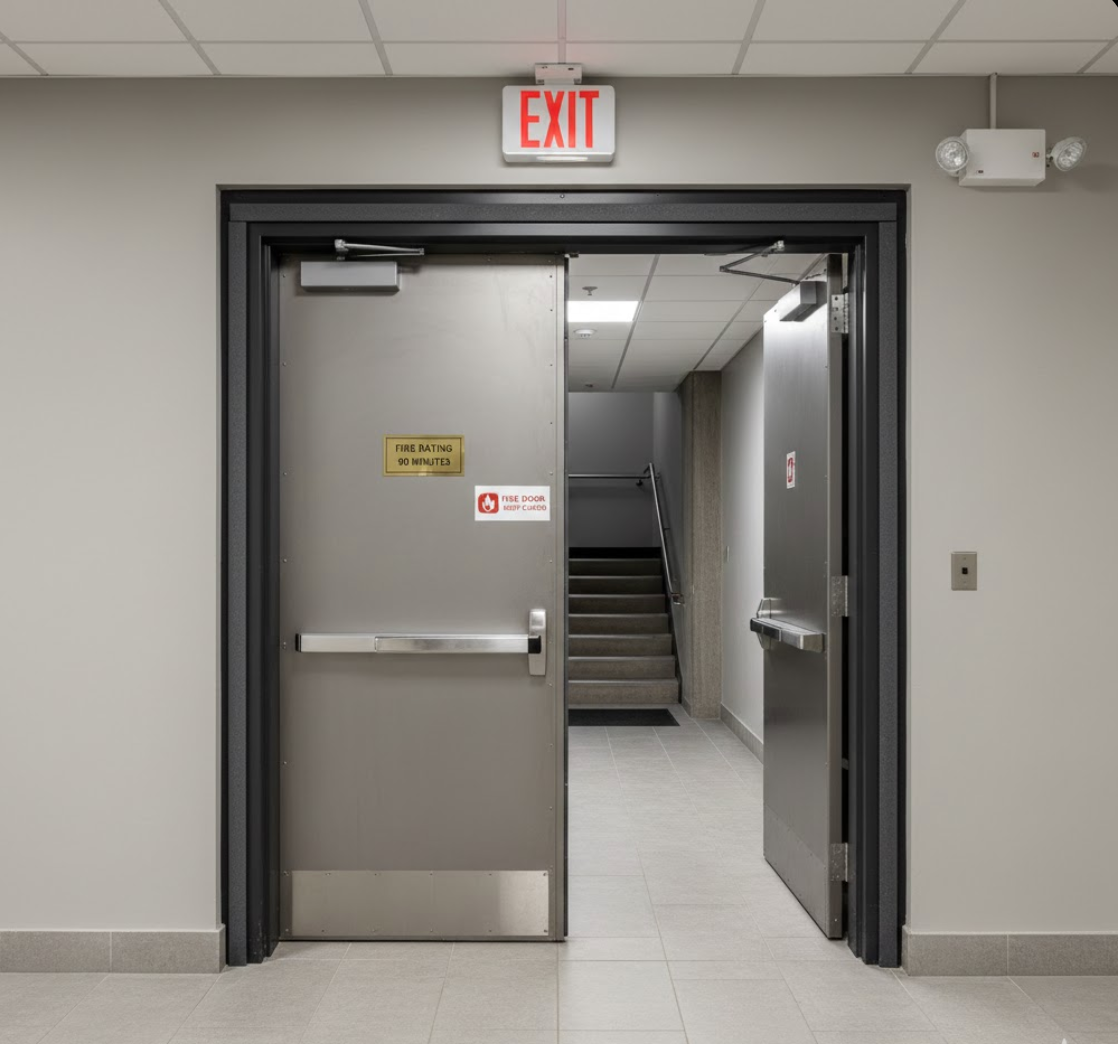
Building safety depends on more than alarms and evacuation plans. One of the most critical yet often overlooked elements is the fire door, a specialized component designed to protect lives and limit damage during a fire. In modern construction, fire doors play a vital role in controlling fire spread, managing smoke, and maintaining safe escape routes.
Understanding what a fire door is and how it contributes to safety helps property owners, developers, and facility managers meet both practical and regulatory requirements.
Understanding the Purpose of a Fire Door
A fire door is a specially engineered door system designed to resist fire and smoke for a specific period of time. Unlike standard doors, it is constructed using fire-resistant materials and tested under controlled conditions to ensure predictable performance.
The primary function of a fire door is to compartmentalize a building. Slowing the spread of flames and smoke, it helps protect occupants and gives emergency responders valuable time to act. This controlled resistance can mean the difference between contained damage and total structural loss.
Fire doors are commonly installed in stairwells, corridors, service rooms, and areas where fire risk is higher.
How Fire Doors Help Control Fire and Smoke
Fire spreads rapidly when it has open pathways. Fire doors interrupt these pathways by forming a sealed barrier between sections of a building. When closed properly, they limit oxygen flow, slow heat transfer, and reduce smoke movement.
Smoke inhalation is one of the leading causes of injury during fires. Fire doors designed with smoke seals help prevent smoke from traveling into escape routes, keeping evacuation paths clearer and safer.
By containing fire within a defined area, fire doors also reduce the risk of structural collapse and secondary damage.
Materials and Construction Standards
The effectiveness of a fire door depends heavily on its materials and construction. These doors are built using fire-resistant materials such as steel, treated timber cores, and specialized insulation layers. The frame, hinges, seals, and glazing, if present, are all tested as part of a complete system.
High-quality fire doors must comply with building safety regulations and meet recognized fire resistance ratings, often measured in minutes. Common ratings include 30, 60, or 90 minutes, indicating how long the door can withstand fire exposure.
Compliance with international certifications ensures that the door has passed rigorous testing and performs reliably under emergency conditions.
The Role of Fire Doors in Escape and Evacuation
During a fire, safe evacuation depends on protected routes. Fire doors are strategically placed to safeguard staircases, corridors, and exit paths. By preventing fire and smoke from entering these areas, they help occupants exit safely and calmly.
Properly installed fire doors remain closed during emergencies, either through automatic closers or integrated alarm systems. This ensures that safety zones remain protected even if occupants forget to close doors during evacuation.
In high-occupancy buildings, this controlled protection is essential for managing crowd movement and reducing panic.
Importance of Correct Installation and Maintenance
Even a certified fire door can fail if it is not installed or maintained correctly. Gaps, damaged seals, or improper hardware can compromise performance. Professional installation ensures proper alignment and sealing, which are critical during a fire event.
Routine inspections help identify wear, damage, or misuse that could affect functionality. Maintenance also ensures compliance with local safety codes and insurance requirements.
Ongoing care is a key part of ensuring long-term reliability and safety.
Fire Doors in Different Building Types
Fire doors are used across a wide range of environments, from residential apartments to commercial offices and industrial facilities. Each setting has specific safety requirements that influence door selection.
In residential buildings, fire doors protect shared corridors and stairwells. In commercial spaces, they help separate high-risk areas such as electrical rooms or storage zones. Industrial facilities rely on fire doors to isolate machinery and hazardous materials.
Despite different applications, the core safety principles remain the same.
Regulatory Compliance and Legal Responsibility
Fire safety is governed by strict regulations in most regions. Property owners and developers are legally responsible for ensuring that fire doors meet required standards. Non-compliance can result in fines, legal liability, and increased risk to occupants.
Certified fire doors provide documented proof of compliance, reducing risk for building owners and managers. Adhering to regulations also improves overall project credibility and trust.
Fire safety planning is not optional; it is a fundamental responsibility.
Long-Term Safety and Property Protection
Beyond immediate life safety, fire doors help protect property and reduce financial loss. By containing fire, they limit damage to specific areas, reducing repair costs and downtime.
For businesses, this can mean faster recovery and reduced disruption. For residential properties, it adds an extra layer of protection that supports long-term value.
A well-maintained fire door system is an investment in safety and resilience.
Conclusion
A fire door is a critical component of modern building safety, designed to control fire spread, protect escape routes, and support regulatory compliance. Through certified materials, proper installation, and regular maintenance, fire doors provide reliable protection when it matters most.
By understanding their role and importance, building stakeholders can make informed decisions that safeguard lives, property, and long-term structural integrity.