


Irises by Tsukioka Kōgyo is one of the most elegant examples of Japanese woodblock botanical art from the early 20th century.
They bloom without applause, urgency, and attention. They simply become what they were meant to be. Looking at Irises by Tsukioka Kōgyo, one is reminded that beauty is often at its most powerful when it whispers instead of shouts. 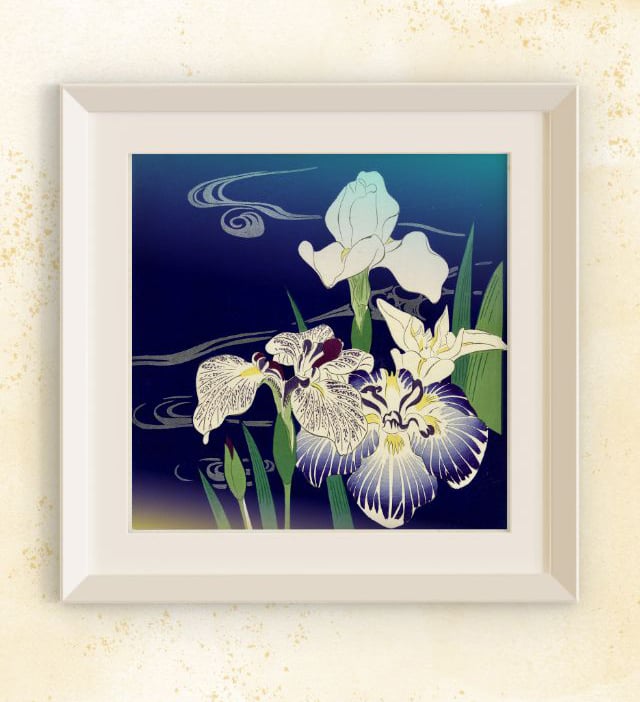
Created during Japan's late Meiji period, this elegant woodblock print captures a cluster of irises rising gracefully from the water. Their long green leaves create sweeping vertical lines while rich violet blossoms unfold with remarkable delicacy. Every detail feels intentional, yet effortless, a hallmark of traditional Japanese design.
Unlike many Western floral paintings that emphasize dramatic lighting and lush abundance, Kōgyo's composition embraces restraint. Empty space becomes part of the artwork. The stillness surrounding the flowers allows the eye to rest, encouraging contemplation rather than distraction.
Who Was Tsukioka Kōgyo?
Tsukioka Kōgyo (1869–1927) was one of Japan's most respected woodblock print artists of the Shin-Hanga era's predecessor, though he is best known for his remarkable depictions of Noh theatre, traditional performers, and classical Japanese subjects. A student and adopted son of the renowned artist Tsukioka Yoshitoshi, Kōgyo inherited both technical mastery and a deep appreciation for Japanese cultural traditions. 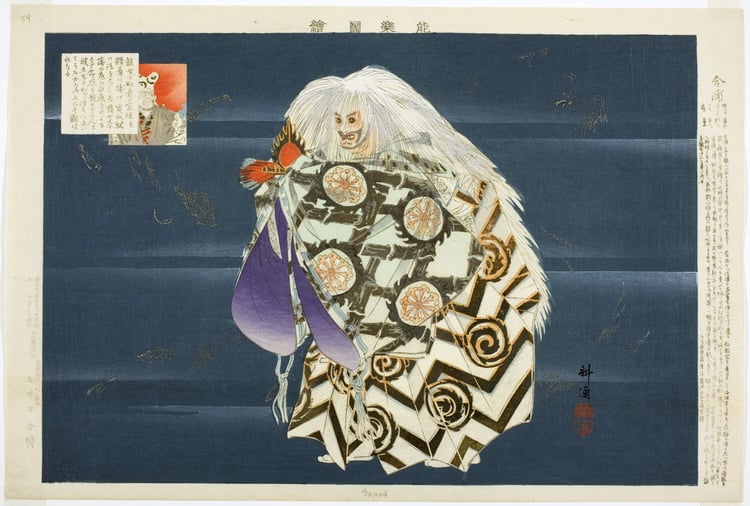
While theatrical prints made his reputation, his botanical works reveal another side of his artistry—one rooted in observation, balance, and quiet appreciation for the natural world.
His floral prints possess a timeless quality that feels just as modern today as they did over a century ago.
The Symbolism of Irises in Japanese Culture
In Japan, irises have long symbolized protection, courage, purification, and the arrival of early summer.
Their sword-like leaves were believed to ward off evil spirits, making iris leaves an important part of traditional celebrations such as Tango no Sekku, now known as Children's Day. Iris baths were once taken to promote health and strength, while the flowers themselves became enduring symbols of resilience and grace.
Perhaps that symbolism explains why Kōgyo's irises feel so calming. They stand tall without appearing rigid, delicate without seeming fragile.
They embody quiet strength.
The Beauty of Japanese Simplicity
One of the reasons vintage Japanese prints continue to resonate today is their remarkable understanding of visual balance.
Rather than filling every inch with detail, artists often allowed negative space to become an active part of the composition. This philosophy echoes aesthetic principles such as ma—the meaningful use of empty space—and wabi-sabi, an appreciation for simplicity and imperfection.
In Irises, every leaf has room to breathe. Every blossom is given its own moment.
The result is an artwork that slows us down.
In an age of endless scrolling and constant stimulation, that may be one of its greatest gifts.
Bringing Kōgyo's Irises into Modern Interiors 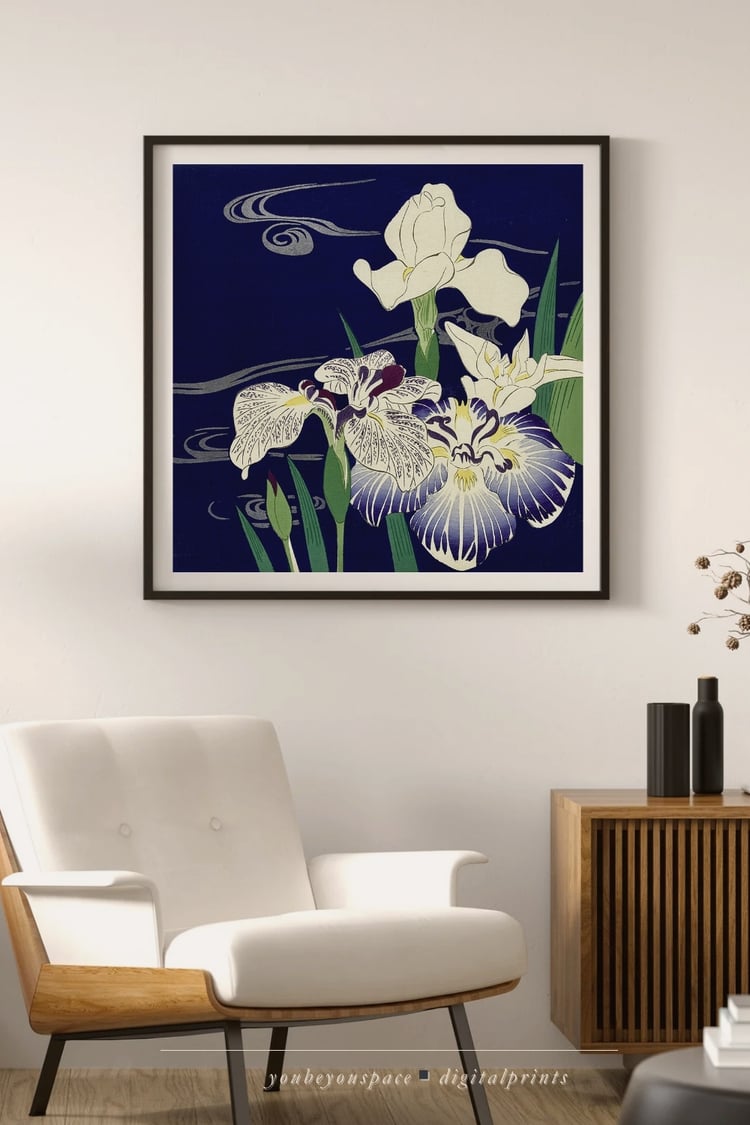
Floral art has always been a popular choice for home décor, but Japanese botanical prints offer something slightly different from traditional European florals.
Their clean compositions make them particularly well suited for contemporary interiors, Scandinavian-inspired homes, Japandi aesthetics, meditation spaces, reading nooks, bedrooms, and minimalist offices.
Soft greens and deep indigos pair beautifully with natural woods, linen textiles, ceramics, and neutral palettes. Whether displayed alone or as part of a gallery wall, Irises brings a quiet sense of harmony wherever it hangs.
Why Vintage Botanical Art Never Goes Out of Style
Trends come and go, but flowers remain.
Not because they are fashionable, but because they remind us of life's gentle rhythms—the changing seasons, the passing of time, and the quiet joy of noticing small things.
Kōgyo's Irises is more than a botanical illustration.
It is a meditation on patience.
On balance.
On finding elegance in simplicity.
Perhaps that's why, more than a hundred years after it was created, this graceful print still feels entirely at home in modern life.
Sometimes the most enduring works of art are also the quietest. I've never studied art formally. I simply know when a piece asks me to slow down.
And like irises themselves, they simply continue to bloom.
Comments ()