
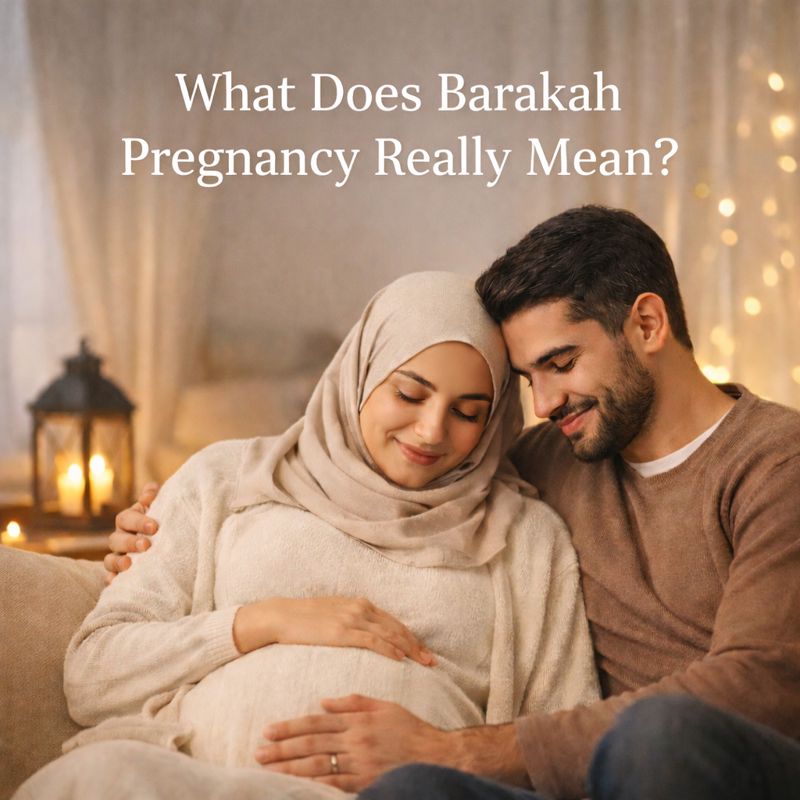
Pregnancy is often described in numbers.
Weeks.
Scans.
Trimesters.
Milestones.
But when many Muslim women quietly reflect on their journey, especially in the early weeks , what they are really asking isn’t:
“Am I doing this right medically?”
It is often:
“Is there barakah in this?”
And sometimes, beneath that question, there is another: “Why does this feel harder than I expected if this is a blessing?”
If you’ve ever held these thoughts, pause here for a moment. You are not alone. And you are not asking the wrong questions.
Barakah: More Than Ease, More Than Positivity
In Islam, barakah is often misunderstood as ease, smoothness, or things going according to plan.
But barakah is not the absence of difficulty.
Barakah is divine increase, protection, and goodness — even when circumstances are heavy.
Allah reminds us that true goodness is not always visible in comfort alone:
“…And it may be that you dislike a thing while it is good for you…”
Qur’an 2:216
Pregnancy, by its very nature, stretches the body, the emotions, and the heart.
So when we speak of Barakah Pregnancy, we are not speaking about a flawless journey.
We are speaking about a pregnancy that is:
- carried with intention (niyyah)
- anchored in trust (tawakkul)
- guided by knowledge and moderation
- softened with rahmah toward oneself
Even when it includes nausea, fear, tears, or uncertainty.
What Barakah Pregnancy Is — And What It Is Not
Let’s gently clear a few misconceptions.
Barakah Pregnancy is not:
- a promise of constant calm
- a guarantee of emotional steadiness
- a sign that you will “enjoy every moment”
- proof of spiritual strength measured by how little you struggle
Barakah Pregnancy is:
- aligning your heart and actions with Allah’s guidance
- caring for your body without obsession or fear
- acknowledging emotional shifts without guilt
- preparing for birth and parenthood with wisdom, not pressure
- trusting that Allah is nurturing you as much as the baby you carry
This distinction matters — because many mothers silently assume that struggle means failure.
Islam teaches otherwise.
The Emotional Reality: When Feelings Shift Without Warning
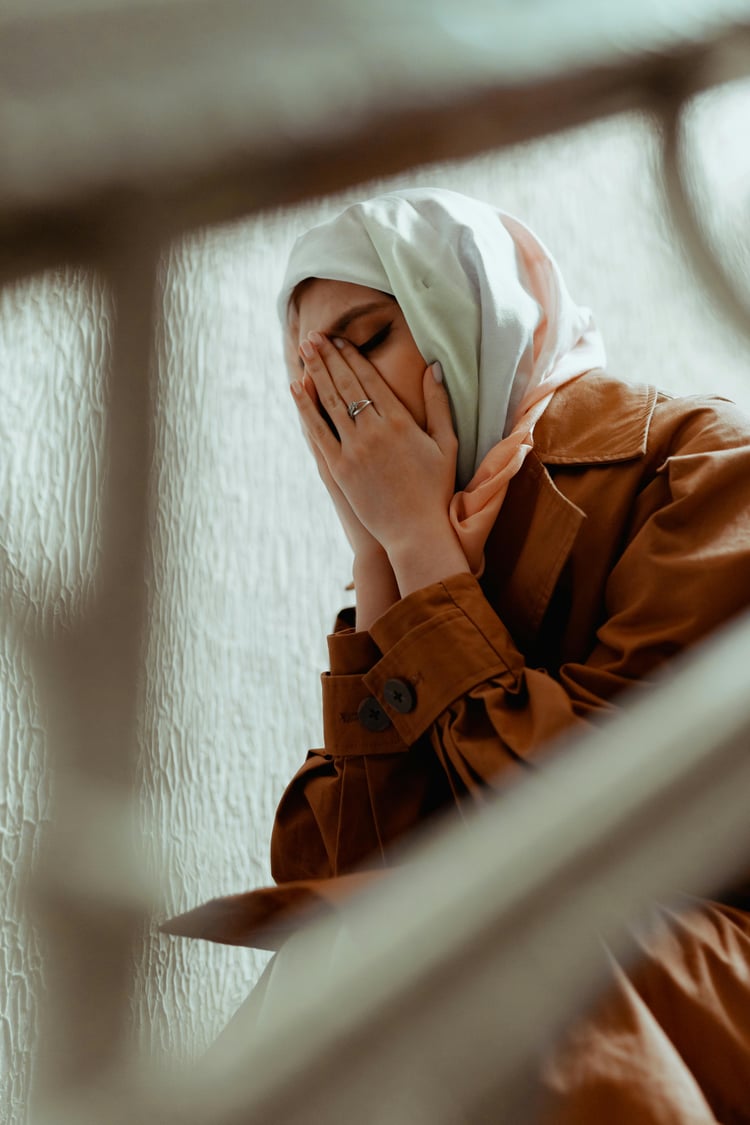
One of the most confusing parts of pregnancy is emotional change.
- Tears appear suddenly.
- Sensitivity increases.
- Thoughts feel heavier.
- This is not a spiritual flaw.
From an evidence-based perspective, early pregnancy brings rapid shifts in hormones such as progesterone and cortisol — both of which directly affect mood regulation and emotional processing.From a faith perspective, Islam recognises emotional transitions during significant life changes.
Maryam (ʿalayhā as-salām) experienced deep emotional distress during pregnancy — so much so that she wished for isolation, not attention.Her story is not presented to shame emotion but to honour its weight.
Barakah Pregnancy allows space for this reality.
A Barakah-Centred Lens on Responsibility
One of the quiet burdens many Muslim parents carry is the belief that everything rests on them.
- What to eat.
- How to think.
- What to avoid.
- How to prepare perfectly.
- Barakah reframes responsibility.
You are asked to do your part with sincerity and then release what is beyond your control.
Allah reminds us:
“Allah does not burden a soul beyond what it can bear.”
Qur’an 2:286
This ayah does not deny difficulty. It places it within divine care.
Barakah Pregnancy is not about control,it is about companionship with Allah through a transformative season.
How Barakah Shows Up Practically in Pregnancy
Barakah is not abstract. It shows up in daily choices.
It may look like:
- eating simply and nourishing your body without fear
- resting when needed, even when productivity whispers guilt
- learning about birth without drowning in information
- preparing emotionally and spiritually alongside practical plans
- making dua, not only for outcomes, but for steadiness of heart
This is where structure becomes supportive, not overwhelming.
👉 The 5 Pillars of a Barakah Pregnancy
Each pillar exists to hold the mother , not to pressure her.
For Couples: Barakah Is a Shared Journey
Barakah Pregnancy is not carried by the mother alone.
When couples approach pregnancy as a shared amānah:
- communication softens
- expectations become gentler
- emotional shifts are met with patience, not confusion
Even simple acts like attending appointments together, making dua as a couple, learning about birth roles — invite barakah into the home.
👉 Preparing Emotionally for Pregnancy — As a Couple
If You’re Wondering, “Am I Doing Enough?”
This question comes up often.
And the answer is rarely found in doing more.
Barakah grows when intention is renewed, not when pressure increases.
If you are:
- seeking knowledge with humility
- caring for your body with respect
- tending to your heart with honesty
- turning back to Allah in moments of fear
Then barakah is already present — even if the journey feels tender.
A Gentle Closing Reflection
Barakah Pregnancy does not promise ease.
It promises meaning.
It does not remove uncertainty.
It gives you something steadier to hold onto when uncertainty appears.
If you are walking this path slowly, imperfectly, prayerfully — you are not behind.
You are exactly where growth happens.
May Allah place barakah in your body, your heart, your home, and the life growing within you.
If you’d like gentle, faith-centred support during this season:
👉Free Duas PDF for Pregnancy & Birth
👉 Barakah Pregnancy Starter Kit
No pressure.
Only guidance, clarity, and grounded reassurance — when you’re ready.